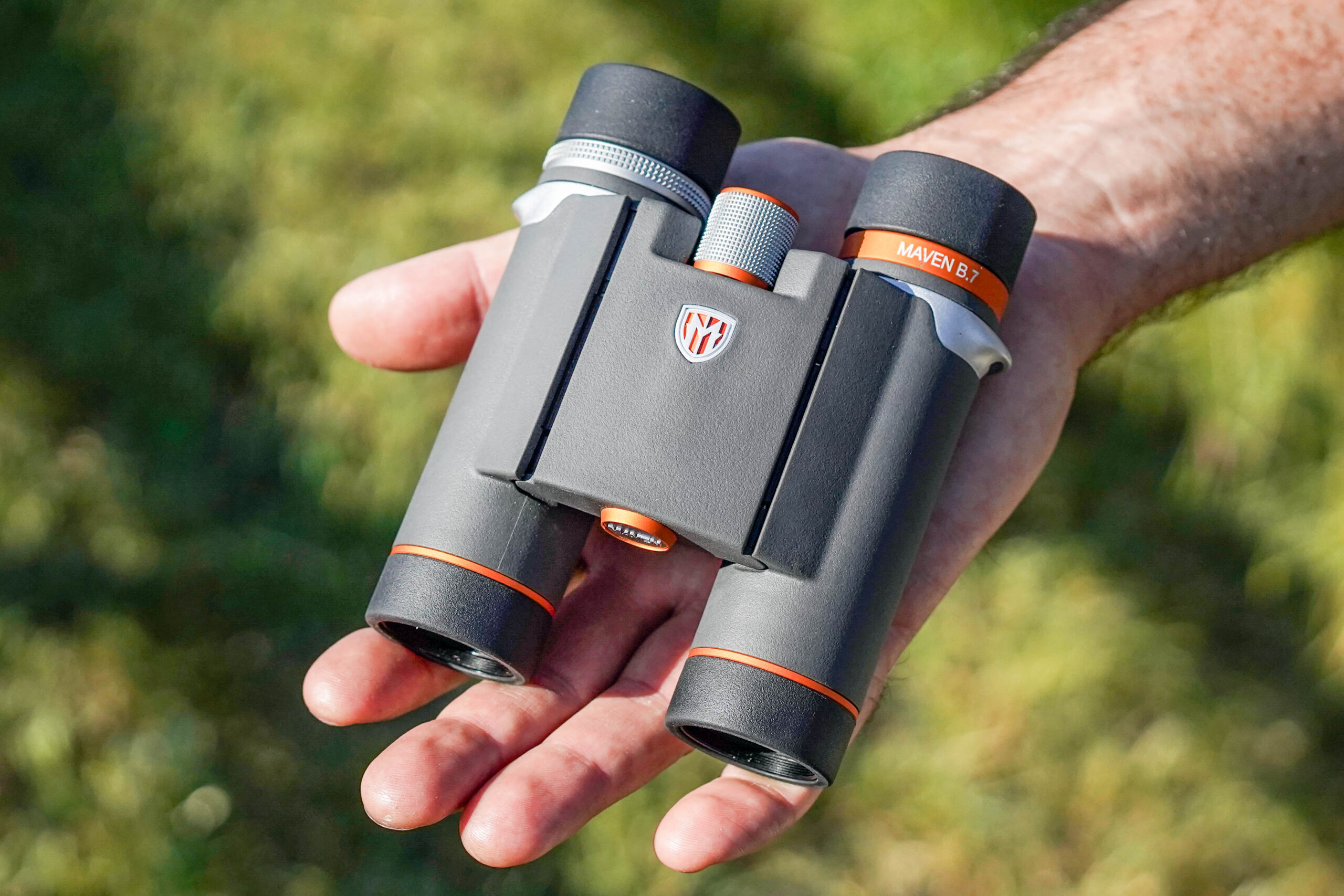
How we picked the best compact binoculars
We took these binoculars into the field to see how they handle the real world of birding, hunting, and astronomy. Our testing focused on three things that matter most when you're carrying gear all day: weight, optical clarity, and durability.
When we talk about "compact," we mean binoculars that fit in a jacket pocket or a small daypack, distinguishing them from the heavier, bulkier optics often found in standard categories. For birders and hunters, that weight difference adds up over miles of trail. For astronomers, it means leaving the binoculars at home is never an option. We prioritized models that balance portability with enough light-gathering power to see details in low-light conditions at dawn or dusk.
We tested popular models from Nikon, Vortex, and Zeiss to see which ones held up. We checked for fogging during temperature swings, the comfort of the eyecups during long viewing sessions, and how quickly the focus wheel responded. The goal was to find compact binoculars that don't feel like a compromise.
Rather than relying on lab charts, we looked at how the binoculars performed in the hand. Did the image stay sharp at the edges? Was the focus smooth or gritty? These practical tests help us recommend compact binoculars you can trust, whether you're scanning a forest canopy or tracking a distant target.
Top compact binocular picks by category
Choosing the right compact binoculars comes down to what you plan to see and how you plan to carry them. While larger optics offer brighter images, they are heavy and cumbersome for long hikes or quick glances. Compact models, typically 8x20, 8x25, or 10x25, strike a balance between portability and optical performance. They fit easily in a jacket pocket or a small side pouch, making them ideal for travelers, casual birdwatchers, and hunters who need to move light.
Below are our top recommendations across three main categories: general all-rounders, birding specialists, and hunting-focused optics. Each pick prioritizes sharpness and durability within a small form factor.
Best All-Rounder: Nikon Monarch M7 Compact
The Nikon Monarch M7 is widely regarded as the best overall binocular in its class. It offers exceptional clarity and brightness, making it a versatile choice for everything from backyard birding to landscape viewing. The compact 8x25 size is easy to handle, and the waterproof, fogproof construction ensures it holds up in rain or humidity. While not the cheapest option, the optical quality justifies the price for most users.
Best for Birding: Vortex Viper HD 8x25
Birders need binoculars that resolve fine details in feathers and distant branches. The Vortex Viper HD 8x25 delivers high-definition optics with excellent color fidelity. Its lightweight design reduces fatigue during long observation sessions. The close-focus capability allows you to examine nearby subjects, which is helpful when studying nests or insects. Vortex’s lifetime warranty adds peace of mind for outdoor enthusiasts.
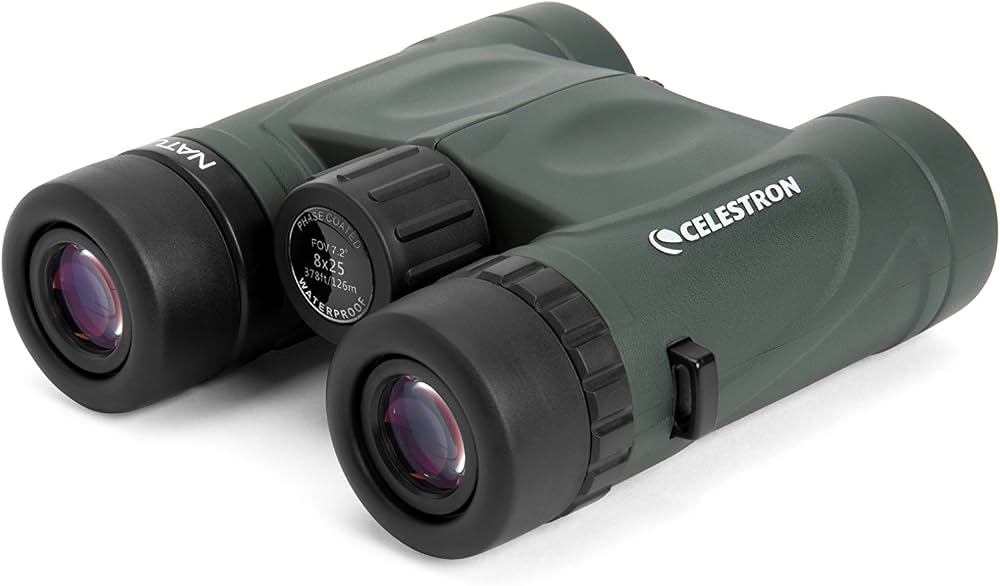
Best for Hunting: Celestron Nature DX 8x25
Hunters often prioritize durability and ease of use over extreme magnification. The Celestron Nature DX 8x25 is rugged, waterproof, and features a bright, clear image even in low light. The rubber-armored body provides a secure grip, essential in wet or muddy conditions. It’s also one of the more affordable options without sacrificing core performance, making it a practical choice for budget-conscious hunters.


As an Amazon Associate, we may earn from qualifying purchases.
How the Specs Compare
Picking compact binoculars means balancing three competing forces: how close things look, how bright the image is, and how heavy the pair feels in your hands. Unlike larger optics, compact designs prioritize portability without sacrificing too much optical quality.
The table below breaks down the key specifications for three top-tier options. We’ve focused on magnification, objective lens size, weight, and field of view to help you decide which trade-off works best for your specific activity, whether that’s scanning the horizon for birds or tracking game in the woods.
| Model | Magnification | Lens (mm) | Weight (oz) | Field of View (ft/1000yd) |
|---|---|---|---|---|
| Nikon Monarch M7 Compact | 8x | 42 | 21.6 | 428 |
| Vortex Viper HD Compact | 8x | 32 | 14.6 | 462 |
| Zeiss Terra ED 3x21 | 8.5x | 21 | 6.7 | 390 |
What to look for in compact binoculars
Picking the right compact binoculars means balancing what you want to see with what you can comfortably carry. Compact pairs prioritize portability, often at the cost of some brightness and field of view compared to larger models. Understanding the trade-offs helps you choose a pair that fits your specific activities, whether that’s hiking, birding, or stargazing.
Magnification: 8x vs. 10x vs. 12x
Magnification determines how close objects appear, but higher numbers aren’t always better for handheld use. Eight-power (8x) binoculars, like the Nikon Monarch M5 8x25, offer a wider field of view and are easier to keep steady in your hands. This makes them ideal for tracking moving birds or scanning landscapes while hiking.
Ten-power (10x) binoculars, such as the Vortex Viper HD 10x26, provide more reach, which is helpful for distant wildlife or astronomy. However, the image may shake more at 10x, so a steady hand or a tripod becomes more important. Twelve-power (12x) compacts exist but are generally too shaky for handheld use unless you have excellent stability or use a support.
Eye Relief for Glasses Wearers
If you wear eyeglasses, eye relief—the distance your eyes can be from the eyepiece and still see the full image—is critical. Most compact binoculars offer around 14–15mm of eye relief, which is enough for brief viewing. For comfortable extended use with glasses, look for models offering 15mm or more, like the Zeiss Terra ED 10x25.
Users who remove their glasses to view through the binoculars may find 12–14mm sufficient. However, if you prefer to keep your glasses on, prioritize higher eye relief to avoid the "vignetting" effect, where the edges of your view are cut off by black circles.
Waterproofing and Durability
Birding and hunting often happen in wet or humid conditions, so waterproofing is non-negotiable. Look for binoculars that are nitrogen-purged and O-ring sealed. This prevents internal fogging when temperatures change rapidly, such as moving from a cold morning to a warm afternoon.
Rubber armor provides grip and protects against bumps and drops. While not all compacts are equally rugged, models from brands like Nikon and Vortex typically offer robust construction suitable for outdoor use. Avoid lightweight plastic-only bodies if you expect rough handling.
Frequently asked questions about compact binoculars
Are 8x25 or 10x25 binoculars better for birding?
For most birding scenarios, 8x25 binoculars are the better choice. The wider field of view makes it easier to locate and track moving birds, and the lower magnification reduces image shake, allowing for steadier viewing without a tripod. 10x25 models offer more reach but require a steadier hand and have a narrower field of view, which can make spotting birds in dense foliage more difficult.
How much does a good pair of compact binoculars cost?
Quality compact binoculars typically range from $100 to $400. Entry-level options from brands like Vortex or Celestron offer solid performance for casual use. Mid-range models from Nikon or Vortex provide significant upgrades in optical clarity and build quality. Premium options from Zeiss or Swarovski can exceed $500, offering exceptional edge-to-edge sharpness and ergonomic design for serious enthusiasts.
Can I use compact binoculars for astronomy?
Compact binoculars can be used for basic astronomy, particularly for viewing the moon, bright star clusters, and wide-field deep-sky objects. However, their smaller objective lenses (typically 21mm to 25mm) gather less light than larger models, limiting their ability to show faint galaxies or nebulae. For serious stargazing, larger 10x50 or 15x70 binoculars are generally preferred, though compact models remain excellent for portable, casual sky watching.
No comments yet. Be the first to share your thoughts!