
The binocular market in 2026
The binocular market is crowded in 2026. Birding and hunting are growing, and that demand keeps the optics tech moving. We are seeing the first real AI features, like bird ID, though they stay mostly in the expensive models for now. Choosing a pair is harder than it used to be.
High prices don't always mean a better view. Premium glass has perks, but you can get a great pair without spending a fortune. I've compared the budget and mid-range options under $500 to see where the money actually goes.
We'll look at how features and build quality change as the price increases. The goal isn’t to steer you toward the most expensive option, but to provide an honest assessment of what you get for your money. There are diminishing returns, and understanding those will help you make a smart purchase.
Specs that actually change your view
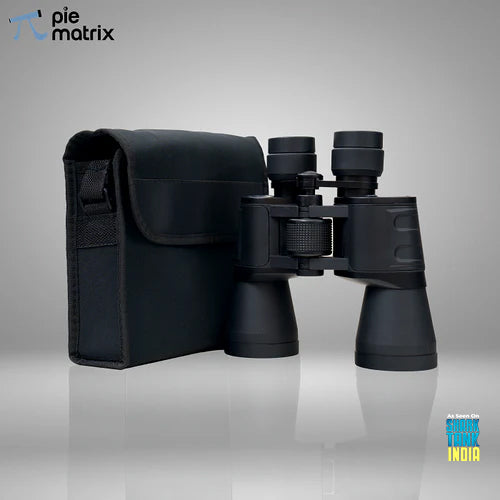
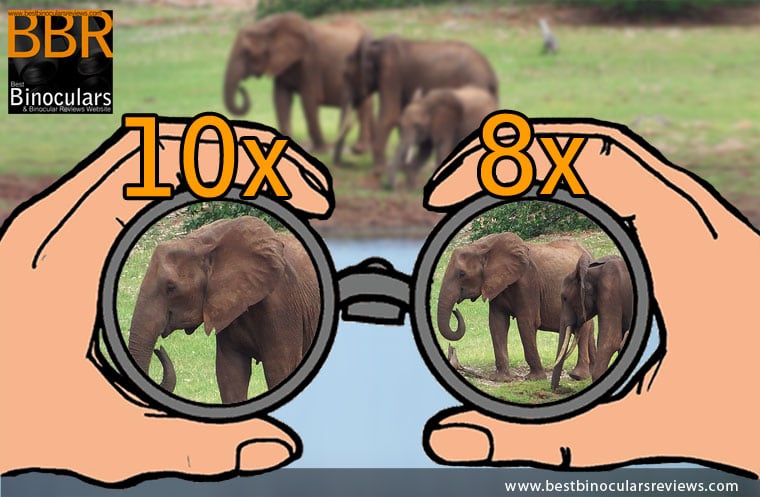
Binocular specifications can seem daunting at first, but understanding a few key terms will empower you to make an informed decision. Magnification is the first number you’ll see (e.g., 8x, 10x), indicating how much larger the image appears. Higher magnification isn’t always better, as it can also amplify hand shake.
The second number is the objective lens diameter (e.g., 42mm, 50mm). A larger objective lens gathers more light, resulting in a brighter image, especially in low-light conditions. Field of view (measured in feet at 1000 yards or in degrees) determines how much of the scene you can see at once – a wider field of view is generally preferred for birding and hunting.
Eye relief is the distance between your eye and the eyepiece. Longer eye relief is essential for eyeglass wearers. Prism type – either roof or Porro – affects the binocular’s size and shape. Roof prisms are more compact, while Porro prisms typically offer a wider field of view. Finally, coatings are crucial. Multi-layer coatings reduce light reflection and increase brightness and contrast.
AI can play a role here. Some online tools and apps can help you analyze these specs based on your intended use. For example, an AI could suggest a lower magnification and wider field of view for birding, while recommending higher magnification and brighter lenses for long-distance observation.
Solid performers under $250
The sub-$250 category is packed with options, and you can find surprisingly capable binoculars for the price. You’ll likely encounter some compromises in optical quality and build materials, but these models are great for casual use and beginners. Don't expect the absolute clearest image, but they'll get you started.
The Celestron Nature DX 8x42 is a popular choice, consistently praised for its sharpness and brightness relative to its price. It’s waterproof and fogproof, making it suitable for a variety of conditions. However, the eye relief is somewhat limited, which might not be ideal for all eyeglass wearers. You can generally find these around $130-$180.
Another strong contender is the Nikon Prostaff 3S 8x42. Nikon has a long-standing reputation for quality optics, and the Prostaff 3S delivers good performance for the money. It’s lightweight and comfortable to hold, but the image isn’t quite as bright or sharp as the Celestron Nature DX. These typically cost between $150 and $200.
The Bushnell Legend Ultra HD 10x42 is also worth considering. It offers a higher magnification, making it suitable for observing distant objects. However, the higher magnification can also make the image more susceptible to shake. The build quality feels a little less robust than the Nikon or Celestron. Expect to pay around $200-$230.
Featured Products

8x magnification and 42mm objective lenses · Waterproof and fogproof construction · Wide field of view and long eye relief
The Nikon PROSTAFF P3 offers a fantastic balance of premium features and affordability, making it a top pick for reliable performance.

10x magnification and 42mm objective lenses · BaK-4 prisms and multi-coated lenses · Waterproof and fogproof design
Celestron's Outland X is a budget-friendly powerhouse, delivering clear views for birding and outdoor adventures without a hefty price tag.

Waterproof construction · Durable build for outdoor use · Reliable optical performance
The Bushnell Legacy WP is a solid, dependable option that provides good optical quality for its price point, perfect for general outdoor observation.

8x magnification with ED glass for enhanced clarity · Waterproof and fogproof · Wide field of view and close focus capability
Wingspan Optics Skyview Ultra HD stands out with its ED glass, offering exceptional clarity and brightness for birdwatchers on a budget.
As an Amazon Associate I earn from qualifying purchases. Prices may vary.
The $250 to $500 sweet spot
Stepping up to the $250-$500 range unlocks a noticeable improvement in optical quality and build materials. You’ll find binoculars with better coatings, more durable construction, and a more refined viewing experience. This is often where enthusiasts start to see real value for their money.
The Vortex Diamondback HD 8x42 is a standout in this category. Vortex is known for its excellent warranty and customer service, and the Diamondback HD delivers impressive optics for the price. It features HD glass and fully multi-coated lenses, resulting in a bright, sharp image. These generally sell for around $300-$350.
The Athlon Argos UHD 8x42 is another excellent option. Athlon has quickly gained a reputation for offering high-performance optics at competitive prices. The Argos UHD features UHD glass and fully multi-coated lenses, providing exceptional clarity and brightness. They are typically priced around $350-$400.
If you're specifically interested in birding, the Maven C.1 8x42 deserves a look. Maven is a newer brand focused on direct-to-consumer sales, allowing them to offer high-quality optics at a lower price point. The C.1 features ED glass and a rugged, waterproof construction. These are usually around $450-$500.
Budget vs. Mid-Range Binoculars (Under $500): A Feature Comparison - 2026 Analysis
| Feature | Budget (<$250) | Mid-Range ($250-$500) |
|---|---|---|
| Magnification | Typically 8x-10x. Often fixed. | Commonly 8x-12x, with some models offering variable zoom. More consistent performance at higher magnifications. |
| Objective Lens | 30mm-42mm is standard. Smaller lenses mean less light gathering. | 42mm-50mm is typical. Larger lenses gather more light, improving performance in low-light conditions. |
| Coatings | Basic multi-coating or single-layer coatings. May experience more glare and reduced brightness. | Improved multi-coating across all lens surfaces. Reduces glare, increases brightness, and improves contrast. |
| Build Quality | Often utilizes plastic housings. May feel less durable and offer limited weather resistance. | Generally features more robust construction, often with rubber armoring for better grip and impact resistance. Better weather sealing is common. |
| Field of View | Narrower field of view, typically around 330-360 feet at 1000 yards. | Wider field of view, generally 350-420 feet at 1000 yards, making it easier to locate and track subjects. |
| Optical Resolution | Acceptable clarity for general use, but may exhibit noticeable chromatic aberration (color fringing). | Sharper images with better edge-to-edge clarity and reduced chromatic aberration. |
Illustrative comparison based on the article research brief. Verify current pricing, limits, and product details in the official docs before relying on it.
What extra money actually buys
Beyond $500, the price of binoculars increases significantly, but the improvements become more incremental. The biggest difference is often in the glass used. ED (Extra-low Dispersion) glass minimizes chromatic aberration – that annoying color fringing around objects – resulting in sharper, clearer images. Premium binoculars also feature superior coatings that transmit more light and reduce glare.
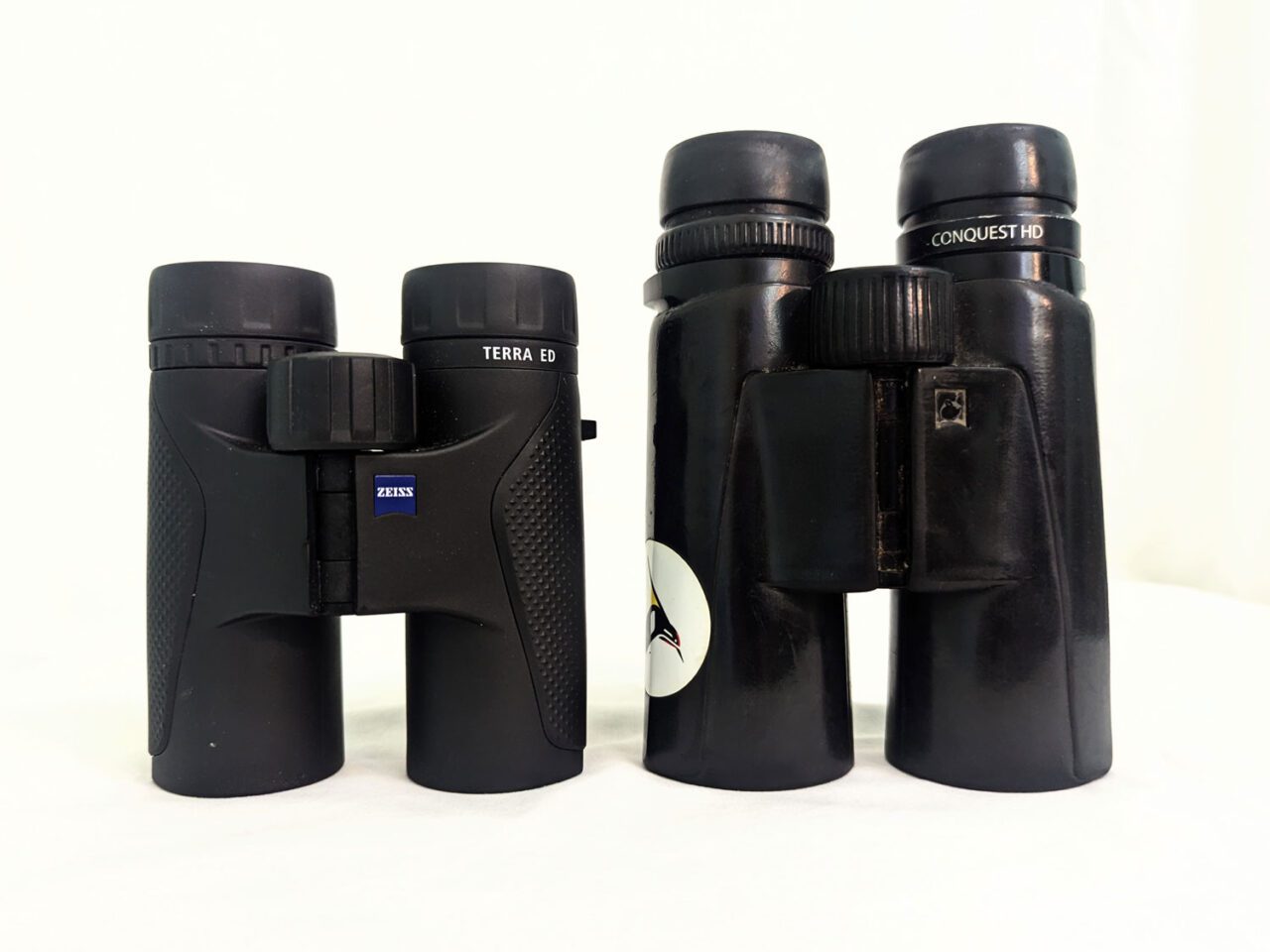
Manufacturing tolerances are also tighter in more expensive binoculars. This means the prisms are more precisely aligned, and the lenses are more accurately ground and polished. Better quality control ensures that each binocular meets higher standards. The materials used – such as magnesium alloy – are more durable and lightweight.
However, it’s important to recognize the diminishing returns. Spending $1000 or $2000 on binoculars won’t necessarily give you a twice as good viewing experience as a $500 pair. The improvements become more subtle and are often only noticeable under challenging conditions or by experienced observers.
Where AI fits into optics
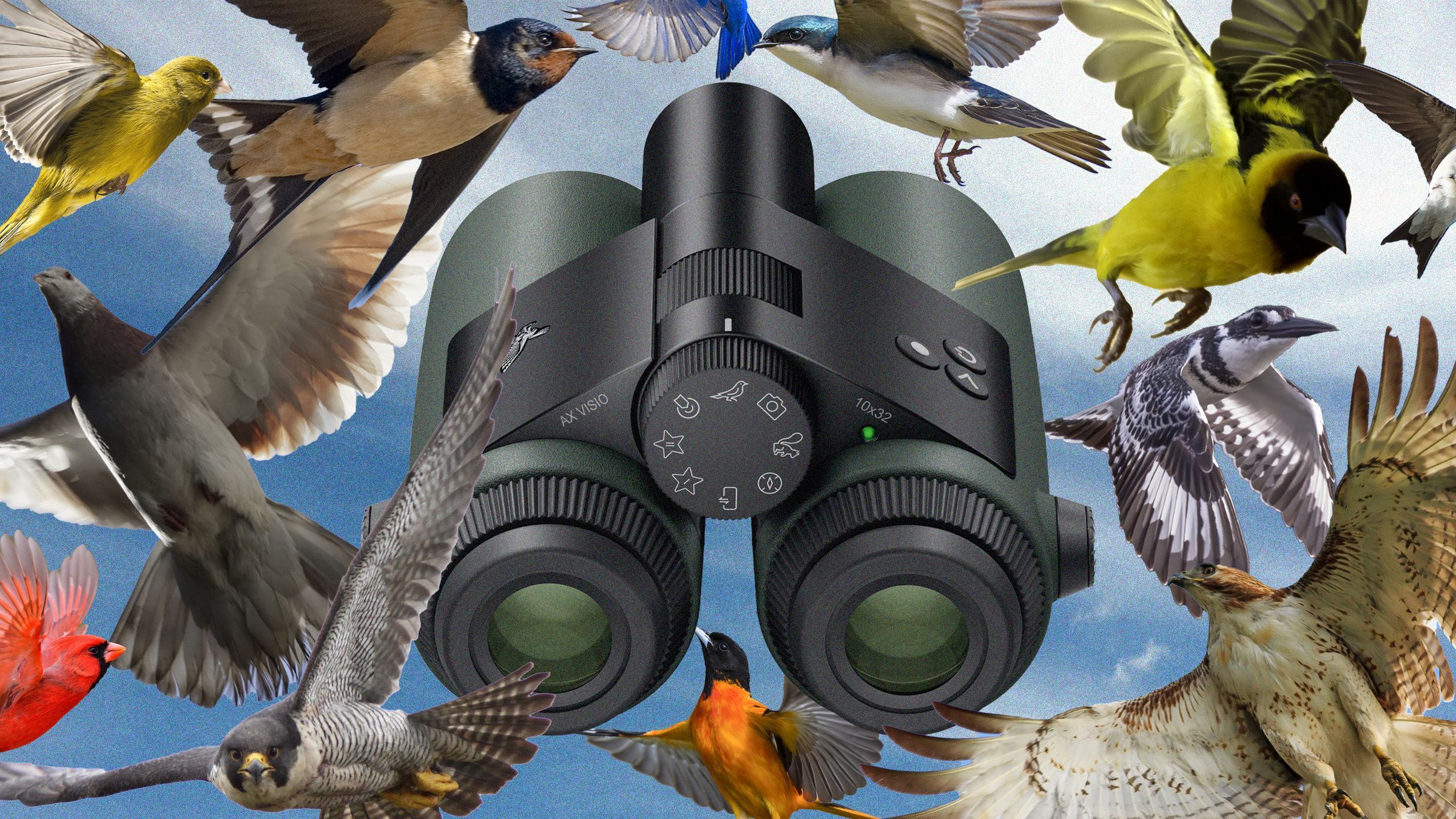
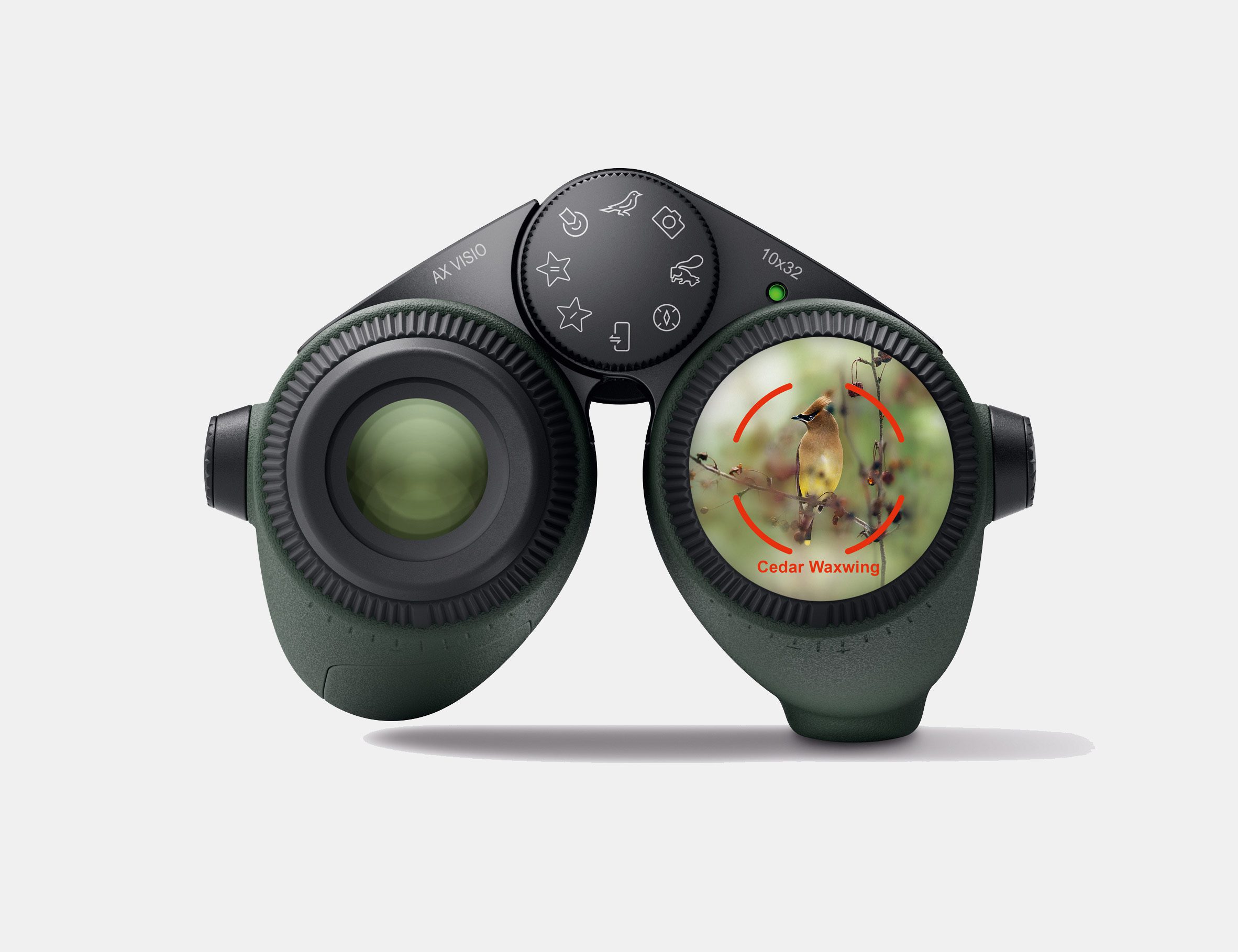
AI is beginning to make inroads into the binocular world, although the technology is still in its early stages. The Swarovski AX Visio, recently reviewed by Badgerland Birding on YouTube, demonstrates some of the possibilities. It can identify birds in real-time, providing information about their species and behavior. This is done through image recognition and a connected app.
Currently, AI applications are mostly limited to high-end models. We’re also seeing some binoculars with AI-powered image stabilization, which helps to reduce shake and provide a steadier view. Automated settings adjustment is another potential application, where AI could optimize the binocular’s settings based on the ambient light and viewing conditions.
Looking ahead, AI could play a larger role in binocular selection. Imagine an AI-powered tool that analyzes your specific needs – your preferred activities, your budget, your vision – and recommends the perfect binoculars for you. This is still a few years away, but the potential is there.
Nikon PROSTAFF P3 8x42 Binocular | Waterproof, fogproof, rubber-armored Full-Size Binocular, wide field of view & long eye relief | Official Nikon USA Model
- 8x magnification and 42mm objective lenses
- Waterproof and fogproof construction
- Wide field of view
- Long eye relief
The Nikon PROSTAFF P3 8x42 binoculars are a fantastic mid-range option, delivering impressive clarity and durability without breaking the bank, making them an excellent choice for budget-conscious enthusiasts.
View on Amazon →As an Amazon Associate I earn from qualifying purchases.
No comments yet. Be the first to share your thoughts!