
Binoculars Reimagined: AI's Role
Binoculars haven't changed much for decades. Glass, prisms, and coatings saw small improvements, but the basic idea stayed the same. That's changing fast with artificial intelligence. We're moving beyond simple magnification to features once thought impossible. AI in binoculars means you don't just see further, you understand what you're seeing.
Automated identification is a major benefit. Point your binoculars at a bird, and you'll instantly know its species. The Swarovski AX Visio shows this off, as seen on YouTube. AI also improves image stabilization, which is key for handheld viewing, and boosts low-light performance. These aren't small changes; they completely change how you use binoculars.
This market is new, but AI features will become more common. Expect AI in more affordable models, making them accessible to more people. Early models are expensive, like the Swarovski AX Visio, but competition should lower prices. This is more than just better optics; it's a new way to connect with nature.
The main challenge is improving the AI. Accurate identification needs large datasets and strong algorithms. Early systems aren't perfect, but they're improving quickly. Soon, AI binoculars will be almost as good at identification as an expert birder, which is a huge step forward.
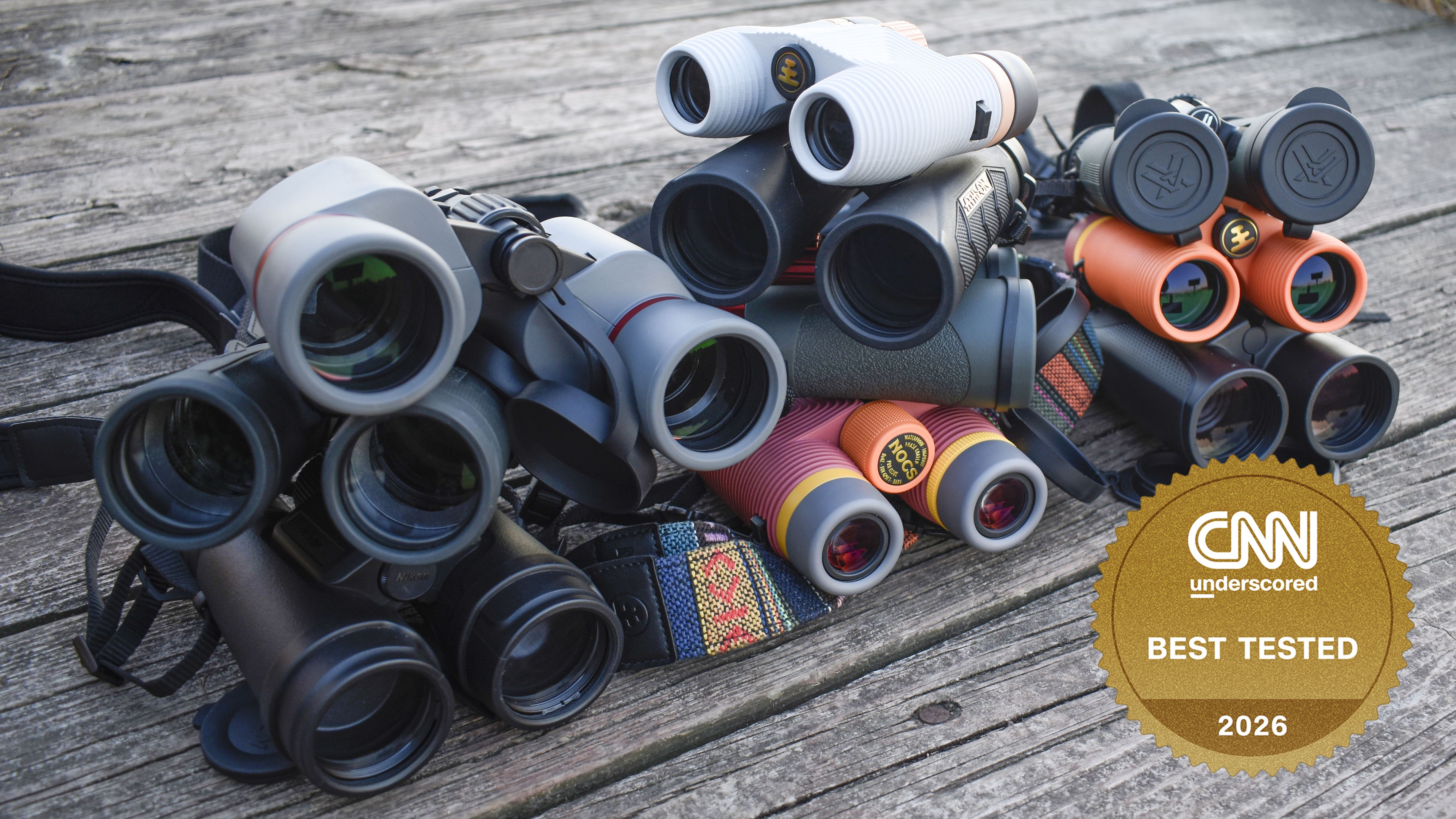
Top Binoculars of 2026: Our Picks
Choosing binoculars depends on how you'll use them and your budget. Here are models we recommend, covering different prices and features. They aren't ranked; they're chosen for specific needs.
Swarovski AX Visio: Top-tier right now. The built-in AI bird identification is impressive, though the $5,000+ price is a big hurdle. It's an 8x42 model with excellent optical clarity and a strong build. It's as much a status symbol as a tool.
Zeiss Victory SF: A long-time favorite for birders and hunters. 8x42 and 10x42 models provide superb image quality, great low-light performance, and comfortable viewing. Expect to pay $2,500 - $3,000. The LotuTec coating repels water and dirt.
Vortex Diamondback HD: Great value. These binoculars offer impressive optical performance for $300 - $400. The 10x42 model is popular, balancing magnification and field of view. Vortex’s VIP warranty backs them.
Nikon Monarch M5: Better than the Diamondback, with improved optics and build quality for $600 - $800. Available in 8x42 and 10x42. The ED glass reduces chromatic aberration for sharper images.
Celestron TrailSeeker ED: A solid choice for birding and general outdoor use, around $300. The 10x42 is a good all-around option. ED glass reduces color fringing, and fully multi-coated optics provide bright, clear images.
Leupold BX-2 Alpine HD: A durable, reliable choice for hunters and outdoor enthusiasts, costing $400 - $500. The 10x42 offers good magnification for medium-range viewing. Its rugged construction handles harsh conditions.
Bushnell Engage DX: A budget-friendly choice with respectable performance, around $200. The 10x42 is a popular configuration. While not as refined as higher-end models, they're a good start for beginners.
Olympus 8x21 DPS I: Compact and lightweight, good for travel and casual viewing. Under $200, they offer decent optical quality in a small package. They aren't suitable for low-light or long-range viewing.
Canon 10x30 IS II: These image-stabilized binoculars are a good choice for handheld viewing, especially for those with shaky hands. Around $600, they provide a steady image, even at higher magnifications. Battery life needs consideration.
Featured Products

ED glass for enhanced clarity and color fidelity · Waterproof, fogproof, and rubber-armored for durability · Wide field of view for expansive observation
The Nikon MONARCH M7 delivers exceptional optical performance with its ED glass and wide field of view, making it a premium choice for discerning users.

HD optical system for superior resolution and contrast · Waterproof, fogproof, and shockproof construction · Includes GlassPak for convenient transport and protection
Vortex Diamondback HD binoculars offer a robust, high-definition viewing experience with impressive durability and a comprehensive warranty.

42mm objective lenses for bright images · BaK-4 prisms and fully multi-coated optics · Waterproof and fogproof design for all-weather use
Celestron Nature DX binoculars are an excellent value, providing bright, clear views ideal for birding and general outdoor observation.

IPX7 waterproof rating for submersion protection · Lightweight design for portability · Suitable for hunting, travel, and camping
The Bushnell Engage X offers reliable waterproof performance in a lightweight package, perfect for active outdoor pursuits.

Daha Prism system for enhanced light transmission · 10x magnification with 42mm objective lenses · Waterproof and anti-fog construction
Olympus 10x42 PRO binoculars provide a high level of optical quality and ruggedness, ensuring clear and reliable performance in challenging conditions.
As an Amazon Associate I earn from qualifying purchases. Prices may vary.
Understanding Binocular Specs: A Deep Dive
Binocular specs can seem confusing, but understanding the numbers helps you choose. Magnification and objective lens diameter are the first two numbers, like 8x42. The first number (8x) shows how much larger the image appears. More magnification isn't always better; it can also amplify hand shake.
The second number (42) is the objective lens diameter in millimeters. A larger lens gathers more light, making images brighter, especially in low light. Larger lenses also add weight and bulk. Field of view is measured in degrees or feet at 1000 yards and shows how wide an area you can see. A wider field of view is better for birding and wildlife viewing.
Exit pupil is the light beam diameter exiting the binoculars, found by dividing the objective lens diameter by the magnification. A larger exit pupil helps in low light. Eye relief is the distance from your eye to the eyepiece. Longer eye relief is needed for eyeglass wearers. There are two main prism types: Porro and Roof. Porro prisms are traditional and offer better depth perception; Roof prisms are more compact.
Finally, lens coatings matter for image quality. Fully multi-coated optics mean all air-to-glass surfaces are coated to reduce light reflection and maximize light transmission. Coatings also improve contrast and color. Understand these specs; they directly affect your viewing experience.
Porro vs. Roof Prism Binoculars: A Comparative Overview
| Feature | Porro Prism | Roof Prism |
|---|---|---|
| Image Brightness & Clarity | Generally excellent brightness and contrast due to simpler light path. Can offer a more 'three-dimensional' image. | Brightness and clarity are very good, but can be slightly less than Porro prisms at the same price point due to more complex coatings required. |
| Size & Ergonomics | Typically wider and bulkier due to the offset prism design. Can be less comfortable for extended use for some users. | More compact and streamlined design. Easier to handle and hold steady, particularly for extended periods. |
| Durability & Ruggedness | Can be more robust due to simpler construction and fewer moving parts. Less susceptible to misalignment. | Generally durable, but the internal baffling and coatings can be more sensitive to impact and require precise alignment. |
| Cost | Often more affordable for a given level of optical quality. Simpler manufacturing process translates to lower production costs. | Generally more expensive due to the complex prism design and required coatings to maintain image quality. |
| Weight | Generally heavier than comparable roof prism binoculars. | Generally lighter and more portable. |
| Field of View | Typically wider field of view, making it easier to locate and track moving subjects. | Field of view can be narrower, although modern designs are improving this aspect. |
| Typical Applications | Birding, nature observation, general viewing where a wider field of view is prioritized. | Hunting, marine use, sporting events, situations where compactness and portability are important. |
Illustrative comparison based on the article research brief. Verify current pricing, limits, and product details in the official docs before relying on it.
Cameras in Binoculars: Convenience vs. Quality
undefined feature? The answer, as with most things, is nuanced.
The biggest advantage is convenience. You can instantly document your sightings, share them with friends, and create a visual record of your adventures. However, image quality is often compromised compared to dedicated cameras. Sensor size is limited, and image processing isn’t always optimal. Expect lower resolution and more noise, especially in low light.
Models like the Visio offer impressive capabilities, but they still don’t match the performance of a dedicated camera. Features to look for include resolution (at least 12 megapixels), video recording capabilities (1080p or 4K), and image stabilization. Some models also offer Wi-Fi connectivity for easy image transfer. The price premium is significant, so carefully consider whether the added convenience is worth the cost.
Ultimately, binoculars with cameras are best suited for casual users who prioritize convenience over image quality. If you’re serious about photography, a dedicated camera will always deliver superior results. But for quick snapshots and documenting sightings, they can be a valuable tool.

Nikon Monarch M5 10x42 (16768) Black Binoculars Bundle with Lens Pen, and Cleaning Cloth, Compact High Powered Binoculars for Adults for Hunting, Bird Watching, and Hiking Essentials, Lightweight
- 10x magnification and 42mm objective lenses for clear, bright views
- Fully multi-coated lenses for superior light transmission and contrast
- Waterproof and fog-proof construction for reliable performance in all conditions
- Lightweight and ergonomic design for comfortable extended use
- Includes Lens Pen and cleaning cloth for easy maintenance
The Nikon Monarch M5 10x42 binoculars deliver exceptional optical clarity and durability, making them an outstanding choice for serious bird watchers, hunters, and hikers seeking reliable performance in the field.
View on Amazon →As an Amazon Associate I earn from qualifying purchases.
AI Features: Beyond Identification
AI’s role in binoculars extends far beyond simple object identification. While identifying birds is a major selling point, the potential applications are much broader. AI-powered image stabilization is already improving handheld viewing, reducing blur and providing a steadier image.
Future applications include noise reduction, which could significantly enhance low-light performance. AI algorithms can analyze images and remove noise without sacrificing detail. Personalized viewing experiences are also on the horizon. Imagine binoculars that automatically adjust settings based on your preferences and viewing conditions.
Another promising area is object tracking. AI could automatically track a moving target, keeping it centered in the field of view. This would be particularly useful for birding and wildlife observation. While these technologies are still in development, they represent the future of binocular technology.
The success of these features will depend on the availability of large datasets and the development of sophisticated algorithms. However, the potential benefits are significant, and we can expect to see more AI-powered features in binoculars in the coming years.
Binoculars for Specific Activities
Different activities demand different binocular characteristics. For birding, high magnification (8x or 10x) and a wide field of view are essential for spotting and tracking birds. Bright, clear optics are also important for viewing in low-light conditions. The Swarovski AX Visio and Zeiss Victory SF are excellent choices.
Hunting requires durable, weather-resistant binoculars with excellent low-light performance. 8x or 10x magnification is typically preferred. The Leupold BX-2 Alpine HD and Vortex Diamondback HD are popular options. Ruggedness is paramount.
Astronomy demands binoculars with large objective lenses (50mm or larger) to gather as much light as possible. A stable mount is also essential for steady viewing. 10x50 binoculars are a good starting point. While not a replacement for a telescope, they provide a wider field of view for scanning the night sky.
General outdoor use calls for a versatile pair of binoculars that are lightweight, compact, and easy to carry. 8x42 or 10x42 binoculars are good all-around choices. The Nikon Monarch M5 and Celestron TrailSeeker ED are solid options.
Budget Breakdown: Finding the Sweet Spot
Determining how much to spend on binoculars can be tricky. Here’s a breakdown of what you can expect at different price points. Under $200, you’ll find basic binoculars suitable for casual viewing. Expect lower optical quality and limited features. The Bushnell Engage DX fits this category.
$200-$500 offers a significant step up in performance. You can find binoculars with better optics, more durable construction, and improved features. The Vortex Diamondback HD and Celestron TrailSeeker ED fall into this range. This is the sweet spot for many users.
$500-$1000 provides access to high-quality binoculars with excellent optics and robust features. The Nikon Monarch M5 and some mid-range Zeiss models are available at this price point. Diminishing returns start to kick in, but the improvement in image quality is noticeable.
Over $1000 is reserved for premium binoculars with top-of-the-line optics, advanced features, and exceptional build quality. The Swarovski AX Visio and Zeiss Victory SF are in this category. These are for serious enthusiasts who demand the very best.
Caring for Your Binoculars
Proper care is essential for maintaining the performance and longevity of your binoculars. Cleaning should be done regularly with a microfiber cloth and lens cleaning solution. Avoid using harsh chemicals or abrasive materials. Always clean the lenses gently to avoid scratches.
Storage is also important. Store your binoculars in a cool, dry place away from direct sunlight and extreme temperatures. A protective case is recommended to prevent damage. Protect them from moisture and impact whenever possible. A silica gel packet can help absorb moisture.
Most binoculars come with a warranty. Be sure to read the warranty terms and conditions carefully. If your binoculars are damaged, contact the manufacturer or retailer for repair or replacement. Don’t attempt to repair them yourself, as this could void the warranty.
Regular maintenance and careful handling will ensure that your binoculars provide years of reliable service. It’s an investment worth protecting, allowing you to continue enjoying the world around you with clarity and detail.
No comments yet. Be the first to share your thoughts!