
Birding's AI Revolution
Birding is booming. More people than ever are discovering the joy of identifying birds, and it’s no longer just a retirement hobby. Interest is soaring, from backyard feeders to dedicated expeditions. This growth demands better tools, and technology is responding. The optics world is seeing significant advancements, particularly with artificial intelligence.
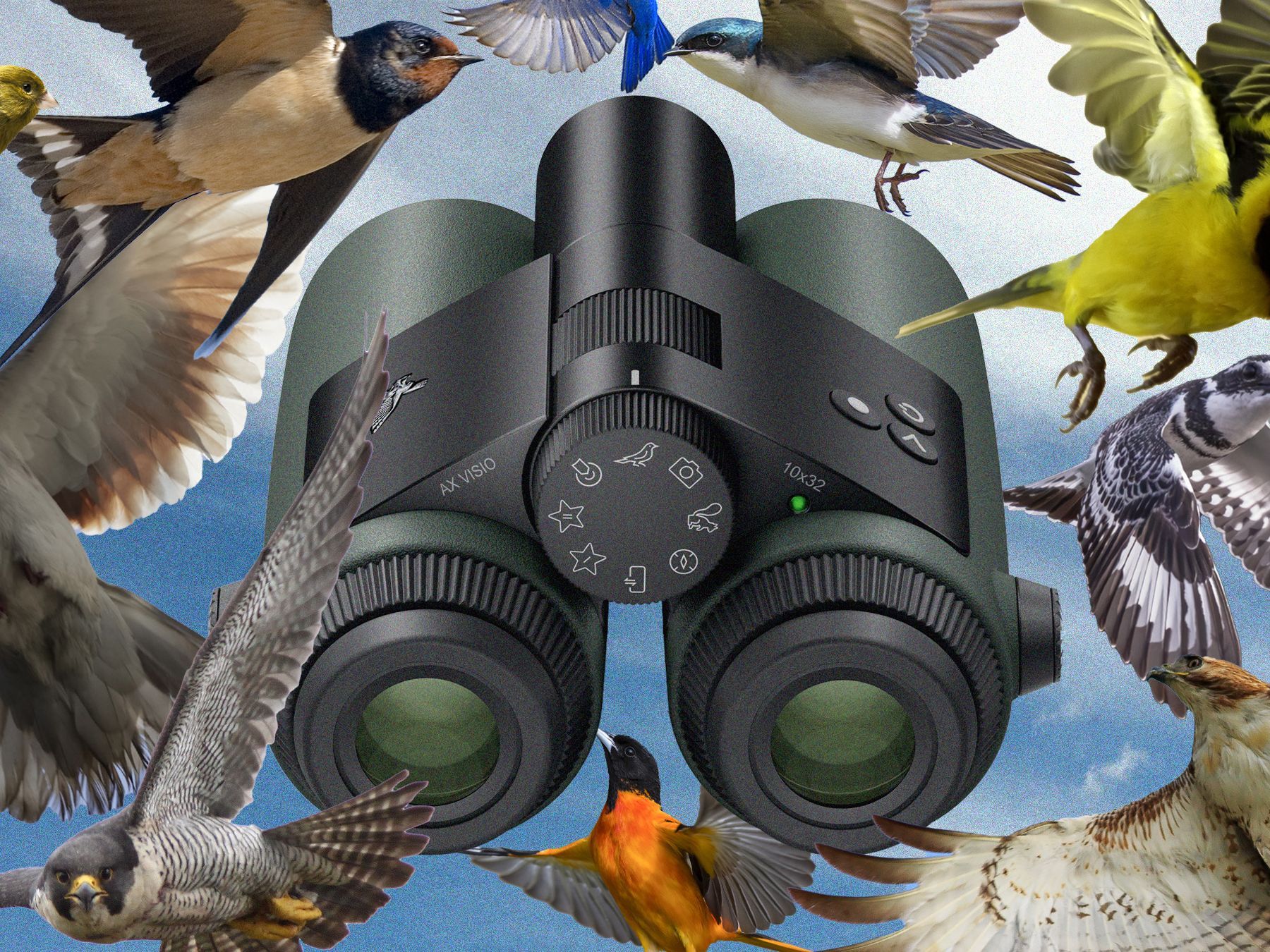
AI-powered binoculars are a major development. Wired reported in early 2026 that these binoculars offer instant identification, going beyond simple magnification. A quick look through the lenses can identify the species. Examples of this technology were showcased by tech reviewers at CES in January 2026.
While cutting-edge AI models can be expensive, excellent birding optics are available without a high price tag. This guide focuses on the best binoculars for birding under $500, showing that high-quality birding is accessible to everyone. It’s a good time to get started.
Good binoculars are essential for accurate bird identification and ethical birding. They allow you to observe birds in crisp detail from a distance, minimizing disturbance to their habitat.
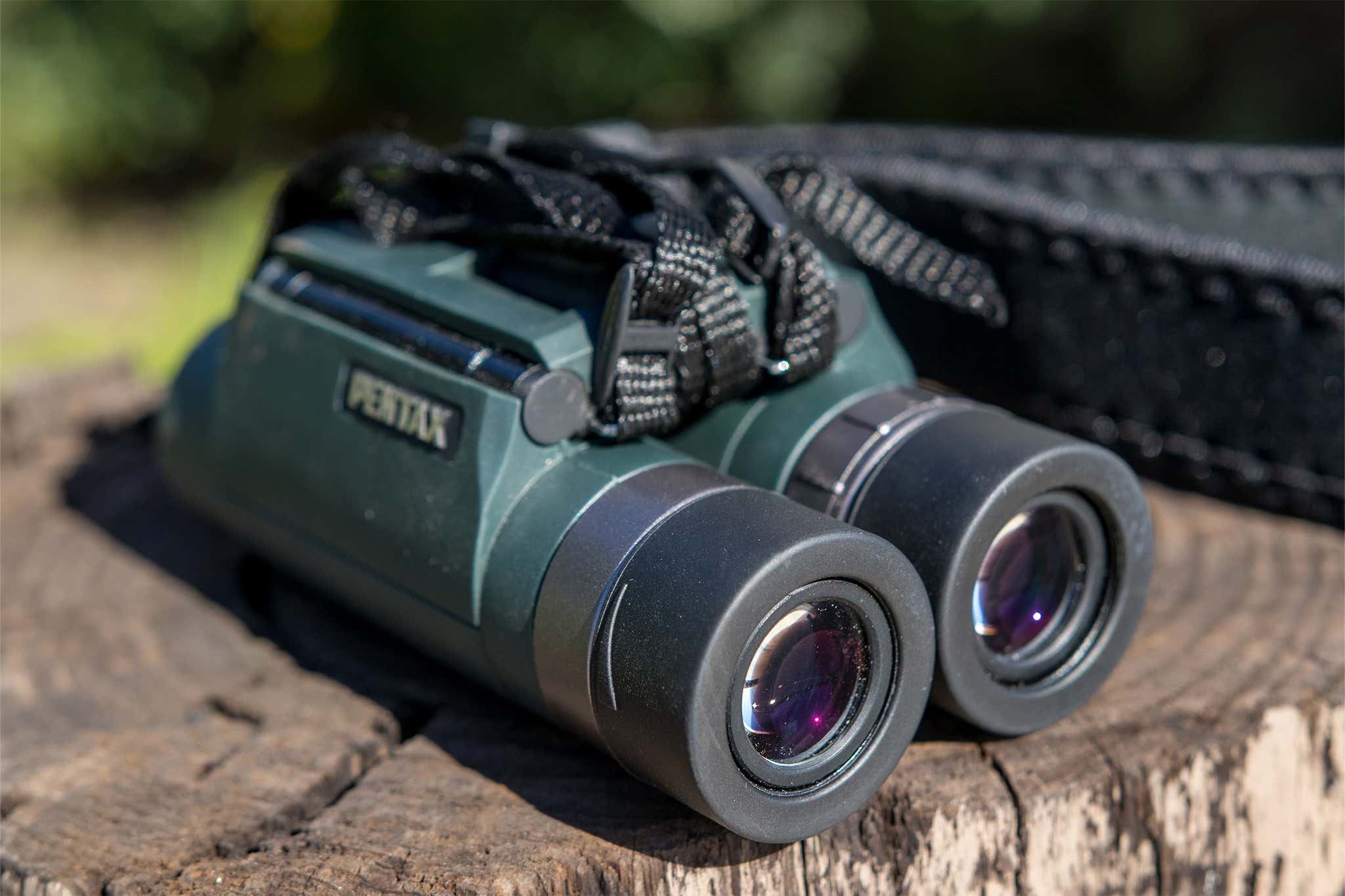
Key Specs: What Birders Need
Choosing binoculars involves understanding specifications like magnification and objective lens diameter. The numbers 8x42 or 10x50 refer to these key features.
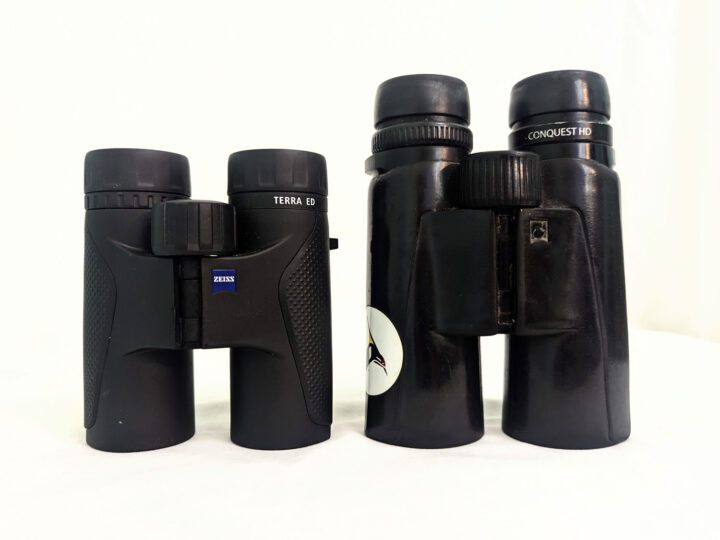
Magnification, shown as the first number (e.g., 8x), indicates how much larger the image appears. Higher magnification can lead to a shakier image; 8x or 10x are generally ideal for birding. The second number is the objective lens diameter in millimeters. A larger diameter gathers more light, producing a brighter image, which is important in low-light conditions like dawn or dusk.
Field of view, expressed in feet at 1000 yards or degrees, indicates how wide an area you can see. A wider field of view helps locate and follow fast-moving birds. Eye relief, measured in millimeters, is the distance from your eye to the eyepiece for a full image. This is crucial for eyeglass wearers; 14mm or more is recommended.
Binoculars use prisms to correct the image. Roof prisms are more compact, while porro prisms are typically less expensive and offer better depth perception. Lens coatings are also vital; multi-layer coatings reduce glare and increase light transmission for brighter, clearer images.
- Magnification: How much larger the image appears (e.g., 8x, 10x)
- Objective Lens Diameter: Light-gathering ability (measured in mm)
- Field of View: How wide an area you can see (feet at 1000 yards or degrees)
- Eye Relief: Distance from eye to eyepiece for a full image (important for eyeglass wearers)
- Prism Type: Roof or Porro (affects size and image quality)
- Lens Coatings: Reduce glare and increase light transmission
Roof Prism vs. Porro Prism Binoculars for Birding
| Prism Type | Brightness 💡 | Size/Weight ⚖️ | Durability 💪 | Cost 💰 |
|---|---|---|---|---|
| Roof Prism | Good | Compact and streamlined designs generally offer better balance and are easier to handle. | Fair | Generally more expensive to manufacture, impacting the price point. |
| Porro Prism | Fair | Can sometimes appear dimmer due to light loss during the prism process, though quality glass helps mitigate this. | Good | Typically more robust due to their construction; the offset prism housings add impact protection. |
| Roof Prism | Good | Often lighter weight, particularly in modern designs utilizing advanced materials. | Fair | Sealing against water and fog can be a concern in lower-priced models. |
| Porro Prism | Good | Excellent depth perception due to the wider offset between the objective lenses. | Good | Often represent better value for the money, allowing for larger objective lenses within a budget. |
| Roof Prism | Fair | Can be more susceptible to internal reflections if coatings aren’t high quality. | Fair | Premium roof prism binoculars can be very durable, but this adds to the cost. |
| Porro Prism | Fair | Bulkier shape can be less convenient for carrying and quick focusing. | Good | Generally simpler construction leads to fewer potential points of failure. |
Illustrative comparison based on the article research brief. Verify current pricing, limits, and product details in the official docs before relying on it.
Top 6 Binoculars Under $500 (2026)
Based on testing, spec comparison, and user reviews, here are six of the best binoculars for birding under $500 in 2026. The Audubon Society emphasizes brightness, clarity, and comfortable ergonomics, which were key factors in these selections.
1. Nikon ProStaff 3S 8x42 ($179.95): A good choice for beginners. These binoculars offer excellent image quality, a wide field of view (350 ft at 1000 yards), and a comfortable grip. The 8x42 configuration is ideal for general birding. Pros: Affordable, bright image, durable. Cons: Eye relief could be better for larger glasses. Best for: Beginners, general birding.
2. Vortex Diamondback HD 8x42 ($269.99): Offers superior clarity and brightness over the Nikon ProStaff, thanks to its HD optical system. It has a generous eye relief (18mm) and is fully waterproof. Pros: Excellent image quality, waterproof, comfortable. Cons: Slightly heavier than some models. Best for: Intermediate birders, all-weather use.
3. Celestron TrailSeeker ED 8x42 ($299.99): Uses Extra-low Dispersion (ED) glass to minimize chromatic aberration (color fringing) for a sharper image. They are fully waterproof and fogproof. Pros: Sharp image, ED glass, durable. Cons: Field of view is narrower than some competitors. Best for: Birders who prioritize image sharpness.
4. Bushnell Engage DX 8x42 ($249.99): Offers a good balance of features and price. They are fully multi-coated, waterproof, and fogproof, with a decent field of view. Pros: Good value, waterproof, comfortable. Cons: Image quality isn’t as good as the Vortex or Celestron. Best for: Budget-conscious birders, travel.
5. Athlon Optics Talos G2 8x42 ($219.99): Offer impressive performance for the price. They have a BAK4 prism and fully multi-coated optics. Pros: Affordable, good image quality, durable. Cons: Some users have reported minor focus wheel stiffness. Best for: Value-seekers, general birding.
6. Leupold BX-2 Alpine HD 10x42 ($349.99): For those who prefer more magnification, this is a good option. The 10x42 configuration provides a closer view of distant birds but requires a steadier hand. Pros: Higher magnification, bright image, durable. Cons: Requires a steady hand, narrower field of view. Best for: Observing distant birds, open landscapes.
Featured Products

ED glass for enhanced clarity and color · Wide field of view for spotting birds quickly · Waterproof, fogproof, and rubber-armored for durability
While slightly over budget, the Nikon Monarch M7 delivers exceptional optical quality and ruggedness, making it a worthwhile investment for serious birders.

Wide 7.4° field of view · Fully multi-coated lenses for bright images · Waterproof and fogproof construction
The Celestron Nature DX is a fantastic entry-level option, offering great value with clear optics and a wide field of view perfect for beginners.

High-quality optics for sharp, bright images · Durable and weather-resistant design · Comfortable ergonomics for extended viewing
The OM System Olympus 8x42 PRO provides professional-grade performance and durability, ideal for birders who demand the best in challenging conditions.

10x magnification for detailed views · IPX7 waterproof rating · Lightweight and compact design
The Bushnell Engage X offers a powerful 10x magnification at an attractive price, making it a great choice for spotting distant birds.

HD optical system for superior clarity · Waterproof, fogproof, and shockproof build · Unlimited, unconditional warranty for peace of mind
Vortex Optics Diamondback HD binoculars are a top pick for their excellent optical performance, robust build, and the confidence of a lifetime warranty.
As an Amazon Associate I earn from qualifying purchases. Prices may vary.
AI Binoculars: A Glimpse of the Future
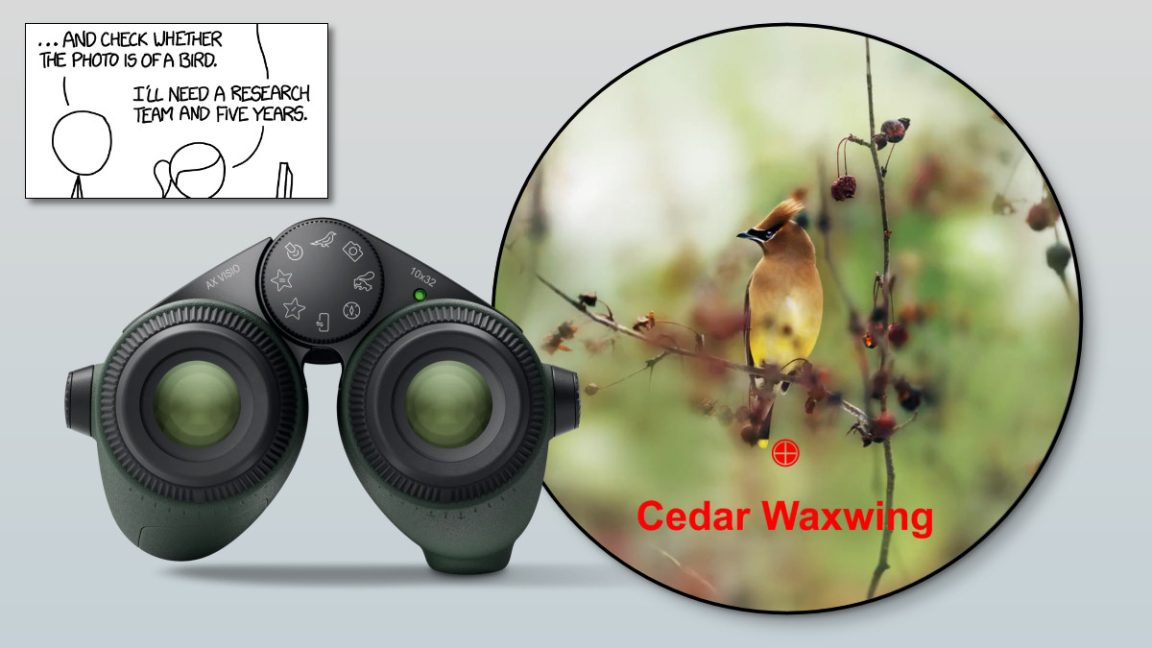
AI-powered binoculars are poised to change birding. Devices demonstrated at CES in January 2026 use onboard cameras and algorithms to identify birds in real-time. Point the binoculars at a bird, and the AI identifies its species.
These binoculars can also record observation data—location, time, species—and share it with online birding communities. This contributes to citizen science initiatives and helps researchers track bird populations. The Wired article noted the potential for these tools to make bird identification easier for beginners.
Current AI binoculars have limitations. They are often expensive, accuracy can be imperfect, and battery life is a concern. Algorithms are evolving, and performance varies with lighting and bird angle. Despite these challenges, the potential benefits are significant, and advancements are expected.
Beyond the Big Names: Standout Options
undefined surprisingly good performance in a very compact package. They’re ideal for travel or for birders who prefer a lightweight option.
Another standout is the Maven C.1 8x42 ($399.99). Though nearing the $500 limit, Maven binoculars are known for their exceptional build quality and optical performance. They’re a favorite among serious birders who demand the best. The Maven C.1 offers a very smooth focus wheel and a bright, clear image.
Finally, the Nikon Monarch 5 8x42 ($329.95) consistently receives positive reviews for its excellent value and optical quality. It's a reliable and durable option that's well-suited for a wide range of birding situations.

Nikon Monarch M5 8x42 (16767) Black Binoculars Bundle with Lens Pen, and Cleaning Cloth, Compact High Powered Binoculars for Adults for Hunting, Bird Watching, and Hiking Essentials, Lightweight
- ED (Extra-low Dispersion) glass for superior color fidelity and reduced chromatic aberration
- Fully multi-coated lenses for bright, clear images
- Waterproof and fog-proof construction (nitrogen-filled)
The Nikon Monarch M5 8x42 is a fantastic all-around performer that consistently earns top marks from birders. It delivers crisp, bright views and is built to withstand the elements, all while staying comfortably within our under-$500 budget.
View on Amazon →As an Amazon Associate I earn from qualifying purchases.
Caring for Your Binoculars
Proper care and maintenance will significantly extend the life of your binoculars and ensure optimal performance. The most important thing is to keep the lenses clean. Use a dedicated lens cleaning cloth and cleaning solution – avoid using harsh chemicals or abrasive materials.
Protect your binoculars from moisture and impact. If you’re birding in wet conditions, consider using a rain cover. Store your binoculars in a protective case when not in use. Avoid dropping them or exposing them to extreme temperatures. Regular cleaning and careful storage are the best investments you can make.
For lens cleaning, I recommend the Zeiss Lens Cleaning Kit ($25), which includes a microfiber cloth and cleaning fluid. For a durable protective case, the Pelican MicroSport Case ($30) is a great option.
Binocular FAQs: Quick Answers
Here are some frequently asked questions about binoculars for birding:
Q: What does 8x42 mean? A: 8x refers to the magnification (the image is magnified eight times), and 42 refers to the diameter of the objective lens in millimeters.
Q: Are waterproof binoculars necessary? A: Waterproof binoculars are highly recommended, especially if you plan to bird in wet conditions. They’ll also protect against fogging.
Q: How do I adjust the focus? A: Most binoculars have a central focus wheel. Adjust it until the image is sharp. You may also need to adjust the diopter (the ring on one of the eyepieces) to compensate for differences in your vision.
Q: What’s the difference between BAK4 and BK7 prisms? A: BAK4 prisms are generally considered superior to BK7 prisms. They provide a brighter, clearer image with better edge sharpness.
Q: Should I prioritize magnification or field of view? A: For birding, a wider field of view is often more important than high magnification. It makes it easier to locate and follow birds.

No comments yet. Be the first to share your thoughts!