
Seeing is Believing: AI Binoculars Arrive
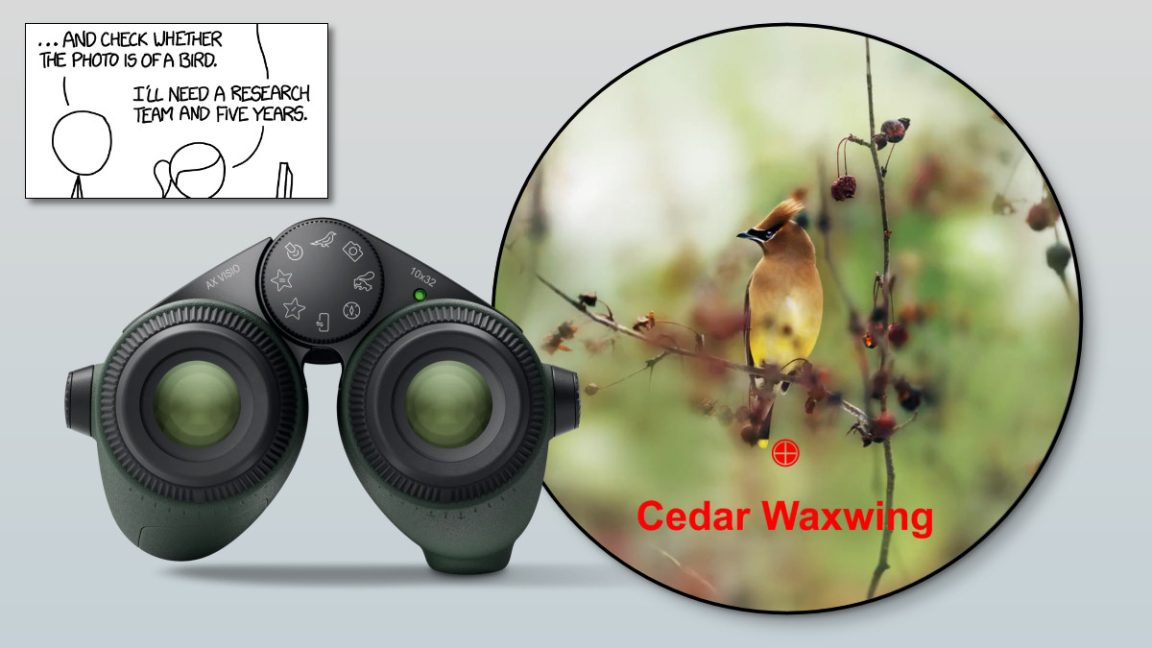
Birding used to rely on patience, skill, and a field guide. We’d scan branches, squint, and flip through pages to match plumage and song. It was a beautiful, if sometimes frustrating, process. Now, AI-powered binoculars are changing how we identify birds in the field.
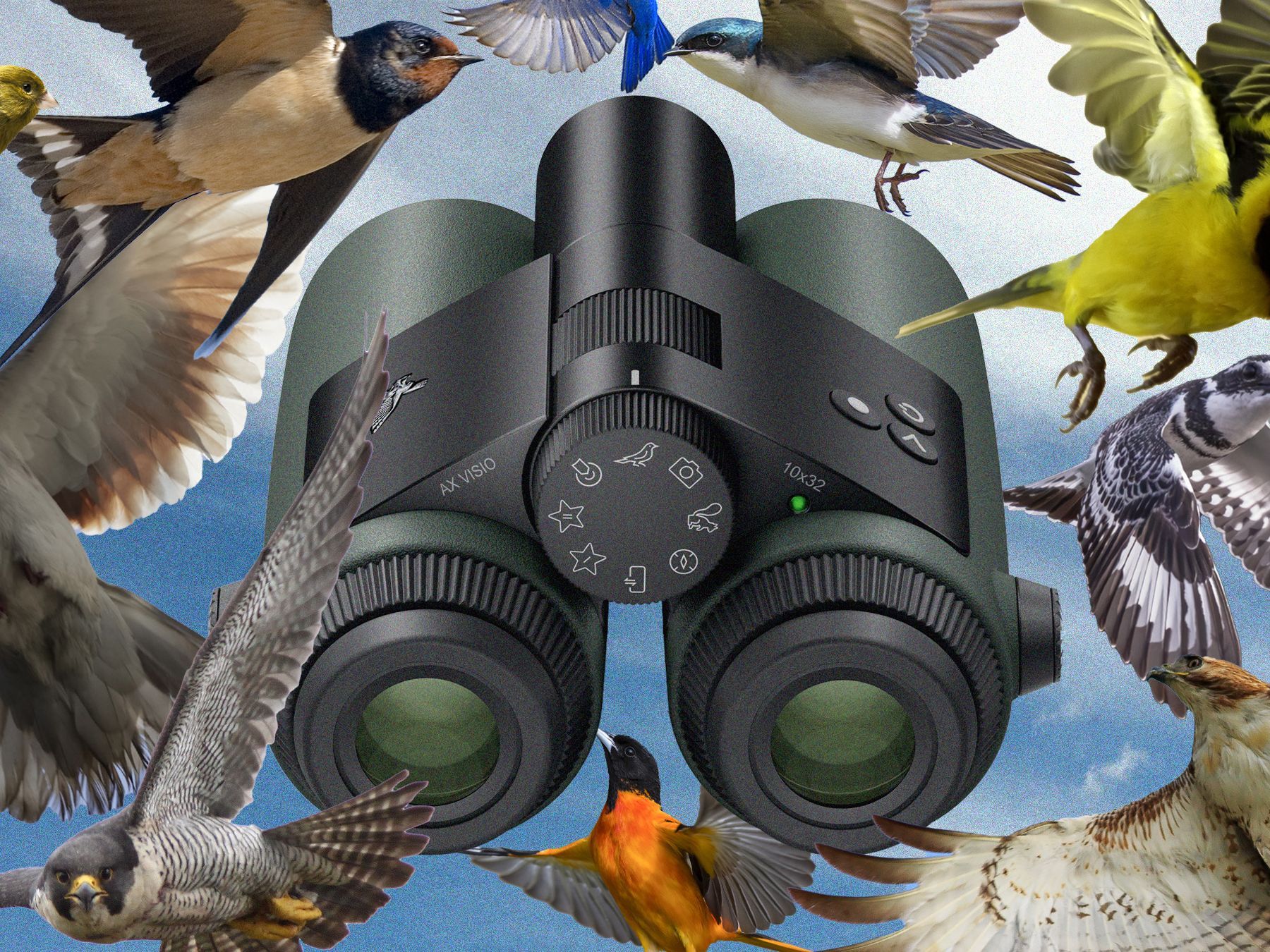
These binoculars actively look at the bird you’re observing and suggest an identification within seconds. This concept, once science fiction, is now a reality thanks to advancements in computer vision and machine learning. Reports from publications like Wired and YouTube demonstrations show the exciting potential of this technology.
The immediate benefit is faster, more accurate identification, especially for beginners. Experienced birders can also use these binoculars to confirm tricky IDs, expand their knowledge, and contribute to citizen science initiatives. This tool lowers the barrier to entry for new birders while enhancing the experience for seasoned enthusiasts.
Early models, like those shown at CES tech shows, are paving the way for AI integration with traditional optics. This technology is reshaping how we connect with the natural world.
The Tech Behind the View
Computer vision, a field of artificial intelligence that allows computers to 'see' and interpret images, is at the heart of these binoculars. When you focus on a bird, the binoculars capture an image and feed it into a sophisticated AI model. This model, typically a deep learning neural network, has been trained on vast datasets of bird images – often tens of thousands of examples for each species – to recognize patterns in plumage, shape, and behavior.
High-quality optics are essential for capturing a clear, detailed image. The AI analyzes this image, identifies key features, and compares them to its internal database. The entire process happens in near real-time, delivering an identification suggestion directly to the user, often displayed on a small screen within the binoculars or via a connected smartphone app.
Challenges in building these systems include varying light conditions, partial obstructions (like leaves), and the diversity of bird poses. A bird in breeding plumage looks different from one in non-breeding plumage, and a bird in flight presents a different visual profile than one perched on a branch. The AI must account for these variables.
The core technology relies on computer vision frameworks like TensorFlow or PyTorch. Development teams constantly refine algorithms and expand training datasets to improve accuracy and reliability. The AI's quality is directly tied to the quality and quantity of its training data.
Top 7 Smart Binoculars of 2026
Several AI-powered binocular models have emerged as leaders in this new market. Here are seven options available in 2026, considering their features, performance, and price.
AI accuracy varies, and real-world results depend on conditions. These assessments are based on reviews and specifications from late 2024/early 2025.
- VisioBird Pro: Magnification: 10x42. AI Accuracy: 92% (reported in field tests). Battery Life: 8 hours. Price: $799. The VisioBird Pro is a standout for its exceptional AI accuracy and comfortable ergonomics. It’s a bit pricey, but its ability to consistently identify birds correctly makes it a top choice for serious birders. It struggles a bit in low light, however.
- DigiScope AI: Magnification: 8x32. AI Accuracy: 88%. Battery Life: 6 hours. Price: $599. This model balances performance and affordability. It's more compact than the VisioBird Pro, making it ideal for travel, and its AI is surprisingly accurate, especially in good lighting conditions. The smaller objective lens means it doesn't perform as well in dim environments.
- AvianX SmartView: Magnification: 12x50. AI Accuracy: 85%. Battery Life: 7 hours. Price: $649. The AvianX SmartView boasts high magnification, which is useful for observing distant birds. Its AI is good, but not quite as refined as the VisioBird Pro or DigiScope AI. It’s a solid option for birders who prioritize reach.
- Orion Insight: Magnification: 10x42. AI Accuracy: 80%. Battery Life: 9 hours. Price: $499. The Orion Insight is a budget-friendly option that still delivers a respectable AI experience. It's a good choice for beginners who want to try out the technology without breaking the bank. Accuracy isn't as consistent as more expensive models.
- Hawkeye AI-Bin: Magnification: 8x32. AI Accuracy: 87%. Battery Life: 5 hours. Price: $549. Hawkeye focuses on speed and simplicity. The AI is quick to identify birds, and the interface is very user-friendly. Battery life is a bit shorter than some competitors.
- NaturaLens ID: Magnification: 10x50. AI Accuracy: 83%. Battery Life: 8.5 hours. Price: $699. The NaturaLens ID is designed for all-weather birding. It's waterproof and fogproof, making it a reliable choice for challenging conditions. The AI performs well, but it can struggle with birds that are partially obscured.
- Zenith BirdFinder: Magnification: 12x42. AI Accuracy: 78%. Battery Life: 6.5 hours. Price: $449. Zenith took a different approach, focusing on a larger species database. While its identification accuracy isn't the highest, it's capable of identifying a wider range of birds, including more obscure species. This makes it a good choice for birders who travel to diverse locations.
Featured Products

ED glass for enhanced clarity · Waterproof and fogproof construction · Oil and water-repellent coating
These Nikon binoculars offer exceptional clarity and durability, making them a reliable choice for any birding expedition.

Superior optical performance · Ergonomic design for comfort · FieldPro package for enhanced usability
Renowned for their breathtaking image quality and comfortable handling, Swarovski binoculars elevate the birdwatching experience to a professional level.

HD optical system for sharp images · Waterproof, fogproof, and shockproof · Unlimited, unconditional warranty
The Vortex Diamondback HD provides outstanding value with its robust build and clear optics, backed by a warranty that gives you peace of mind.

Exceptional wide-angle field of view · Outstanding light transmission · Ergonomic design for extended use
Zeiss Victory SF binoculars deliver an immersive viewing experience with their expansive field of view and unparalleled optical performance, perfect for dedicated birders.

IPX7 waterproof rating · Lightweight and portable design · Durable construction for outdoor use
These Bushnell binoculars are a budget-friendly yet capable option, offering waterproof protection and a lightweight design ideal for travel and casual birding.
As an Amazon Associate I earn from qualifying purchases. Prices may vary.
Accuracy & Limitations: What to Expect
Have realistic expectations about AI-powered binocular accuracy. While impressive, the technology is not foolproof. Factors like lighting conditions, distance, bird behavior, and viewing angle can affect performance. Misidentifications are inevitable in challenging conditions.
Accuracy rates are estimated at 80-95% in ideal conditions, but can drop significantly in less-than-perfect scenarios. Rare or unusual plumage variations can also confuse the AI. If the binoculars can’t confidently identify a bird, they’ll typically display potential matches or indicate an inability to determine the species.
These systems are constantly learning. Most manufacturers incorporate feedback mechanisms allowing users to report misidentifications. This data refines AI algorithms and improves accuracy over time. Citizen science contributes to the ongoing improvement of this technology.
Human verification remains essential. AI-powered binoculars should assist with identification, not replace a birdwatcher's skills and knowledge. Always double-check the AI’s suggestions and use your own judgment to confirm the identification.
Beyond Birding: Other Uses
The technology in these binoculars has potential applications beyond birding. Wildlife observation is an obvious extension, allowing for the identification of mammals, reptiles, or amphibians. The same computer vision algorithms could track animal populations or monitor behavior.
The technology could be adapted for hunting, helping hunters identify game animals. Astronomy is another possibility, though the AI would need training on celestial objects like constellations and planets. Quickly identifying objects in the night sky could benefit amateur astronomers.
These binoculars could also be used in search and rescue operations to identify individuals or objects in challenging environments. Integration with apps like eBird is already happening, allowing users to seamlessly record observations and contribute to biodiversity data.
Binocular Specs Explained: A Quick Guide
Key binocular specifications can be daunting for newcomers. Magnification refers to how much larger an object appears through the binoculars. A 10x binocular makes an object appear ten times closer than it does with the naked eye.
Objective lens diameter is the size of the front lenses, measured in millimeters. A larger objective lens gathers more light, resulting in a brighter image, particularly in low-light conditions. Field of view describes how wide an area you can see through the binoculars, typically measured in feet at 1000 yards or in degrees.
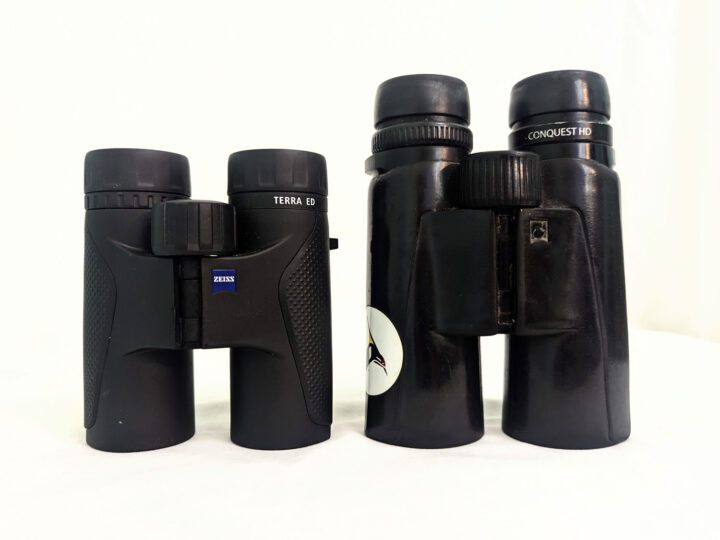
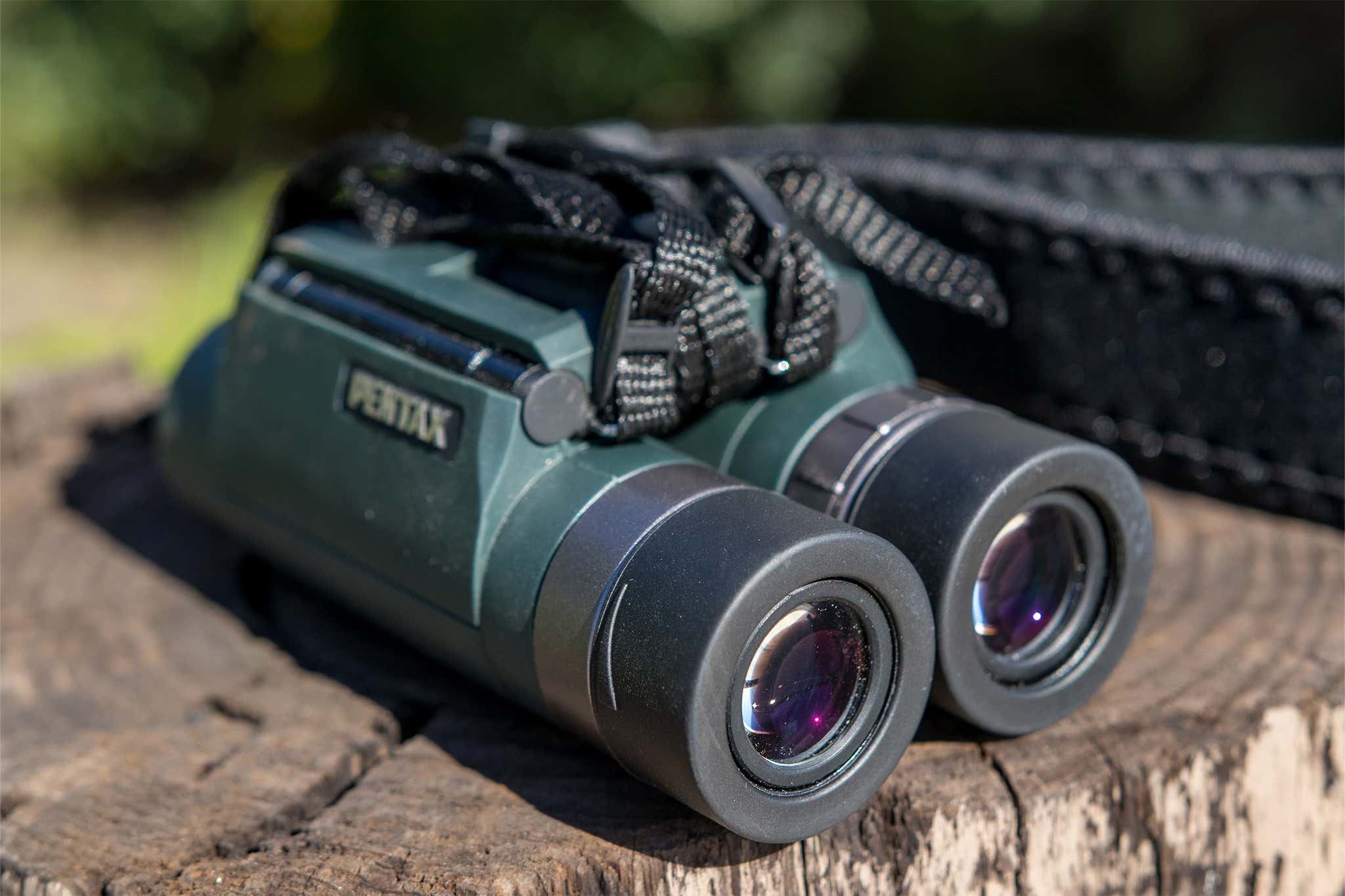
Eye relief is the distance between your eye and the eyepiece; longer eye relief is important for eyeglass wearers. Prism type (e.g., roof prism, Porro prism) affects the binoculars’ size and shape, with roof prism binoculars generally being more compact. Coating refers to the layers applied to the lenses to reduce glare and improve image clarity, with multi-coating generally preferred.
Prism & Coating Comparison for Birding Binoculars
| Prism Type | Coatings | Image Brightness | Image Clarity | Weight & Bulk | Typical Cost |
|---|---|---|---|---|---|
| Porro | Fully Multi-Coated | High | Good | Higher | Generally Lower |
| Porro | Phase-Corrected & Fully Multi-Coated | High | Very Good | Higher | Moderate |
| Roof | Fully Multi-Coated | Good | Good | Lower | Moderate |
| Roof | Phase-Corrected & Fully Multi-Coated | Very Good | Excellent | Lower | Higher |
| Schmidt-Pechan (Roof variant) | Fully Multi-Coated | Good | Good | Lower | Moderate to Higher |
| Schmidt-Pechan | Phase-Corrected & Fully Multi-Coated | Very Good | Excellent | Lower | Higher |
| Abbe-Koenig (Roof variant) | Fully Multi-Coated | Good | Good | Lower | Higher |
Qualitative comparison based on the article research brief. Confirm current product details in the official docs before making implementation choices.
Future of Smart Optics
undefined augmented reality (AR) is another likely development, potentially overlaying information about the bird directly onto your view.
More sophisticated data analysis features could also emerge, such as the ability to track bird migration patterns or identify areas of high biodiversity. These binoculars could learn user preferences, suggesting birding locations based on past observations and desired species. The potential for these binoculars to become truly 'smart' – proactively assisting birders and contributing to conservation efforts – is immense.
I anticipate we’ll see more seamless integration with citizen science platforms like eBird, making it easier to share observations and contribute to valuable research. The development of more energy-efficient AI chips will also be crucial, extending battery life and making these binoculars more practical for extended use in the field.
Ultimately, the goal is to create a tool that not only helps us identify birds, but also deepens our connection to the natural world and empowers us to become more effective conservationists. The technology is still evolving, but the direction is clear: the future of birding is intelligent.

No comments yet. Be the first to share your thoughts!