
Seeing Beyond: AI Binoculars Emerge
For decades, binoculars have been passive tools. You look through them to see further. That’s it. But a new generation of binoculars is changing this, integrating artificial intelligence to actively assist the observer. These are smart binoculars, designed to identify what you’re looking at and provide information on the fly.
Traditional binoculars demand knowledge and skill. Knowing constellations, recognizing bird species, or holding them steady for a clear view are all learned abilities. AI binoculars aim to lower that barrier, offering real-time assistance and enriching the experience. The technology augments expertise, making observation accessible to everyone.
This shift is happening quickly. What started as a concept is now reality, with manufacturers like Unistellar and Swarovski leading. The idea is simple: combine high-quality optics with AI algorithms to transform passive observation into an interactive and informative experience. Forget field guides or star charts—the information is presented directly to you.

What AI Actually *Does* Inside Binoculars
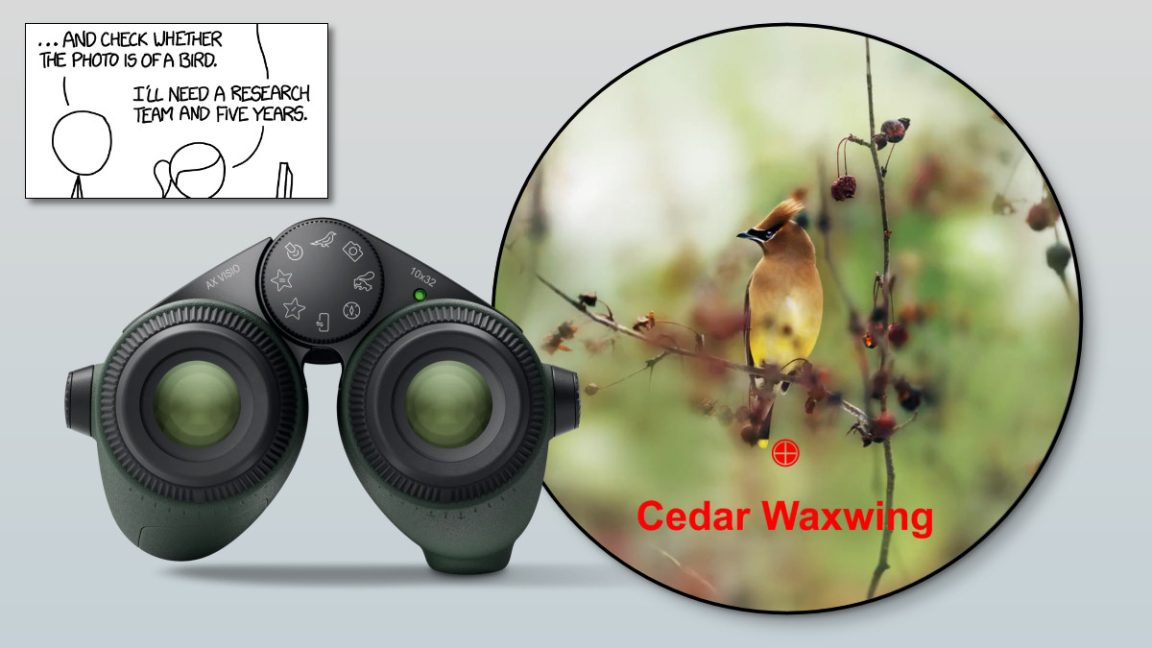
The AI within these binoculars is a collection of capabilities. Object recognition is central. Point the binoculars at a bird, and the AI attempts to identify the species. Look at the night sky, and it can pinpoint constellations, planets, and even deep-sky objects.
Automated tracking is another element. Once an object is identified, the AI can lock onto it and compensate for movement, keeping it centered in your field of view. This is useful for observing fast-moving subjects like birds in flight, or tracking celestial bodies as the Earth rotates. AI-powered image stabilization further enhances the viewing experience by reducing blur.
Some systems explore sound recognition. Imagine binoculars that can identify bird songs, adding another layer of information. The user experience is key. The AI operates in the background, providing information without being intrusive. It enhances your natural curiosity, rather than overwhelming you with data. The goal is to help you understand what you’re seeing.
Swarovski and Unistellar: Current Leaders
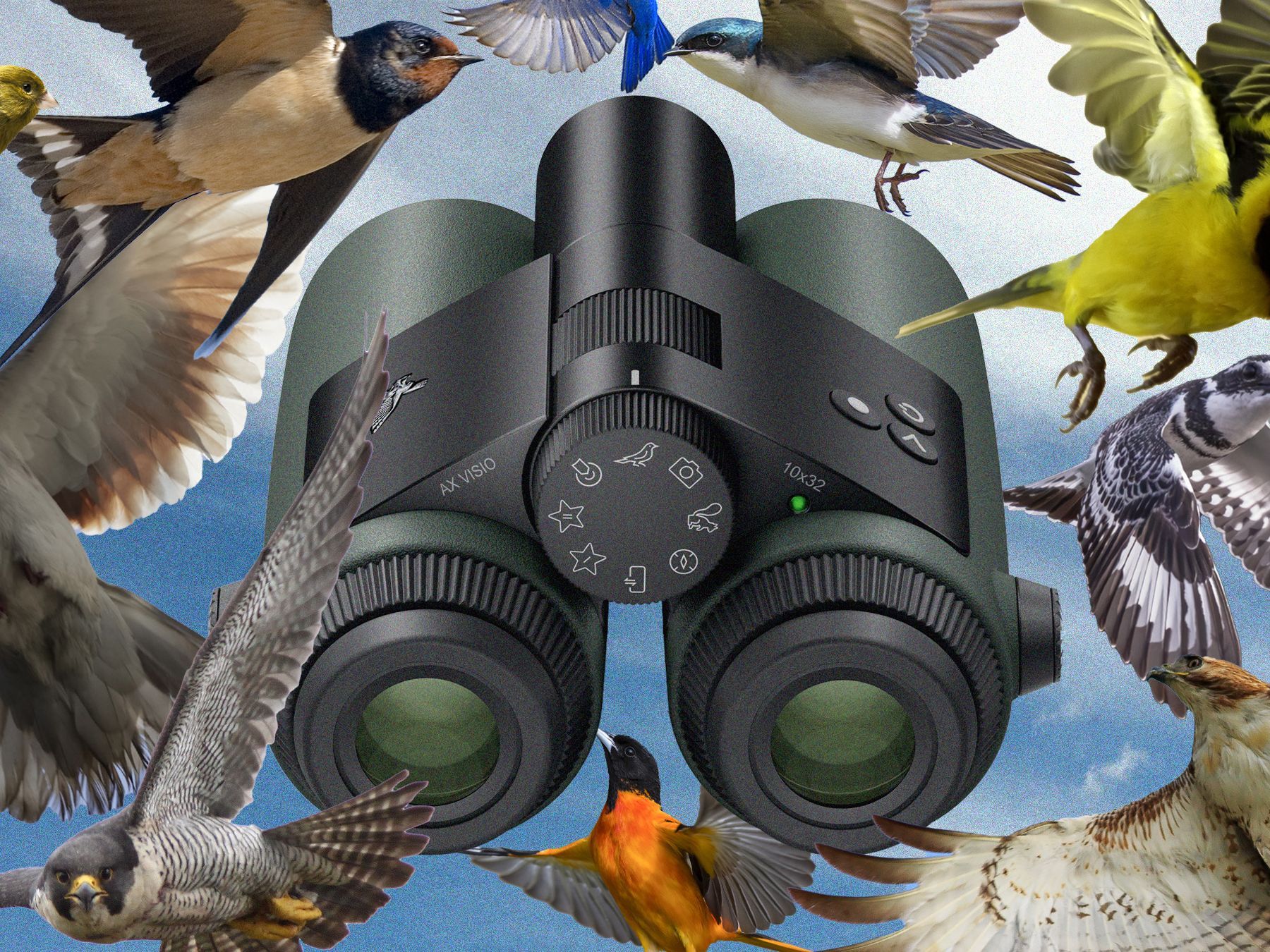
Two companies stand out in smart binoculars: Swarovski and Unistellar. Swarovski, a long-established optics leader, has taken a measured approach with the AX Visio. These binoculars prioritize optical excellence, then layer in smart technology. They’re expensive, starting around $2,800, but deliver exceptional image quality with features like object recognition and location tagging.
Unistellar has focused squarely on the AI experience with their Envision binoculars. Priced around $699, they aim for an accessible price point while offering impressive capabilities. The Envision binoculars excel at augmented reality, overlaying information about constellations and planets directly onto your view. They also emphasize citizen science, allowing users to contribute data to research projects.
The difference lies in their target audience. Swarovski appeals to seasoned birders and wildlife observers who demand the highest optical performance and appreciate subtle AI integration. Unistellar targets a broader audience, including astronomy enthusiasts and casual observers eager to explore the night sky with intelligent assistance. Each company has a distinct philosophy, but both are pushing the boundaries of what binoculars can do.
Here’s a quick comparison:
- Swarovski AX Visio: Premium optics, subtle AI integration, high price ($2,800+), geared towards experienced observers.
- Unistellar Envision: Accessible price ($699), strong augmented reality features, focus on citizen science, wider appeal.
Swarovski AX Visio vs. Unistellar Envision: AI Feature Comparison (2026)
| Feature | Swarovski AX Visio | Unistellar Envision |
|---|---|---|
| Object Recognition | Focused on bird and animal identification; excels in common species. | Broader object recognition, including celestial objects; strong for astronomy and general wildlife. |
| Tracking | Smooth, stabilized tracking of moving subjects; designed for following birds in flight. | Automated tracking of identified objects; particularly effective for long-duration observation of stars and planets. |
| Image Stabilization | Exceptional optical image stabilization; minimizes shake for clear viewing at high magnification. | Digital image stabilization combined with optical elements; effective, but may introduce some image processing artifacts. |
| Connectivity | Streamlined smartphone integration via Bluetooth; data transfer for observation logs and sharing. | Integrated app with extensive database and community features; facilitates sharing observations and participating in citizen science projects. |
| Field of View | Wider field of view, advantageous for locating and observing subjects in dynamic environments. | Narrower field of view, optimized for detailed observation of specific targets. |
| User Interface | Intuitive controls integrated into the binocular body; designed for quick adjustments in the field. | Heavily app-dependent; relies on a smartphone or tablet for full functionality and control. |
| Power Source | Rechargeable battery with extended life; designed for all-day use. | Rechargeable battery; runtime may be shorter with intensive AI processing and screen use. |
Qualitative comparison based on the article research brief. Confirm current product details in the official docs before making implementation choices.
Birding Reimagined: AI for Identification
For birders, AI binoculars represent a significant change. Identifying birds, especially in challenging conditions or with subtle plumage variations, can be difficult. AI can speed up this process, providing real-time suggestions based on your location, the time of year, and the bird's appearance.
The accuracy of these systems is improving rapidly. While no AI is perfect, current algorithms can correctly identify a significant percentage of common bird species. These systems are not foolproof. Challenging lighting conditions, obscured views, and rare species can still pose problems. The AI should assist identification, not replace careful observation and critical thinking.
The benefits extend beyond identification. AI can also provide information about migration patterns, habitat preferences, and bird songs. This can deepen your understanding of the birds you’re observing and enhance your birding experience. Demonstrations show binoculars identifying a bird and pulling up relevant information from online databases, providing an immersive learning experience.
Astronomy's New Ally: Beyond Manual Star Hopping
For astronomy enthusiasts, finding and tracking celestial objects has been a challenge. Manual star hopping, using star charts and telescopes, requires skill and patience. AI binoculars simplify this process. Point the binoculars at the sky, and the AI can identify constellations, planets, and even faint deep-sky objects like galaxies and nebulae.
Automated tracking is particularly valuable for astronomy. It compensates for the Earth’s rotation, keeping the object centered in your field of view, allowing for extended observation. This is a benefit for both amateur and experienced astronomers, making it easier to study celestial objects in detail.
The potential for citizen science is exciting. Unistellar encourages users to contribute their observations to research projects. By collecting data from a network of binoculars, scientists can gain new insights into the universe and accelerate discovery. This lowers the barrier to entry for contributing to astronomical research.
Connectivity and Data: Sharing Your Observations
Smart binoculars are connected devices. They typically feature Wi-Fi and Bluetooth connectivity, allowing them to sync with smartphones and other devices. This enables features like remote control, data transfer, and software updates. Sharing your observations with others is also a benefit.
Users can upload sightings to online databases, contribute to citizen science projects, and share photos and videos with friends and family. This fosters community and allows for collaborative exploration. The Unistellar app, for example, lets users share observations with a global network of fellow astronomers.
Connectivity also raises privacy concerns. Be aware of what data is collected and how it’s used. Reputable manufacturers should have clear privacy policies and allow users to control data sharing preferences. Understanding these considerations is important before investing in these technologies.
The 2026 Outlook: What to Expect
The next few years will likely see advancements in AI binoculars. Expect more sophisticated AI algorithms capable of identifying a wider range of objects with greater accuracy. Improvements in sensor technology will also play a role, leading to better image quality and lower noise levels.
Integration with augmented reality (AR) and virtual reality (VR) technologies is a likely trend. Imagine binoculars that overlay detailed information about constellations onto your view in real-time, or that allow you to virtually explore distant galaxies. The possibilities are exciting.
I anticipate that the price of these binoculars will come down as the technology becomes more mainstream. Competition will drive innovation and affordability. We may also see the emergence of new features, such as improved sound recognition and the ability to record and analyze environmental data. The lines between binoculars, telescopes, and smart devices will continue to blur.
Ultimately, the future of wildlife observation is undoubtedly intertwined with artificial intelligence. These technologies are not just about making observation easier; they're about unlocking new levels of understanding and appreciation for the world around us.
No comments yet. Be the first to share your thoughts!