
First Light: Why Binoculars for Astronomy?
Looking up at the night sky holds a simple magic, a sense of wonder many of us recall from childhood. You don't need expensive equipment to recapture that feeling; a good pair of binoculars is often the perfect first step into amateur astronomy.
While many think of telescopes for stargazing, binoculars offer advantages. They are more portable than most telescopes, easy to take to dark sky locations, and intuitive to use—no complicated setup or alignment is needed. You simply point and observe. Binoculars also provide a wider field of view than telescopes, letting you see larger sky areas at once.
With binoculars, you can see craters and mountains on the moon in sharp detail. Jupiter’s four largest moons appear as tiny points of light orbiting the planet. Under dark skies, you might glimpse brighter nebulae, like the Orion Nebula, as faint, fuzzy patches. Views are rewarding for a small investment.
Magnification Isn't Everything
Higher magnification isn't always better for binoculars. While it makes objects appear larger, it also magnifies any instability. A shaky image at high magnification is less enjoyable than a stable, clear view at lower power. I learned this when I bought a pair of 20x80 binoculars that were almost impossible to hold steady.
The key to good astronomical viewing is aperture—the diameter of the objective lenses. Aperture determines how much light the binoculars gather. A larger aperture means a brighter image and more visible detail. A 70mm or 80mm aperture is ideal for astronomy.
Another concept is the exit pupil, the diameter of the light beam exiting the eyepieces. It's calculated by dividing the objective lens diameter by the magnification. A larger exit pupil (around 7mm) is better for low-light viewing, allowing more light into your eye. However, your pupil dilates to a maximum of about 5-6mm, so an exit pupil larger than that is wasted. Look for binoculars with an exit pupil between 5mm and 7mm.
Key Specs to Understand
Beyond magnification and aperture, other specifications influence binocular performance. Field of view (FOV) is measured in degrees and often in feet at 1000 yards. A wider FOV makes locating and tracking objects easier. Eye relief is the distance between the eyepiece and your eye, important for eyeglass wearers who need enough to see the full image without vignetting.
Lens coatings are critical. Fully multi-coated lenses have multiple coating layers on all glass surfaces, minimizing light loss and maximizing brightness and contrast. Coated lenses have a single layer, while others have some surfaces coated and others not. Fully multi-coated is best for astronomy.
Binoculars come in two main prism types: Porro and Roof. Porro prisms have a traditional, wider, offset design, generally offering better depth perception and affordability. Roof prisms are more compact and streamlined but can be more expensive to manufacture. Both types can deliver excellent performance; the prism type isn't necessarily a deal-breaker.
Top Astronomy Binoculars Under $500 (2026)
Finding the right balance of features and price is key when shopping for astronomy binoculars. Here are excellent options available in 2026, all under $500. Prices are approximate and can vary.
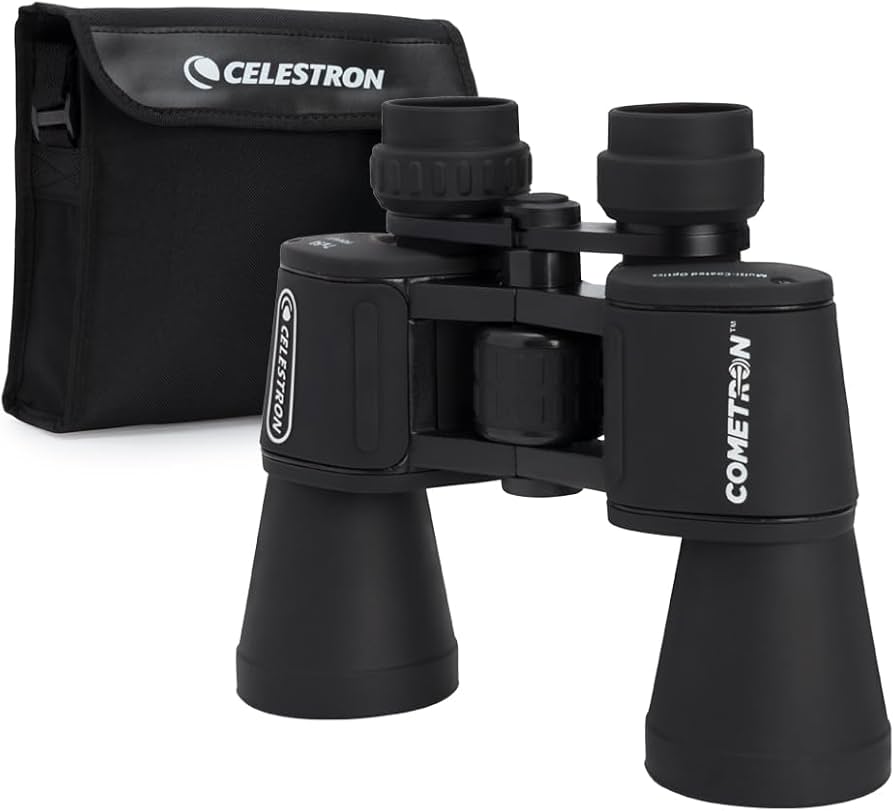
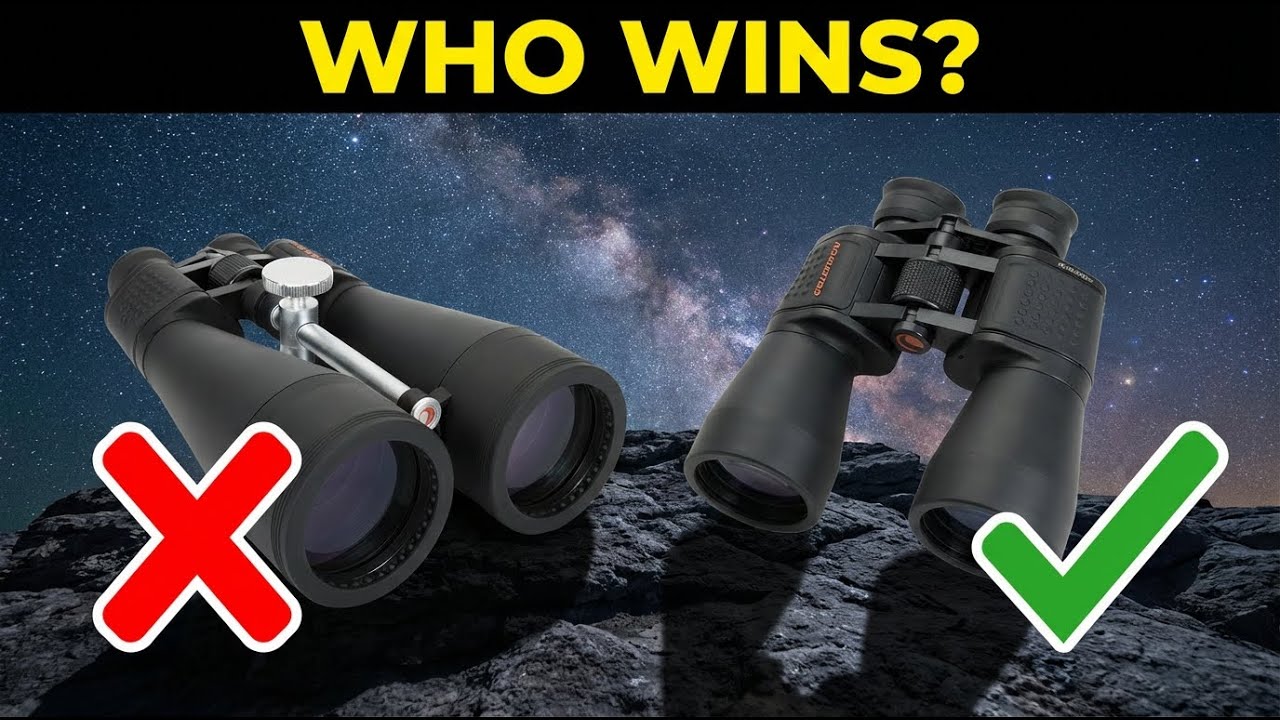
Celestron Skymaster 25x70: A classic choice for beginner astronomers, offering a good balance of magnification and aperture at around $200. They are relatively lightweight and easy to handle, but image stability can be an issue at 25x. Best for lunar and planetary viewing.
Nikon Aculon A211 10x50: A versatile binocular that performs well for daytime and nighttime viewing. At about $180, they are a great value. The 10x magnification provides a stable image, and the 50mm objective lenses gather plenty of light. Excellent for wide-field views of star clusters and the Milky Way.
Orion GiantView 10x50 Waterproof: Priced around $250, these binoculars are a step up in build quality and optical performance. They are fully multi-coated and waterproof, suitable for use in various conditions. They offer a bright, clear image with good contrast.
Vortex Diamondback HD 10x42: While not specifically marketed for astronomy, the Vortex Diamondback HD (around $300) is highly regarded for its sharp optics and excellent build quality. It is a good choice if you want a binocular that performs well in all situations, not just for stargazing.
Leupold BX-2 Alpine HD 10x42: A premium option within the $500 price range (approximately $400). Leupold is known for high-quality optics, and the BX-2 Alpine HD delivers a bright, clear image with excellent color rendition. They are also lightweight and durable.
undefined larger aperture for detailed views of the moon and planets (around $220). They are a bit heavier and require a tripod for stable viewing.
Featured Products

ED glass for enhanced clarity · Waterproof and fogproof construction · Wide field of view for expansive stargazing
These binoculars offer excellent optical performance and features suitable for exploring the night sky without breaking the bank.

ED Objective Lenses for sharp, clear views · Fully Broadband Multi-Coated Optics · Compact and lightweight design
These binoculars offer excellent optical performance and features suitable for exploring the night sky without breaking the bank.

Multi-Coated Optics for bright images · Porro Prism design for a classic feel · Great value for beginners
These binoculars offer excellent optical performance and features suitable for exploring the night sky without breaking the bank.

IPX7 Waterproof rating · Lightweight and durable · 10x magnification for detailed views
These binoculars offer excellent optical performance and features suitable for exploring the night sky without breaking the bank.

XD (Extra-low Dispersion) glass for superior color fidelity · 42mm objective lenses for good light gathering · Excellent optical quality for the price
These binoculars offer excellent optical performance and features suitable for exploring the night sky without breaking the bank.
As an Amazon Associate I earn from qualifying purchases. Prices may vary.
Unistellar's Smart Binoculars: A New Breed?
Unistellar is pushing the boundaries of what binoculars can do with their Envision smart binoculars. These aren't your traditional optics. They integrate with a smartphone app, providing features like automatic object recognition, guided tours of the night sky, and the ability to share your observations with others.
The Envision binoculars use a digital display to enhance the image and provide additional information about the objects you’re viewing. They can even stack images to increase brightness and reveal faint details. While the price point (typically over $500) is higher than traditional binoculars, they offer a unique and engaging stargazing experience.
I'm intrigued by the potential of smart binoculars. They could be a great way to introduce newcomers to astronomy and make the hobby more accessible. However, it’s important to remember that they rely on technology, and battery life and app functionality are important considerations.

Odyssey - UNISTELLAR Smart Telescope (no Eyepiece), 85mm f/3.9 (320mm) Digital & Computerized, App-Controlled Motorized Alt-Az, Enhanced Vision, RAW/FITS Export, 64GB, Tripod, 5h Battery (Black)
- App-controlled smart telescope with automated object finding
- Enhanced Vision technology for brighter, clearer views of deep-sky objects
- RAW and FITS file export for astrophotography enthusiasts
- Built-in 64GB storage and 5-hour battery life for extended observation sessions
While the Unistellar Odyssey is an investment, its advanced smart features and enhanced vision technology provide an unparalleled, user-friendly stargazing experience that justifies the price for serious budget-conscious astronomers.
View on Amazon →As an Amazon Associate I earn from qualifying purchases.
Beyond the Specs: Comfort and Accessories
Don't underestimate the importance of comfort. You'll likely be holding your binoculars for extended periods, so a comfortable neck strap is essential. A wide, padded strap will distribute the weight evenly and prevent neck strain. I personally recommend the Vortex Optics Wide Strap—it’s made a huge difference for me.
A tripod adapter is another must-have accessory, especially if you’re using binoculars with high magnification. Even a slight shake can make it difficult to see details. Dew shields are also useful, as they prevent condensation from forming on the objective lenses, which can obscure your view.
Other helpful accessories include a star chart or planetarium app to help you locate objects, and a red-light flashlight. Red light preserves your night vision, unlike white light. A good star chart will make the night sky feel less intimidating and more accessible.
Troubleshooting Common Issues
Collimation, or the alignment of the optics, can sometimes drift out of alignment, causing blurry or double images. Some binoculars allow you to adjust the collimation yourself, while others may require professional servicing. Fogging can occur when there’s a temperature difference between the binoculars and the surrounding air. Store your binoculars in a cool, dry place to prevent this.
Cleaning your binoculars requires care. Use a microfiber cloth and a lens cleaning solution specifically designed for optics. Avoid harsh chemicals or abrasive materials, as these can damage the coatings. Gently wipe the lenses in a circular motion.
Regular maintenance will help keep your binoculars in good condition for years to come. Taking the time to clean and care for your equipment will ensure that you continue to enjoy clear, bright views of the night sky.
Binocular Standouts: Worth a Second Look
If I had to pick just two binoculars from the list above, I’d recommend the Nikon Aculon A211 10x50 and the Leupold BX-2 Alpine HD 10x42. The Nikon Aculon offers an exceptional value for the price, providing a bright, clear image and a comfortable viewing experience. It’s a great all-around binocular for both beginners and experienced stargazers.
The Leupold BX-2 Alpine HD is a step up in terms of optical quality and build quality. The image is incredibly sharp and detailed, and the binoculars feel solid and well-made. While they’re more expensive than the Nikon Aculon, the extra investment is worth it if you’re serious about astronomy.
Ultimately, the best binoculars for you will depend on your individual needs and budget. But both of these models represent excellent choices for anyone looking to explore the wonders of the night sky.
No comments yet. Be the first to share your thoughts!