
Binoculars budget
Best Birding Binoculars works best when the purchase path is explicit. Verify the source, compare the offer against real alternatives, check the total cost, and confirm what happens after payment before you decide. After each comparison, write down the one risk that would change your mind. If the seller, condition, support, warranty, shipping, or upkeep still feels uncertain, resolve that question before moving to checkout.
The simplest way to use this section is to verify the seller, compare the total cost, and resolve the biggest risk before you commit.
Shortlist real options
Spring migration brings birds close enough to scan, but it also demands gear that won't weigh you down during long hours in the field. Choosing the right binoculars comes down to three factors: magnification, eye relief, and build quality. For most birders, 8x42 optics offer the best balance of stability and light gathering, while 10x42 models provide extra reach for distant waterfowl or raptors.
The market has shifted significantly toward waterproof, nitrogen-purged bodies that withstand sudden weather changes. Brands like Vortex, Nikon, and Swarovski dominate the conversation, but the "best" pair depends on whether you prioritize portability, optical sharpness, or budget. Below, we compare the strongest contenders currently available, focusing on real-world performance rather than abstract specifications.
| Model | Mag/Obj | Weight (oz) | Best For |
|---|---|---|---|
| Vortex Viper HD | 8x42 | 19.8 | All-around birding |
| Nikon Monarch M5 | 8x42 | 21.6 | Budget-conscious buyers |
| Swarovski EL Range | 8x42 | 20.7 | Premium optical clarity |
| Zeiss Victory SF | 8x42 | 21.1 | Low-light conditions |
The Vortex Viper HD stands out for its edge-to-edge sharpness and lifetime warranty, making it a safe bet for beginners and veterans alike. Nikon’s Monarch M5 offers similar performance at a lower price point, though the body feels slightly heavier. For those willing to invest in premium glass, the Swarovski EL Range provides exceptional color fidelity, while Zeiss’s Victory SF excels in dim forest canopies where light is scarce. Each option serves a specific niche, so consider how often you’ll carry the binoculars and what kind of lighting conditions you typically encounter.


As an Amazon Associate, we may earn from qualifying purchases.
When evaluating these options, pay attention to eye relief—especially if you wear glasses. Most modern binoculars offer at least 15mm of eye relief, but models like the Zeiss Victory SF are designed with long eye relief in mind, ensuring a full field of view even for spectacle wearers. Additionally, consider the weight distribution; a pair that feels unbalanced can cause neck strain during extended use. The Vortex Viper HD and Nikon Monarch M5 both feature rubber-armored bodies that provide grip and protection, while the Swarovski and Zeiss models prioritize smooth focus wheels and precise diopter adjustments.
Ultimately, the best binoculars for spring migration are those that fit your body and your budget. If you’re just starting out, the Vortex Viper HD or Nikon Monarch M5 offer excellent entry points. For seasoned birders seeking the sharpest possible image, the Swarovski EL Range or Zeiss Victory SF are worth the investment. Test them in person if possible, or buy from retailers with generous return policies to ensure they meet your expectations.
Inspect the expensive parts
Birding binoculars are precision instruments, but they are also mechanical devices subject to wear, impact, and environmental stress. When shopping for used gear or evaluating high-end optics for longevity, focus your inspection on the components that are most expensive to repair or replace. A single failure in these areas can render a premium pair of binoculars useless.
Start with the optical coatings. Look inside the eyepieces and objective lenses for haze, fungus, or separation of the cement between lens elements. Fungus often appears as spiderweb-like patterns and can spread if the binoculars are stored in humid conditions. While surface dust is normal, internal fungal growth is a dealbreaker because it degrades image contrast and clarity permanently.
Next, check the hinge and focus mechanisms. Open and close the binoculars slowly. The action should be smooth and consistent without any grinding or loose play. A loose hinge means the binoculars are no longer properly aligned (collimated), which causes eye strain and double vision. Test the focus wheel from the nearest to the furthest distance; it should engage firmly without slipping or feeling gritty.
Finally, inspect the rubber armor and seals. Cracked or peeling rubber can expose the magnesium or aluminum housing to moisture and scratches. If the binoculars are marketed as waterproof or fog-proof, look for any gaps in the rubber armor near the objective lenses or eyecups, as these are common entry points for moisture. A well-maintained pair of binoculars will have intact seals and a firm, responsive focus mechanism, ensuring they can withstand the rigors of spring migration.
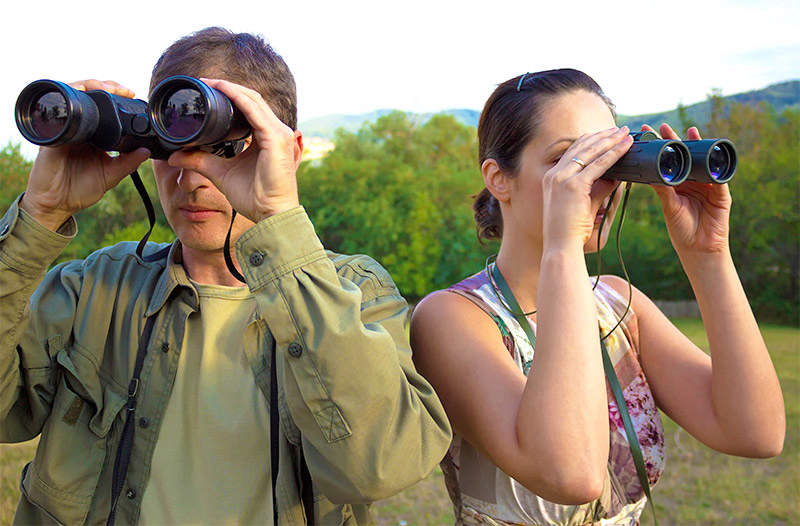
Look through both eyepieces at a plain, light-colored wall. Rotate the focus wheel slowly. If you see moving spots, spiderweb patterns, or a cloudy haze that doesn't clear, the internal lenses may have fungus or coating separation. This is a critical failure point that is rarely worth repairing on mid-range optics.
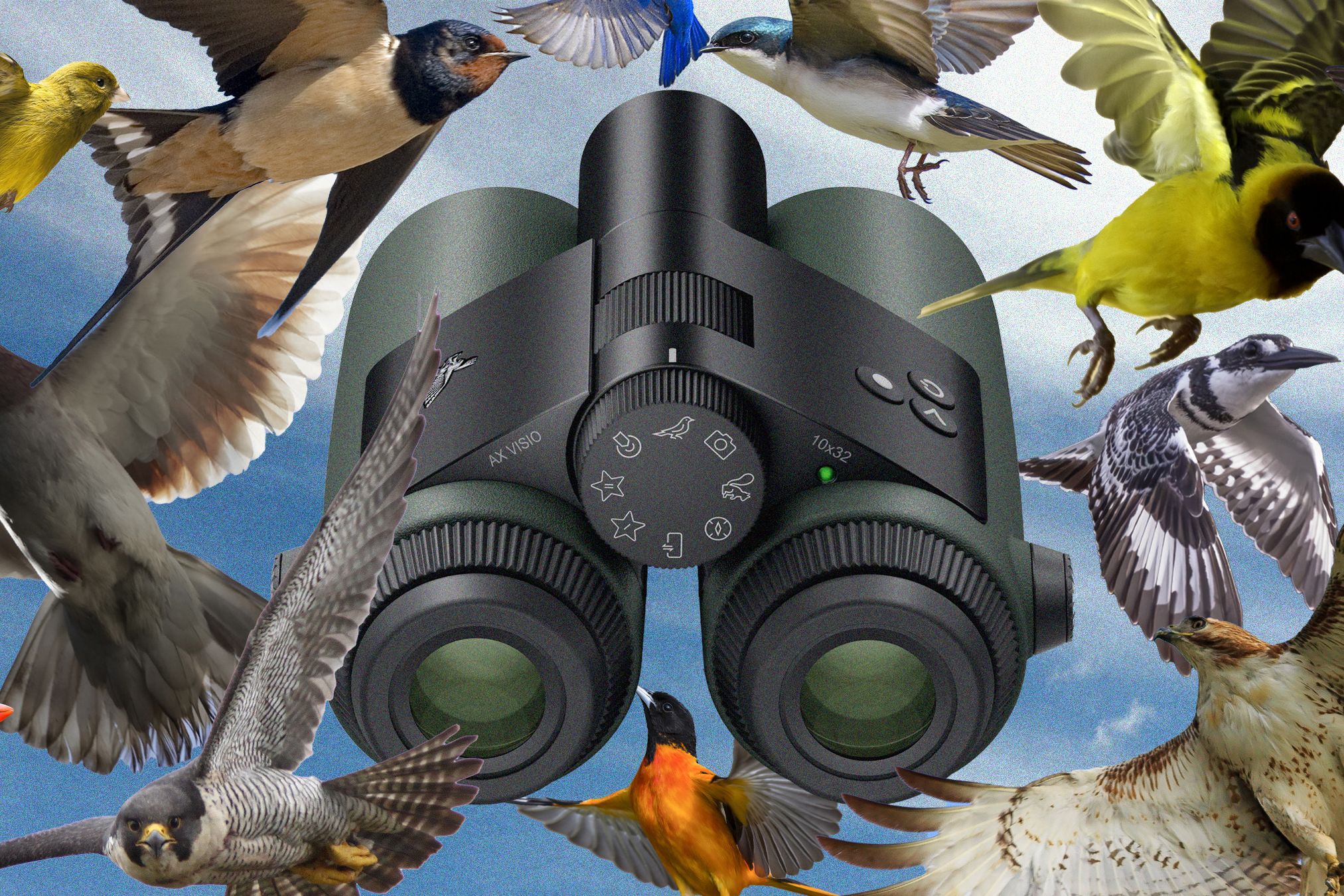
Open the binoculars fully and then close them. The motion should be fluid, not stiff or loose. Check for "collimation" by covering one objective lens with your hand; the image in the open side should not appear to shift or move relative to the covered side. A loose hinge or misaligned optics will cause eye fatigue and double vision, making extended birding sessions uncomfortable.
Examine the rubber coating for deep cracks, peeling, or sticky residue, which can indicate age or poor storage conditions. Check the seams around the objective lenses and eyecups for any gaps where moisture could enter. For waterproof models, intact seals are vital; compromised seals can lead to internal fogging and mold growth, which destroys the optical quality from the inside out.
Plan for ownership costs
The sticker price is only the first expense. Binoculars are mechanical instruments that require protection, cleaning, and occasional repair. A cheap pair that breaks after one season of heavy use costs more than a premium pair that lasts a decade.
Start by budgeting for a hard case. Soft pouches offer little protection against drops or rain. A rigid case prevents lens scratches and internal misalignment, which are the most common causes of premature failure. Next, factor in maintenance. Microfiber cloths and lens cleaning fluid are inexpensive, but skipping them leads to mold inside the barrels in humid environments. Once mold sets in, the binoculars are usually unfixable.
Repair costs vary by brand. Vortex offers a no-hassle lifetime warranty, which effectively removes long-term risk. Other manufacturers charge for objective lens replacements or collimation adjustments, which can run $100 or more. When evaluating a "budget" pair, check if the company charges for warranty service. If they do, the total cost of ownership rises quickly.


As an Amazon Associate, we may earn from qualifying purchases.
A premium pair with a strong warranty often saves money over time. The initial investment is higher, but the absence of repair bills and the longevity of the optics make it cheaper in the long run. Always read the warranty terms before buying. Look for "lifetime" coverage that includes accidental damage, not just manufacturing defects.
Birding binoculars: what to check next
Choosing the right optics for spring migration involves balancing weight, clarity, and budget. Below are practical answers to the most common questions readers ask before buying.
These specifications directly impact your ability to identify species during migration. Prioritize features that match your specific birding style and physical comfort.
No comments yet. Be the first to share your thoughts!