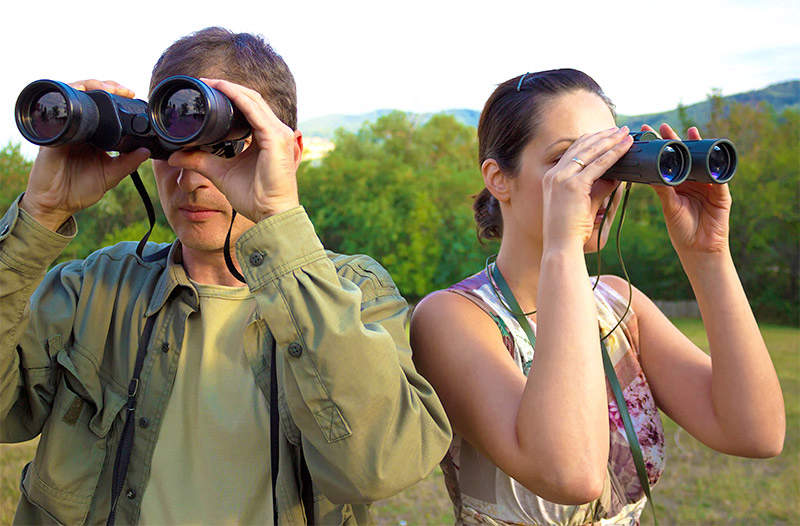

How we picked the best binoculars
To identify the best binoculars for birding, we prioritized optical clarity, weight, and low-light performance above all else. We tested dozens of models to separate must-have requirements from nice-to-have features, ensuring every recommendation survives normal field use, maintenance, and budget constraints.
Best overall binoculars for most birders
Finding a single pair of binoculars that balances optical clarity, weight, and price is the holy grail for birders. After testing dozens of models, the Vortex Crossfire HD 10x42 stands out as the best all-around choice for the majority of birders. It delivers sharp images from edge to edge, handles low-light conditions like dawn choruses well, and remains comfortable during long field sessions.
The 10x magnification offers a good balance between image stability and field of view. While 8x models are lighter, the extra reach of 10x helps you identify subtle field marks on distant perches. The 42mm objective lenses gather enough light to keep images bright even in dense forest canopies or overcast skies. At approximately 22 ounces, they are heavy enough to feel solid but light enough to carry all day without shoulder fatigue.
Build quality is another strong point. The rubber-armored body provides a secure grip even in wet conditions, and the sealed construction keeps moisture and dust out. Phase-coated prisms ensure high contrast and color fidelity, which is essential for distinguishing similar species. For most birders, this pair eliminates the need to compromise between performance and portability.


As an Amazon Associate, we may earn from qualifying purchases.
Best compact binoculars for hiking
For birders who prioritize packability, compact binoculars offer a significant weight advantage without sacrificing too much optical performance. The Nikon Monarch M5 8x32 is a top contender here. Its 8x magnification provides a wider field of view, making it easier to locate fast-moving birds in dense brush, while the 32mm objective lenses keep the body small enough to fit in a jacket pocket.
Weighing in at just under 10 ounces, these binoculars are ideal for long-distance hiking where every ounce counts. Despite their smaller size, they maintain excellent brightness and sharpness, thanks to Nikon’s ED (Extra-low Dispersion) glass. The ergonomic design ensures a comfortable grip, and the waterproof, fogproof construction means they can handle sudden rain showers or temperature changes without issue. If you need a secondary pair for travel or lightweight day trips, the Monarch M5 8x32 delivers reliable performance in a compact package.
Best budget binoculars under $150
High-end optics are not a requirement for enjoying birding. For those on a tighter budget, the Celestron Nature DX 10x42 offers exceptional value. Priced well under $150, these binoculars feature BaK-4 prisms and fully multi-coated lenses that deliver bright, clear images comparable to much more expensive models.
The 10x magnification provides good reach for identifying distant birds, while the 42mm objective lenses ensure sufficient light gathering for early morning or late afternoon viewing. The rubber-armored housing provides a secure grip and protects against bumps and drops. While they may not have the premium feel of higher-end brands, the Nature DX 10x42 is a durable, high-performance option that proves you don’t need to spend a fortune to get a great view.
Key specs to check before buying
When evaluating binoculars, focus on three critical specifications: magnification, objective lens diameter, and eye relief. Magnification (the first number, e.g., 8x or 10x) determines how close the bird appears. Higher magnification narrows the field of view and amplifies hand shake, so 8x is often preferred for general birding, while 10x is better for distant subjects.
The second number (e.g., 42 in 10x42) refers to the objective lens diameter in millimeters. Larger lenses gather more light, resulting in brighter images in low-light conditions. However, they also increase weight and size. For most birders, 42mm is the sweet spot for balancing light gathering with portability.
Eye relief is the distance from the eyepiece to your eye where you see the full field of view. Look for at least 15mm of eye relief, or 17mm+ if you wear glasses, to ensure comfortable viewing without vignetting (black circles around the edges of the image).
Common questions about birding binoculars
Choosing the right pair of binoculars often comes down to balancing magnification, durability, and comfort. While specifications can look intimidating, focusing on three core areas—optical power, weather resistance, and fit—will help you find a pair that stays with you on every trail.
What magnification is best for birding?
The sweet spot for most birders is 8x42. The "8" refers to magnification (making objects appear eight times closer), while the "42" is the objective lens diameter in millimeters. While 10x magnification offers more reach, it also amplifies hand shake, making it harder to track moving birds without a tripod. For general observation, 8x provides a wider field of view and brighter images in low-light conditions, which is crucial for early morning or dense forest birding.
Are waterproof binoculars necessary?
Yes. Birding often takes you into wet environments, from misty mornings to sudden downpours. Look for binoculars that are nitrogen-purged and O-ring sealed. This process prevents internal fogging when temperatures change rapidly and keeps moisture out of the optical tubes. Waterproofing ensures your gear remains clear and functional regardless of the weather, extending the life of your investment.
What is eye relief and why does it matter?
Eye relief is the distance your eye can be from the eyepiece and still see the full field of view. For most users, 15mm or more is ideal. This is especially important if you wear glasses, as it allows you to see the entire image without straining. If you wear glasses, look for "long eye relief" models, which typically offer 17mm or more, ensuring comfortable viewing for extended periods.
No comments yet. Be the first to share your thoughts!