
How we picked the best binoculars
Choosing the right pair of binoculars comes down to matching specs to your eyes and your environment. We tested top models from Vortex, Nikon, Leica, and Swarovski to separate marketing claims from optical reality. Our evaluation focused on three non-negotiable pillars: clarity, comfort, and durability.
Optical performance is where cheap glass fails. We tested for chromatic aberration (color fringing) and edge sharpness by scanning high-contrast subjects like tree branches against the sky. A good pair keeps the center sharp and minimizes color distortion, which is critical for identifying bird plumage or spotting game in low light. We also measured the true field of view to ensure you aren't hunting for a target in a narrow tunnel.
Ergonomics matter just as much as optics. You’ll be holding these up for hours, so we prioritized weight distribution and grip comfort. We checked focus wheel smoothness and eye relief to ensure eyeglass wearers can see the full image without straining. If the binoculars are too heavy or awkward to balance, even the sharpest lens won’t save the experience.
Durability is the final filter. We inspected waterproofing seals and nitrogen purging to ensure fog resistance in humid or freezing conditions. We also tested drop resistance and scratch-resistant coatings. Whether you’re tracking deer in mud or observing stars on a dewy night, your gear needs to survive the elements without compromising the image.
Best binoculars for most birders
Birding is the most common reason people buy binoculars, and the 10x42 size is the gold standard for a reason. The 10x magnification lets you spot distant warblers and see feather details, while the 42mm objective lenses gather enough light for early morning or late evening viewing in dense woods. This size strikes the balance between optical power and portability, making them suitable for hours of hiking without destroying your neck.
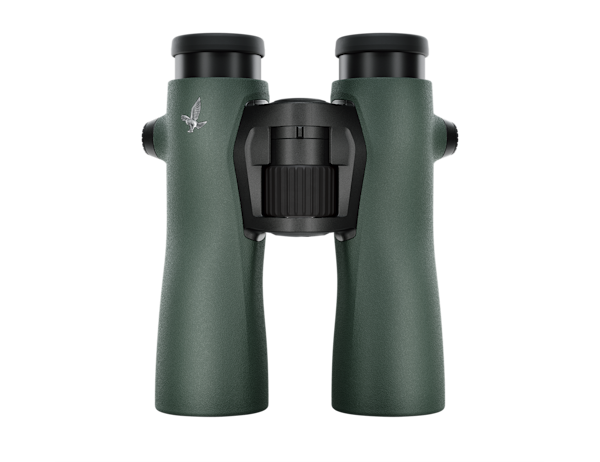
The Swarovski NL Pure 10x42 represents the top tier of this category. These binoculars are famous for their exceptional brightness and clarity, which is critical when scanning through dark forest canopies. While they come with a premium price tag, the optical quality justifies the cost for serious birders who need every bit of light and resolution. They are lightweight for their class and offer a broad perspective, making it easier to track moving birds.
If the premium price is out of reach, the Vortex Viper HD 10x42 offers nearly comparable performance at a more accessible price point. These binoculars feature fully multi-coated lenses and a phase-corrected prism system, delivering sharp images with true-to-life color. The rubber-armored body provides a secure grip in wet conditions, and the twist-up eyecups accommodate both glasses wearers and those with uncorrected vision.
For those on a tight budget, the Celestron Nature DX 10x42 provides a solid entry point. They are not as bright as the Swarovski or Vortex, but they deliver respectable clarity and durability. If you are just starting out or birding occasionally, these are a reliable choice that won't break the bank.


As an Amazon Associate, we may earn from qualifying purchases.
Best compact binoculars for travel
Compact binoculars are the ultimate travel companions, fitting easily into a jacket pocket or small daypack without adding bulk. For travelers, birders, and casual observers, the priority is portability balanced with enough optical clarity to identify distant subjects. While they may not match the light-gathering power of larger 8x42 or 10x42 models, modern compact designs deliver sharp images in daylight and remain manageable for extended handheld use.
When selecting a compact pair, look for lightweight magnesium or polycarbonate bodies and waterproof construction to handle unexpected weather. Many models feature roof prisms and fully multi-coated lenses to ensure bright, high-contrast views. For birding, a 10x magnification offers good detail, while 8x or 12x options provide stability or reach depending on your preference. Always consider the eye relief and field of view, which determine how comfortable and immersive the viewing experience feels.
The following Amazon products represent popular compact binoculars favored by travelers for their balance of weight, durability, and optical performance.


As an Amazon Associate, we may earn from qualifying purchases.
Best hunting binoculars for low light
Hunting often happens in the gray zones of the day—dawn and dusk—when light is scarce and visibility is tough. For these conditions, you need binoculars with larger objective lenses (42mm or bigger) and high-quality coatings to gather and transmit as much light as possible. This setup helps you spot game before they spot you.
Leica Trinovid HD 10x42
The Leica Trinovid HD 10x42 is a staple for serious hunters who prioritize clarity. Its 10x magnification and 42mm objective lenses provide a bright, sharp image even in dim lighting. The HD glass ensures color fidelity, which is helpful for identifying game at a distance. It’s built to withstand rugged outdoor conditions while delivering consistent performance.
Zeiss Conquest HD 10x42
Zeiss brings its reputation for German precision to the Conquest HD 10x42. This model offers excellent light transmission, making it a strong contender for low-light hunting. The broad perspective helps you track moving animals, and the ergonomic design makes it comfortable to hold for extended periods. It’s a reliable choice for hunters who need dependable optics in challenging environments.
Sig Sauer Zulu 7 10x42
The Sig Sauer Zulu 7 10x42 is an affordable option that doesn’t compromise on brightness. Its fully multi-coated lenses and large 42mm objectives help gather light effectively. The waterproof and fog-proof construction ensures it performs well in various weather conditions. For hunters on a budget, it offers solid performance without breaking the bank.
Nikon Monarch 5 10x42
Nikon’s Monarch 5 10x42 is known for its value and ease of use. The binoculars feature ED glass to reduce chromatic aberration, resulting in clearer images. They are lightweight and compact, making them easy to carry on long hikes. The bright, sharp optics make them suitable for low-light scenarios, providing good visibility for early morning or late evening hunts.
Vortex Viper HD 10x42
The Vortex Viper HD 10x42 is a popular choice among hunters for its durability and optical quality. The HD lenses provide crisp, high-contrast images, and the waterproof design ensures reliability in wet conditions. It’s a versatile option that works well in various lighting situations, from bright daylight to dim forest canopies.
As an Amazon Associate, we may earn from qualifying purchases.
Premium binoculars for astronomy
When you move into the premium tier, you aren't just buying glass; you're buying clarity that reveals the universe's finer details. For astronomy and deep-sky observing, two specs matter most: a wide field of view and exceptional color correction. Cheap optics often leave stars with purple fringes or cut off the edges of wide nebulas. High-end models correct for these aberrations, keeping stars sharp from center to edge.
The Leica Ultravid 7x42 HD-Bin represents the gold standard for color fidelity. Its HD (High Definition) glass is engineered to minimize chromatic aberration, which is critical when scanning the Milky Way or observing planetary details. The 7x magnification provides a naturally wide field of view, making it easier to locate faint deep-sky objects without the shaking common in higher-power handheld scopes. It is lightweight enough for long nights on a hilltop.
For those who prefer a bit more magnification, the Vortex Viper HD 10x42 offers a compelling alternative. While not as expensive as the Leica or Swarovski, it delivers 90% of the performance with a slightly wider field of view than many competitors in the 10x class. The HD lenses provide excellent contrast, helping you pick out star clusters against dark skies. It bridges the gap between casual stargazing and serious amateur astronomy.
Choosing between these depends on your viewing style. If you prioritize color accuracy and a natural, wide perspective, the Leica is unmatched. If you want more magnification without breaking the bank, the Vortex Viper HD is a robust choice. Both eliminate the color distortion that ruins the experience with budget models.


As an Amazon Associate, we may earn from qualifying purchases.
Binocular buying guide: What to look for
Picking the right binoculars comes down to three main numbers and a few design choices. These specs determine how much you’ll see, how bright it looks, and how comfortable they feel in your hands. Understanding them helps you match the gear to your specific activity, whether you’re scanning tree lines for warblers or tracking game in low light.
Magnification and Objective Lens
The numbers printed on binoculars (like 8x42 or 10x50) tell you the magnification power and the diameter of the front lens in millimeters. The first number is how much closer objects appear; the second is how much light enters the lens.
For most outdoor activities, 8x magnification is the sweet spot. It provides a stable image that doesn’t shake as easily as higher powers, making it ideal for birding and hunting where you might be holding the binoculars for long periods. A 42mm objective lens offers a bright, wide field of view, perfect for daylight use. If you spend time in very dim light, like dawn or dusk hunting, a 50mm lens gathers more light, but the binoculars will be heavier.
Prism Type: Roof vs. Porro
Prism type affects the shape, weight, and optical quality of the binoculars. Porro prisms are offset, creating a wider stance between the eyepieces. They generally offer better depth perception and are often less expensive for the same optical quality. However, they are bulkier and harder to pack.
Roof prisms are aligned straight through the barrel, making the binoculars more compact and waterproof-friendly. They are the standard for high-end birding and hunting optics. While they can be more expensive to manufacture, modern roof prism binoculars like the Vortex Viper HD or Swarovski EL series deliver crisp, high-contrast images in a package that fits easily in a vest pocket.
Exit Pupil and Field of View
The exit pupil is calculated by dividing the objective lens diameter by the magnification (e.g., 42mm / 8x = 5.25mm). A larger exit pupil means a brighter image, which is crucial for early morning or late evening use. If the exit pupil is smaller than your eye’s dilated pupil in low light, the image will look dimmer.
Field of view (FOV) is how wide an area you can see at a given distance, usually measured in feet at 1,000 yards. A wider FOV helps you track moving birds or scan large habitats. For birding, a FOV of 350 feet or more is desirable. For astronomy, a narrower FOV is acceptable since you are looking at stationary objects.
Comfort and Durability
Beyond specs, consider how the binoculars fit. Rubber armor protects against bumps and provides grip, especially in wet conditions. Waterproof and fog-proof models (usually nitrogen-purged) are essential for outdoor use to prevent internal condensation. Eyecups should twist up or down to accommodate eyeglass wearers, ensuring you get the full field of view without straining your neck.
No comments yet. Be the first to share your thoughts!