
How we picked these binoculars
Finding the right pair of compact binoculars for birding and travel means balancing two competing needs: optical clarity and packability. We tested several models to see which ones actually perform when you are hiking a trail or sitting in a blind, rather than just sitting on a shelf. Our selection process focused on three core criteria that matter most for this specific use case.
Optical clarity in low light
Birding often happens in dappled shade or during early morning and evening hours. We prioritized binoculars with high-quality glass and bright coatings that maintain color fidelity and sharpness in these conditions. A lightweight pair is useless if the image is blurry or dim. We looked for models like the Nikon Monarch M7 and Vortex Viper HD, which are frequently cited for their ability to deliver clear, high-contrast images even in challenging lighting.
Weight and ergonomics
For travel, every ounce counts. We excluded heavy full-size models that are better suited for stationary observation. Instead, we focused on compact designs that fit easily into a daypack or carry-on bag. Comfort is equally important; we tested the grip texture and balance to ensure the binoculars feel secure in your hands during long periods of use. If they cause neck strain or slip from your grip, they are not suitable for active birding.
Durability and weather resistance
Outdoor gear faces rain, dust, and accidental bumps. We verified that our picks are waterproof and fog-proof, typically filled with nitrogen or argon to prevent internal fogging during temperature changes. We also checked for rubber armor that provides shock absorption. This ensures that your binoculars can withstand the rigors of travel and field use without compromising their optical performance.
What to look for
When evaluating compact binoculars, keep these practical points in mind:
- Magnification: Stick to 8x for stability. Higher magnifications like 10x or 12x can make handheld viewing shaky and difficult, especially for beginners.
- Objective lens size: Look for 32mm or 42mm lenses. 32mm offers maximum compactness, while 42mm gathers more light for better low-light performance.
- Field of view: A wider field of view helps you track moving birds more easily. Check the degrees or feet-at-distance specs.
- Eye relief: Ensure at least 15mm of eye relief, especially if you wear glasses, to see the full image without straining.
Best overall compact binoculars
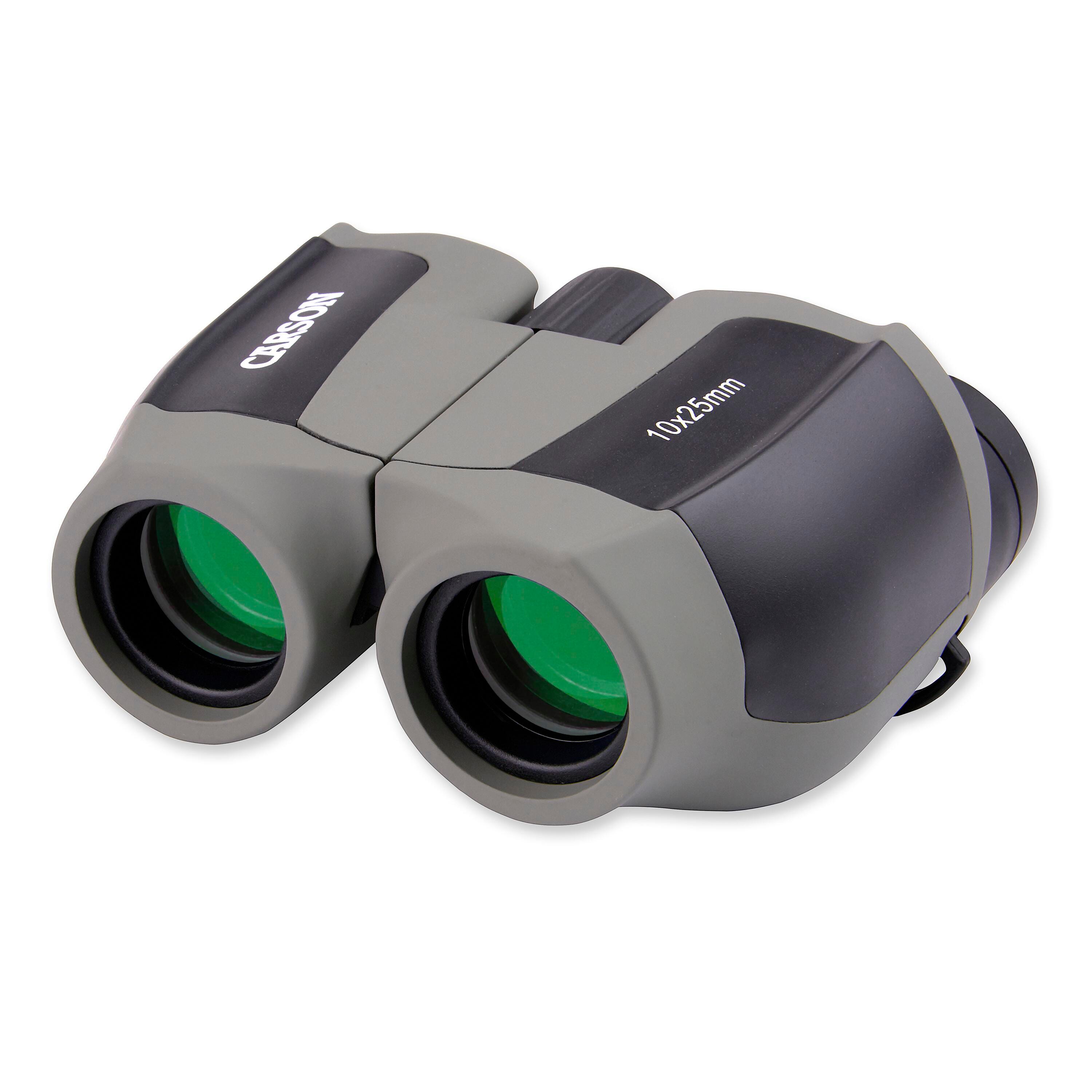
The Nikon Monarch M7 10x42 is the benchmark for all-around performance, but for a dedicated compact setup, the Vortex Optics Viper HD 10x25 takes the top spot. It strikes a practical balance between optical clarity and pocketability, making it a reliable companion for both birding and travel. While slightly larger than the smallest keychain models, its 10x25 size class offers enough light gathering for early morning or wooded birding without adding significant weight to your pack.
The HD glass delivers sharp, high-contrast images with minimal color fringing, a common issue in smaller binoculars. This clarity helps you identify distant birds or read trail signs with ease. The ergonomic design fits comfortably in most hands, and the rubber armor provides decent grip and shock protection during hikes. It is a versatile tool that performs well in various lighting conditions, from bright open fields to shaded forest edges.
For travelers who need a compact binocular that does not compromise on image quality, the Vortex Viper HD 10x25 is a strong contender. Its durable construction and clear optics make it suitable for a wide range of outdoor activities. Below, we have listed this model alongside other top-rated compact options to help you find the best fit for your specific needs.


As an Amazon Associate, we may earn from qualifying purchases.
Best budget binoculars for beginners
You don’t need to spend hundreds of dollars to get started with birding or travel photography. For beginners, the goal is finding a pair that offers a clear, bright image without weighing down your pack. The sweet spot for entry-level optics usually lands between $50 and $100, where manufacturers prioritize durability and ease of use over niche features.
The Celestron Nature DX 10x42 is widely regarded as the best budget option for most hobbyists. It delivers crisp, colorful images that make identifying bird plumage easy, even in slightly shaded areas. The rubber-armored body provides a secure grip, and the waterproof construction means you won’t panic if a sudden rain shower hits your hike. It’s the kind of reliable tool that grows with you as your skills improve.
If portability is your main concern, compact 20x25 models are a popular choice for travel. These tiny binoculars slip easily into a jacket pocket or small daypack. While they offer high magnification, the smaller lenses gather less light, so they work best in bright daylight. They are perfect for scanning a skyline or watching birds in a sunlit park, but may struggle in dense forest or at dusk.
When shopping, look for models with fully multi-coated lenses. This coating reduces glare and increases light transmission, which makes a huge difference in image clarity. Avoid uncoated or partially coated budget bins, as they often produce hazy, dim views that can frustrate new users. A little research here pays off in every outing.


As an Amazon Associate, we may earn from qualifying purchases.
Best premium binoculars for serious birders
When you move beyond entry-level gear, the difference comes down to glass quality and coatings. Premium binoculars use extra-low dispersion (ED) or high-density abnormal dispersion glass to eliminate color fringing around high-contrast subjects like birds against the sky. This clarity makes identifying field marks much easier in low-light conditions, such as dawn or dusk.
For those who prioritize portability without sacrificing optical performance, the Vortex Vanquish 10x26mm stands out. Its compact size fits easily into a jacket pocket, yet it delivers sharp images thanks to fully multi-coated lenses. The lightweight design reduces hand fatigue during long hikes, making it an ideal companion for travel birding where every ounce counts.
Top Picks for High-End Optics
Vortex Vanquish 10x26mm
Ideal for hikers who need a pocket-sized tool that doesn't compromise on brightness.
Vortex Razor HD 10x42mm
Often cited as the best optical value in its class, this model offers superior clarity and contrast for serious observation.
Nikon Monarch M5 10x42mm
A full-size favorite known for its durable construction and excellent low-light performance, perfect for dense forest environments.
Spec Comparison
| Model | Magnification | Lens Diameter | Weight | Best For |
|---|---|---|---|---|
| Vortex Vanquish | 10x | 26mm | 10.2 oz | Travel & Hiking |
| Vortex Razor HD | 10x | 42mm | 23.6 oz | High-Clarity Birding |
| Nikon Monarch M5 | 10x | 42mm | 23.0 oz | Low-Light Forests |
Choosing the right premium pair depends on your primary birding environment. If you are moving quickly across varied terrain, the lighter 10x26mm options provide agility. For stationary observation in dim light, the larger 10x42mm barrels gather more light, revealing details you might otherwise miss.
As an Amazon Associate, we may earn from qualifying purchases.
What magnification works best for birding (h2)
When shopping for compact binoculars, you will almost always choose between 8x and 10x magnification. These two options represent the sweet spot for birding and travel, balancing reach with stability. While you might see 12x or 16x models online, higher magnification usually requires a tripod and adds significant weight, making them impractical for hiking or quick glances at flying birds.
Think of magnification like a camera zoom lens. The first number (8 or 10) tells you how many times closer the object appears. An 8x42 pair brings a bird eight times closer, while 10x42 brings it ten times closer. The second number (42) is the lens diameter in millimeters, which determines how much light enters the scope. Since we are focusing on compact models, you will often see 42mm lenses, though some ultra-compact travel pairs drop to 32mm or 36mm.
Choosing between 8x and 10x depends on your specific needs. 8x binoculars offer a wider field of view and a brighter image, making them easier to track moving birds and use in low light. They are also more stable in your hands, reducing shake. 10x binoculars provide greater reach, allowing you to see finer details on distant birds, but they have a narrower field of view and are more sensitive to hand shake. For most travelers and general birders, 8x is the more versatile starting point.
If you prefer seeing every feather detail on a distant bird, 10x is the better choice. However, you must hold them steadier, and the image will be slightly darker in the early morning or late evening. Many experienced birders own both: 8x for active scanning and 10x for stationary observation. For a single compact pair, 8x is generally the safer bet for ease of use.
Frequently asked questions about binoculars
Choosing the right optics can feel overwhelming, especially when you are balancing portability for travel with the clarity needed for birding. Here are quick answers to the most common questions we hear from beginners and hobbyists.
Which brand of binoculars is considered the best?
There is no single "best" brand, as the right choice depends on your budget and specific needs. However, several manufacturers consistently earn top marks for their compact models. Swarovski Optik is renowned for its exceptional clarity and lightweight designs, making it a favorite for serious birders who value optics above all else. Zeiss is another top contender, known for its natural color rendering and durable build. For those seeking reliable performance without the premium price tag, brands like Nikon and Pentax offer excellent entry-level and mid-range options that deliver crisp, colorful images suitable for most field conditions.
What is better, 12x50 or 10x42 binoculars?
For most birding and travel scenarios, 10x42 binoculars are the more practical choice. The "10x" magnification provides a good balance between detail and a wide field of view, while the "42" mm objective lens lets in enough light for early morning or late evening viewing. A 12x50 setup offers higher magnification, but the narrower field of view makes it harder to track moving birds, and the larger size can become heavy and cumbersome during long hikes. If you prioritize extreme detail over portability and steady hands, 12x50 might work, but 10x42 is generally more versatile.
How much does a really good pair of binoculars cost?
You do not need to spend a fortune to get high-quality optics. A solid pair of binoculars for birding and travel typically ranges from $150 to $400. In this price bracket, you can find reliable models from reputable brands that offer good glass quality and comfortable ergonomics. While premium models from brands like Swarovski can cost upwards of $1,000, the average birder will find that spending between $200 and $300 yields significant improvements in clarity and durability over entry-level options.
Which binoculars do Navy SEALs use?
Military special operations forces, including Navy SEALs, often use specialized, ruggedized binoculars designed for low-light performance and durability. While specific models are rarely publicly disclosed for security reasons, they typically favor compact, waterproof, and nitrogen-purged optics that can withstand harsh environments. Brands like Leica and Zeiss have long-standing contracts with military branches, providing high-end optics that are both portable and extremely durable. For civilian use, looking for binoculars with similar rugged features—such as rubber armor and waterproofing—ensures they can handle the same kind of abuse you might encounter on a trip.
No comments yet. Be the first to share your thoughts!