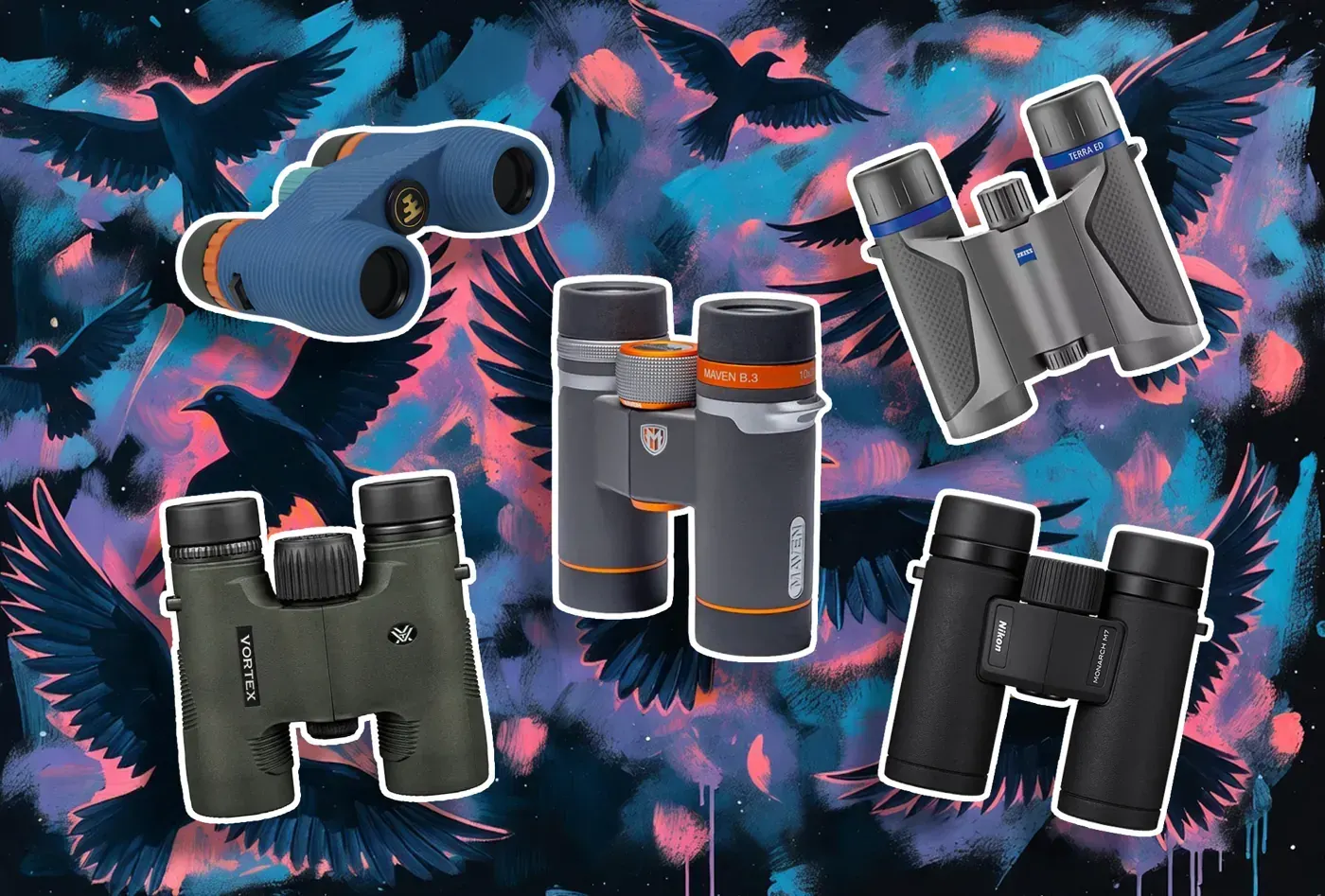

Compact binoculars budget
Finding reliable compact binoculars for birding doesn’t require a luxury price tag, but it does demand realistic expectations about what $50–$150 buys you in 2026. At the lower end of the market, you are trading optical clarity and durability for portability. These pocket-sized models, often 8×25 or 10×25, fit easily into a jacket pocket but suffer in low light due to their small objective lenses.
The sweet spot for budget-conscious birders sits around the $100 mark. Models like the Vortex Crossfire 10x32 or 8x32 offer a practical balance. While technically slightly larger than "pocket" binoculars, they remain lightweight enough for trekking while providing brighter images and better weather sealing. This size allows for more generous internal prisms, which directly translates to sharper views of distant birds without the bulk of full-size field optics.
When evaluating budget options, check the build quality first. Rubber armor should be firm, not mushy, and focus wheels should turn smoothly without slipping. Avoid models with plastic lenses that feel fragile; even entry-level optics should withstand the damp conditions of a morning birding walk. Prioritize brands that offer warranties, as this signals confidence in their construction despite the lower price point.


As an Amazon Associate, we may earn from qualifying purchases.
Shortlist real options
Finding compact binoculars for birding requires balancing portability with optical performance. The goal is to find a pair that fits in a jacket pocket but still delivers enough light gathering and magnification to identify species at a distance. Below is a comparison of strong contenders that prioritize lightweight design without sacrificing clarity.
| Model | Specs | Best For | Notes |
|---|---|---|---|
| Vortex Crossfire | 8x32 or 10x32 | General birding | Reliable entry-level optics with good warranty support. |
| Nikon HG Series | 5x15 or 7x15 | Ultralight travel | Incredibly small form factor; excellent for one-bag travelers. |
| Occer Compact | 12x25 | Budget use | High magnification for the price; wider field of view. |
Vortex Crossfire 8x32 / 10x32
The Vortex Crossfire series remains a staple for birders who need a step up from pocket-sized models but still want to avoid the bulk of full-size field glasses. The 8x32 version offers a wider field of view, which helps track moving birds, while the 10x32 provides more reach for distant subjects. Both options feature waterproofing and nitrogen purging, making them durable enough for trekking in various weather conditions. They strike a practical balance between weight and optical performance.
Nikon HG 5x15 or 7x15
For travelers prioritizing minimal weight, the Nikon High Grade (HG) series is hard to beat. These monocular-style binoculars are exceptionally compact, slipping easily into any bag or pocket. The 5x15 and 7x15 models offer stable views with minimal eye shake, which is crucial when holding them for extended periods. While they lack the light-gathering power of larger objective lenses, they are surprisingly sharp and clear for their size, making them ideal for day trips where every ounce counts.
Occer 12x25 Compact
The Occer 12x25 binoculars cater to budget-conscious birders who need higher magnification. With a 12x power and 25mm objective lens, they allow you to spot details from farther away than standard 8x or 10x models. The trade-off is a narrower field of view and potentially more hand shake, so a steady hand or tripod is recommended. They offer a wide field of view (273ft/1000yds) relative to their magnification, making them a viable option for those on a tight budget who still want serious zoom capability.
Inspect the expensive parts
Use this section to make the Best Compact Binoculars for Birding decision easier to compare in real life, not just on paper. Start with the reader's actual constraint, then separate must-have requirements from details that are merely nice to have. A practical choice should survive normal use, maintenance, timing, and budget. If a recommendation only works in an ideal situation, call that out plainly and give the reader a fallback path.
-
Verify the basicsConfirm the core specs, condition, and fit before comparing extras.
-
Price the downsideLook for the repair, maintenance, or replacement cost that would change the decision.
-
Compare alternativesCheck at least two comparable options before treating one listing as the benchmark.
Plan for ownership costs
Use this section to make the Best Compact Binoculars for Birding decision easier to compare in real life, not just on paper. Start with the reader's actual constraint, then separate must-have requirements from details that are merely nice to have. A practical choice should survive normal use, maintenance, timing, and budget. If a recommendation only works in an ideal situation, call that out plainly and give the reader a fallback path.
The simplest way to use this section is to write down the must-have criteria first, then compare each option against those criteria before weighing nice-to-have features.
Compact binoculars: what to check next
Choosing the right pair of compact binoculars for birding involves balancing portability with optical performance. These FAQs address the most common practical concerns for travelers and trekkers.
What is the best size for compact binoculars?
The 8×25 and 10×25 configurations are the industry standard for compact binoculars. The 25mm objective lens keeps the weight low enough for all-day hiking, while the 8x magnification provides a wider field of view that makes tracking moving birds easier. The 10x version offers more reach but requires steadier hands and performs better in bright light.
Are compact binoculars good enough for serious birding?
Yes, provided you prioritize optics over raw power. High-quality models with ED (extra-low dispersion) glass minimize color fringing and deliver sharp images despite the smaller lenses. For most birding scenarios, a well-made 8×25 or 8×32 will outperform cheap, high-magnification models that suffer from a dark, fuzzy image.
What is the difference between 8×25 and 10×25 binoculars?
The "8" or "10" refers to magnification. An 8×25 brings objects eight times closer, while a 10×25 brings them ten times closer. The trade-off is brightness and stability. The 10×25 image is smaller and dimmer, especially in the shade, and hand shake is more pronounced. For general birding, the 8×25 is the more versatile choice.
Can I use compact binoculars for watching birds in low light?
Compact binoculars struggle in low light because their small objective lenses (25mm or less) gather less light than larger 42mm models. They are best suited for dawn, dusk, or open-canopy forests. If you frequently bird in dense, dark woods or at twilight, consider stepping up to an 8×32 model for better light transmission.
No comments yet. Be the first to share your thoughts!