
Why small binoculars matter
At a recent college baseball game, I wished I'd brought binoculars. Not for serious scouting, but just to get a better view of the action. My full-size birding binoculars were too bulky to carry alongside everything else. That's when the appeal of compact binoculars really hits home. They involve compromise, but sometimes convenience is worth it.
For travelers, hikers, or anyone attending events where space and weight are at a premium, a pocket-sized binocular is invaluable. You won't get the same brightness or wide field of view as a larger instrument, but the portability is unmatched. Binoculars you have with you are far more useful than the best optics left at home.
Optics have improved dramatically, even at lower price points. While $200 won’t buy you a Swarovski, it will buy you a surprisingly capable pair of binoculars. Expect trade-offs like a narrower field of view and potentially lower light performance, but for many users, these are acceptable sacrifices. Compacts have been used on birding trips where the extra weight of larger sets couldn't be justified, and birds were still identified effectively.
Understanding key specs
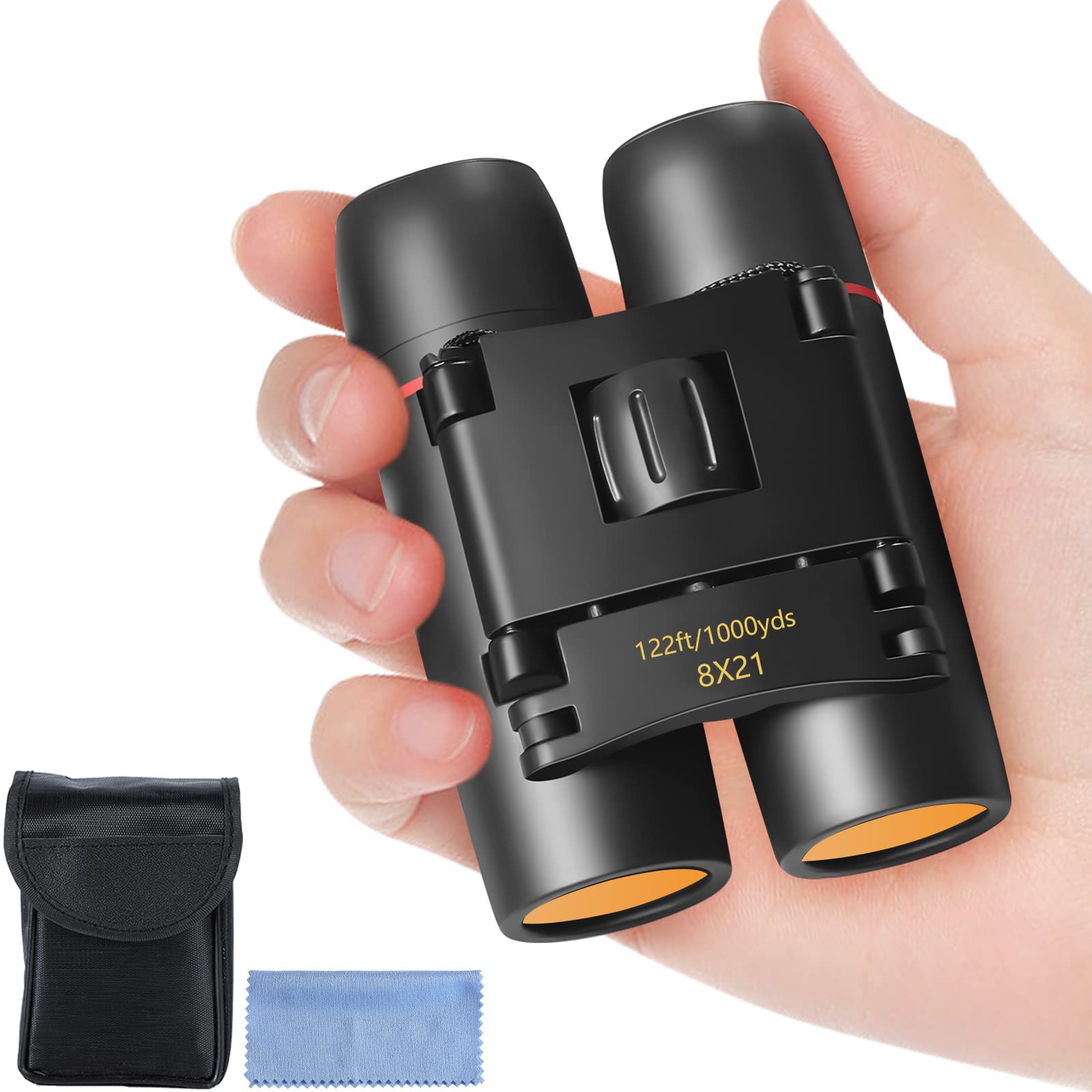
When shopping for compact binoculars, you'll encounter numbers. The first number in a specification, like 8x42, is the magnification. It tells you how much closer the image appears. 8x means the image looks eight times closer than with the naked eye. Higher magnification isn't always better; it can make the image shaky and reduce the field of view.
The second number is the objective lens diameter, measured in millimeters. This determines how much light the binoculars gather. A larger objective lens generally results in a brighter image, especially in low light. However, larger lenses also add weight and bulk. For a compact binocular, you’ll typically see objective lenses between 25mm and 32mm.
Field of view is how wide an area you can see at a given distance, often expressed in feet at 1000 yards or in degrees. A wider field of view makes it easier to track moving subjects. Exit pupil is the diameter of the light beam exiting the eyepiece. Divide the objective lens diameter by the magnification to get the exit pupil. A larger exit pupil is better for low-light viewing. Close focus distance is the closest you can focus on an object, important for birding or insect observation.
- Prism Type: Roof prisms are more compact and streamlined, while Porro prisms offer better depth perception but are bulkier.
- Coatings: Lens coatings reduce light reflection and improve brightness and contrast. 'Fully multi-coated' is the best, followed by 'multi-coated', then 'coated'.
Top compact binoculars under $200
The market for budget-friendly compact binoculars is surprisingly competitive. Here are some of the best options available as of late 2025/early 2026. Prices fluctuate, so consider these estimates.
Nikon Prostaff 3S 8x25 ($120): A consistently well-regarded option. Lightweight and easy to handle, offering good image quality for the price. Best for: General use, travel.
Celestron Outland X 10x25 ($80): A very affordable choice, with decent optics and a rubber armored housing. Best for: Budget-conscious buyers, casual observation.
Bushnell Legend Ultra HD 10x25 ($160): Offers excellent clarity and color rendition for its price range. It's a bit heavier than some others, but the image quality is worth it. Best for: Birding, wildlife viewing.
Vortex Diamondback HD 8x32 ($180): While pushing the upper limit of our budget, the Diamondback HD provides exceptional optical performance. It’s a step up in terms of brightness and sharpness. Best for: Serious hobbyists, demanding users.
Olympus 8x25 DPS I ($100): A classic compact binocular known for its durability and ease of use. Best for: Beginners, everyday carry.
Wingspan Optics Spectator 8x32 Compact Binoculars ($90): A popular Amazon choice with a large following. These are lightweight and feature a wide field of view. Best for: Hiking, travel, events.
Gosky 12x55 High Definition Monocular ($50): Technically a monocular, but included as an extremely affordable and portable option. Best for: Spotting, casual observation (one-handed use).
Featured Products

ED Glass for enhanced clarity and color · Waterproof and fogproof construction · Long eye relief for comfortable viewing
While slightly above the stated budget, the Nikon Monarch M5 delivers superior optical performance and durability, making it a worthwhile investment for serious outdoor enthusiasts.

10x magnification for detailed viewing · Waterproof and fogproof design · Compact and lightweight roof prism construction
The Olympus 10x25 WP II offers robust waterproofing and a compact form factor, ensuring reliable performance in various weather conditions for travelers.
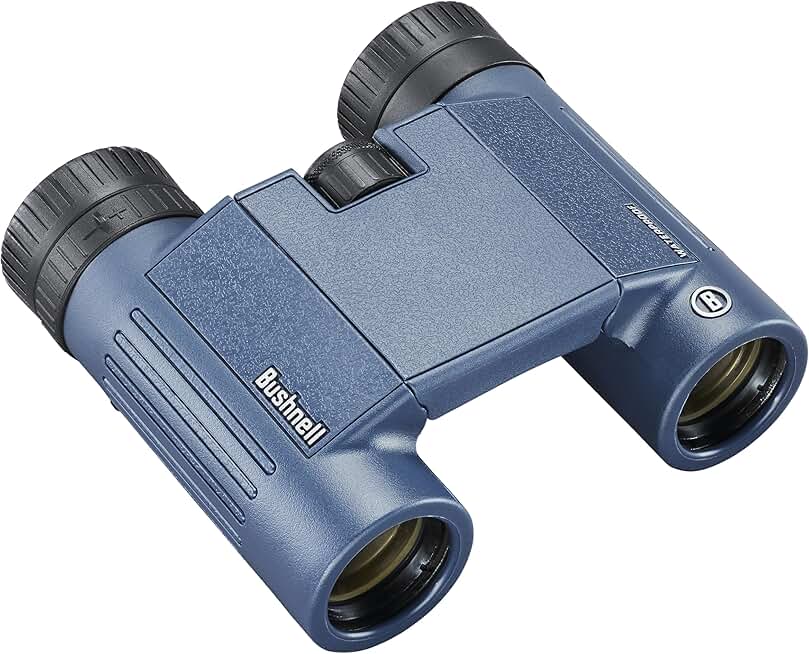
10x magnification for clear observation · Waterproof and fogproof for all-weather use · Durable rubber armor for secure grip
The Bushnell H2O 10x25mm binoculars provide excellent value, delivering reliable waterproof performance and clear magnification for a variety of outdoor activities.

8x magnification with a wide field of view · BaK-4 prisms and multi-coated lenses for bright images · Waterproof and fogproof construction
Celestron's Outland X 8x25 binoculars are a budget-friendly choice, offering good optical quality and weather resistance for birding and general outdoor observation.

8x magnification with 32mm objective lenses · Lightweight and compact design · Designed for bright, clear viewing
The Wingspan Optics FieldView 8x32 offers a balance of portability and optical clarity, making it an excellent choice for extended birdwatching sessions and other outdoor pursuits.
As an Amazon Associate I earn from qualifying purchases. Prices may vary.
Standout models
The Vortex Diamondback HD 8x32 is a strong contender. For $180, you get exceptional optical quality, including HD glass and fully multi-coated lenses. The sharpness and clarity are impressive, even in less-than-ideal lighting conditions. The build quality is also excellent – these binoculars feel solid and well-made. The larger 32mm objective lenses provide a noticeable brightness advantage over smaller models.
The Bushnell Legend Ultra HD 10x25 is another strong option. While slightly heavier, the image quality is superb for a binocular in this price range. Colors are vibrant and accurate, and the image is remarkably sharp. The rubber armor provides a comfortable grip and protects against bumps and scratches. It's a solid all-around performer, especially for birding and wildlife viewing. Some reports mention minor issues with the focus wheel, but these seem to be isolated incidents.
The Nikon Prostaff 3S 8x25 is a consistent performer. It’s a reliable, lightweight option that delivers good image quality for the price. It doesn’t have the same optical punch as the Vortex or Bushnell, but it’s a great choice for general use and travel. Prioritizing portability and affordability makes the Prostaff 3S a safe bet.
Coatings and light transmission
Lens coatings are important for maximizing light transmission and improving image quality. Without coatings, a significant amount of light is lost due to reflection. Fully multi-coated lenses have multiple layers of coating on all glass surfaces, providing the best performance. Multi-coated lenses have multiple layers on some surfaces, while coated lenses have a single layer on some surfaces.
More coatings provide brighter, clearer images with better contrast and color fidelity. The Vortex Diamondback HD and Bushnell Legend Ultra HD both have fully multi-coated optics, contributing to their excellent image quality. The Nikon Prostaff 3S has multi-coated lenses, which is still good, but not quite as effective. Cheaper binoculars often have minimal or no coatings, resulting in dimmer, lower-contrast images.
Consider the environment you’ll be using the binoculars in. If you plan to use them primarily in bright daylight, coatings are less important. But if you’ll be birding in forests or using them at dusk or dawn, good coatings are essential for maximizing light gathering and seeing details in low-light conditions.
Durability and waterproofing
For outdoor use, durability and waterproofing are important. Most compact binoculars have rubber armor to protect against bumps and scratches. Some are also waterproof or water-resistant. Water-resistant binoculars can withstand light rain or splashes, but they shouldn’t be submerged. Waterproof binoculars are sealed to prevent water from entering, even when fully submerged.
The Vortex Diamondback HD is waterproof and fogproof, making it a good choice for challenging conditions. The Bushnell Legend Ultra HD is also waterproof. The Nikon Prostaff 3S is water-resistant, which is sufficient for most users. Check the manufacturer’s specifications to confirm the level of waterproofing.
Warranties provide peace of mind. Vortex offers a lifetime warranty on their binoculars, indicating their confidence in their products. Bushnell and Nikon also offer warranties, but the terms may vary. Review the warranty before making a purchase.
- Water-resistant: Suitable for light rain and splashes.
- Waterproof: Can withstand submersion for a limited time.
- Fogproof: Prevents internal fogging in humid conditions.

No comments yet. Be the first to share your thoughts!