
Binoculars are better than telescopes for beginners
Forget the image of a massive telescope dominating your backyard. For a beginner, astronomy binoculars offer a surprisingly rewarding entry point to celestial viewing. They're portable, easy to use, and significantly less expensive than even a basic telescope. You can grab a decent pair and be scanning the sky on a whim, something a telescope setup rarely allows.
The biggest advantage binoculars offer is a wide-field view. Telescopes magnify a small section of the sky, which can make it hard to find things. Binoculars show a broader area, making it easier to locate constellations and star clusters. While they won’t deliver the extreme magnification of a telescope, they excel at revealing details within those wider views.
A few 'smart' binoculars are hitting the market now, like the Unistellar Envision. They use digital sensors to brighten the image. They're expensive, but they change how you find objects in a light-polluted city. I still think a standard pair is the better starting point for most people.
The numbers that matter: magnification and aperture
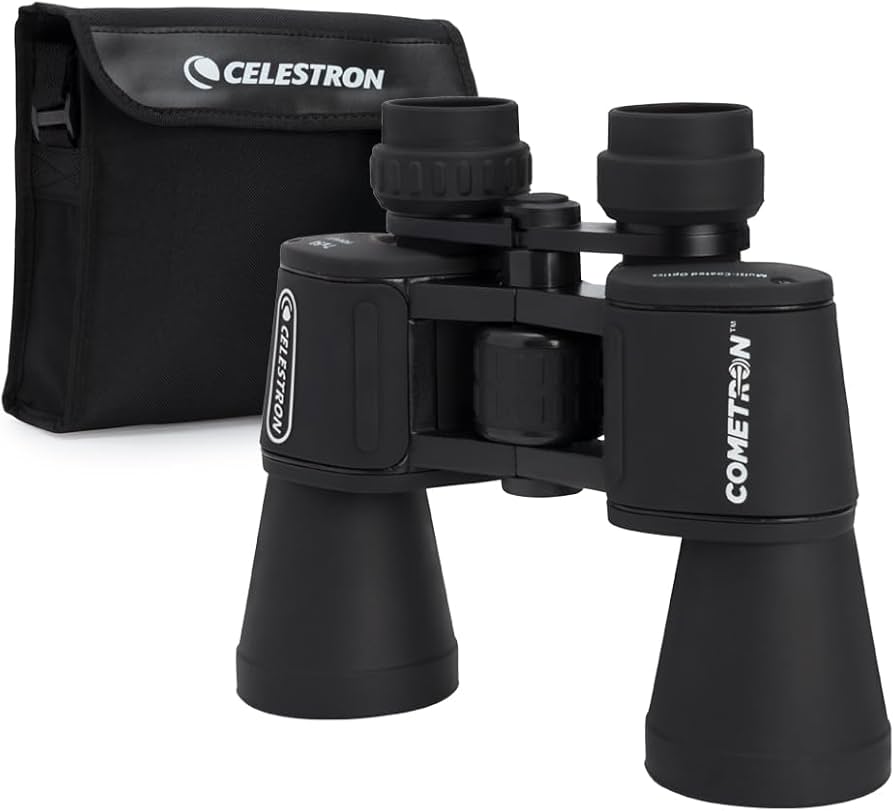
When looking at astronomy binoculars, you’ll see numbers like '10x50' or '7x35'. The first number is the magnification – how much larger the object appears. However, higher magnification isn’t always better. Too much magnification with a small aperture results in a dim, blurry image. Stability also becomes a major issue at high magnifications; even slight tremors become amplified.
The second number is the aperture, measured in millimeters. This is the most important specification for astronomy. Aperture refers to the diameter of the objective lenses – the lenses that gather light. A larger aperture gathers more light, allowing you to see fainter objects and more detail. Think of it like the pupil of your eye; the wider it is, the more light it lets in.
Field of view (FOV) describes how much of the sky you can see at one time, usually expressed in degrees or feet at 1000 yards. A wider FOV makes it easier to find and track objects, especially if you're new to stargazing. A narrow FOV can feel like looking through a tunnel, making the experience less enjoyable. Balancing magnification with a reasonable field of view is key. I'd recommend prioritizing aperture and a wider FOV over excessive magnification for beginners.
Lens coatings and light transmission
Lens coatings help get more light to your eye and stop glare from ruining the view. You'll see labels like 'fully multi-coated' or just 'coated.' Fully multi-coated is what you want; it means every glass surface has layers to stop light from bouncing away. If it just says 'multi-coated,' some surfaces are likely bare.
Marketing materials often exaggerate the benefits of coatings, but they do make a noticeable difference, especially when observing faint deep-sky objects. Without good coatings, light is reflected away from your eye, resulting in a dimmer image. Look for binoculars that explicitly state "fully multi-coated" lenses.
Phase correction coatings are also important, particularly in prism binoculars. These coatings correct for phase shift, a phenomenon that can reduce image sharpness and contrast. While less critical than multi-coating, phase correction coatings contribute to a clearer, more detailed view. Don’t get bogged down in the technical details, but prioritize binoculars with both multi-coating and phase correction.
Top binoculars for 2026
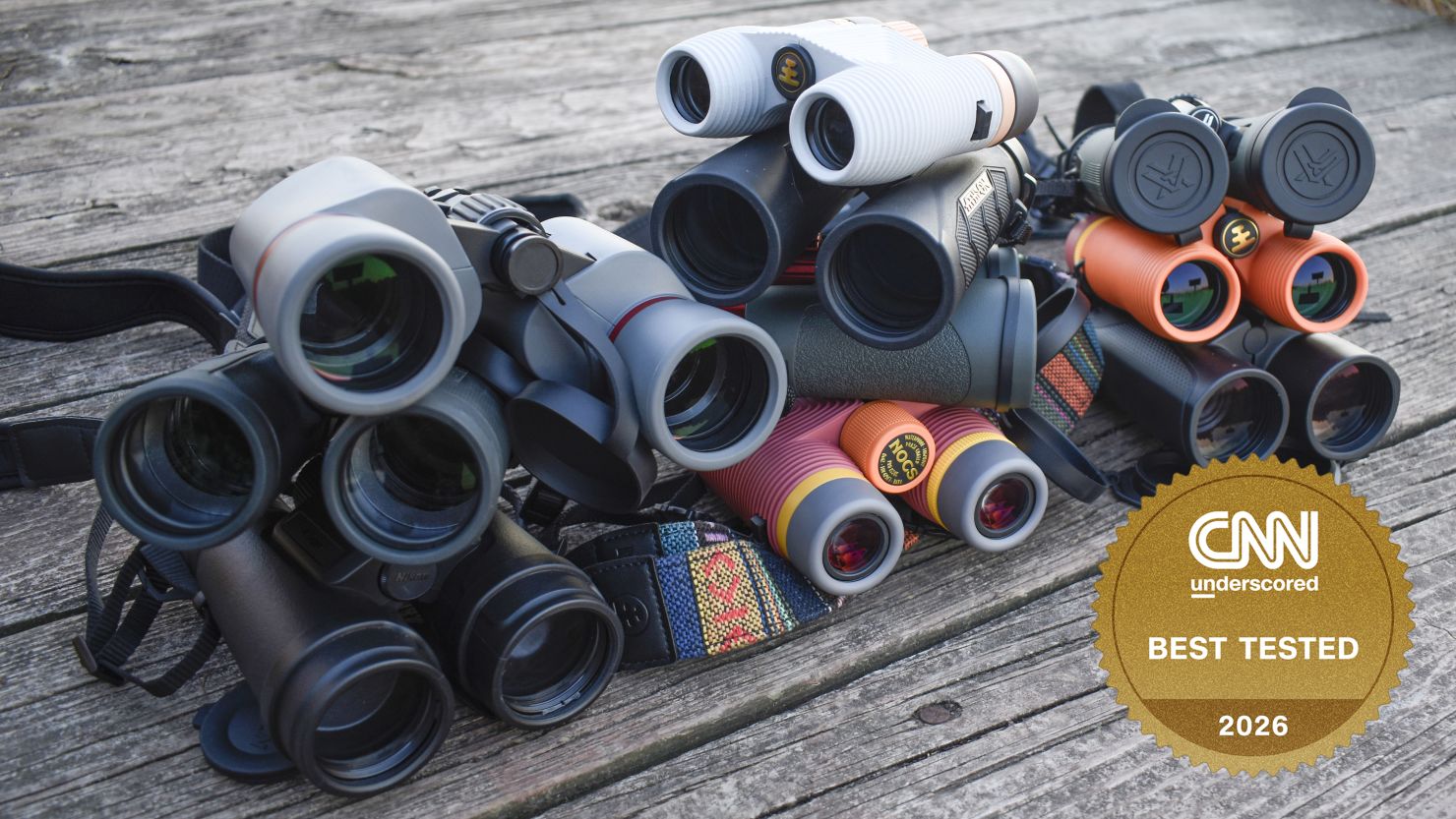
Choosing the right binoculars depends on your budget and observing goals. Here’s a selection of models that stand out for beginners, as of late 2025/early 2026. Prices can fluctuate, so consider these estimates.
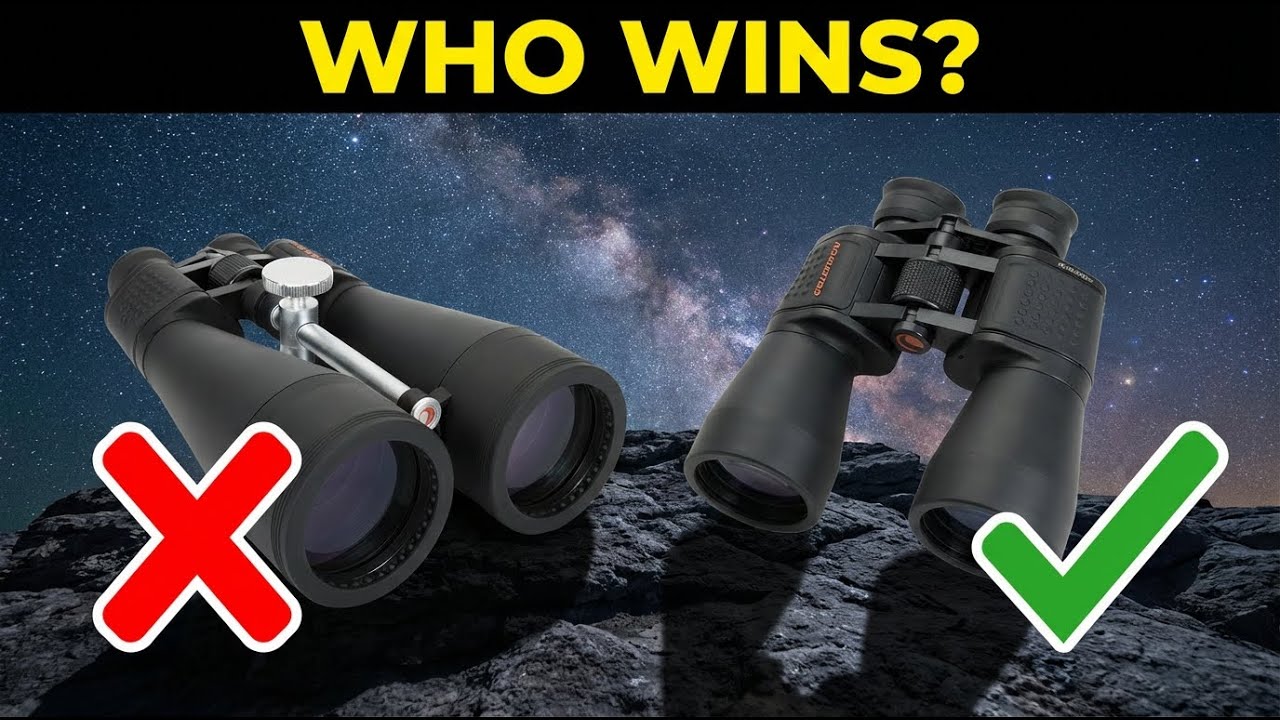
Celestron SkyMaster 25x75: ($150-200) These are a popular choice for their large aperture and relatively low price. They offer decent light-gathering ability, but can be heavy and require a tripod for stable viewing. Best for those prioritizing aperture on a budget.
Nikon Aculon A211 10x50: ($100-150) A well-rounded option with good optical quality and a comfortable grip. They’re relatively lightweight and easy to handle, making them ideal for beginners. They won’t reveal as much detail as the Celestron, but they’re more user-friendly.
Vortex Diamondback HD 10x42: ($200-250) A step up in quality, with excellent optics and a rugged build. These are waterproof and fogproof, making them suitable for all-weather observing. The smaller aperture means they aren’t ideal for faint objects, but they deliver sharp, bright images.
Oberon 15x70 Astronomy Binoculars: ($180-220) These binoculars are specifically marketed for astronomy, offering a good balance of magnification and aperture. They come with a tripod adapter for stable viewing. They are a bit bulky, but offer good value.
Unistellar Envision: ($2,000 - $2,500) Entering the realm of smart binoculars, the Envision uses light amplification and image stacking to reveal details you wouldn’t normally see with traditional binoculars. It's app-controlled and allows for easy sharing of observations. It’s a significant investment, but offers a unique experience.
Bushnell Legend Ultra HD 10x42: ($250-300) These binoculars boast excellent light transmission and clarity, making them a solid choice for both daytime and nighttime viewing. They're well-built and comfortable to hold.
Beginner Astronomy Binocular Comparison - 2026
| Model | Aperture (mm) | Ease of Use | Light Gathering | Portability |
|---|---|---|---|---|
| Celestron SkyMaster 25x70 | 70 | Medium | High | Medium |
| Nikon Aculon A211 10x50 | 50 | High | Medium | High |
| Olympus 10x50 DPS I | 50 | High | Medium | High |
| Unistellar Envision | N/A - Digital | Medium | High | Medium |
| Vortex Diamondback HD 10x42 | 42 | High | Medium | High |
| Bushnell Legacy 10x50 | 50 | Medium | Medium | Medium |
Illustrative comparison based on the article research brief. Verify current pricing, limits, and product details in the official docs before relying on it.
What you'll see in the sky
Don't expect Hubble-style photos through these. You're looking at live light, not a long-exposure digital composite. Even so, the Moon looks incredible through 10x50s. You can clearly see the jagged shadows inside the Copernicus crater and the mountain ranges along the lunar mare.
You can also observe Jupiter’s four largest moons (Io, Europa, Ganymede, and Callisto) as tiny points of light. Saturn’s rings are visible, but appear as a small oval shape. Bright nebulae, like the Orion Nebula (M42), appear as fuzzy patches of light. Star clusters, such as the Pleiades (M45), are beautiful, sparkling collections of stars.
Light pollution is your biggest enemy. The darker your sky, the more you’ll see. If you live in a city, consider traveling to a darker location for optimal viewing. Even a small amount of light pollution can wash out faint objects. Remember, patience is key. Your eyes need time to adjust to the darkness, and some objects are faint and require careful observation.
Tripods and other gear
A tripod is essential for stable viewing, especially with higher magnification binoculars. Even slight hand tremors can make the image blurry. Look for a sturdy tripod with a fluid head for smooth panning. Binocular adapters are available to attach your binoculars to a tripod.
A star chart or stargazing app is invaluable for locating objects. Apps like SkyView and Star Walk use augmented reality to overlay constellations and objects onto your view of the sky. A red-light flashlight preserves your night vision; white light will ruin your dark adaptation.
Other useful accessories include a binocular strap for comfortable carrying and a cleaning kit to keep your lenses clean. Microfiber cloths are best for cleaning lenses; avoid using paper towels or harsh chemicals.
Helpful Astronomy Resources
- Sky & Telescope - A magazine, website, and resource offering in-depth articles, observing guides, and news about astronomy. They cater to all levels, from beginner to advanced.
- Stellarium - A free, open-source planetarium software that simulates a realistic night sky. It's excellent for learning constellations and planning observing sessions.
- Heavens-Above - A website providing predictions for satellite passes, including the International Space Station, visible from your location. Requires entering your latitude and longitude.
- NASA's Night Sky Network - A national network of astronomy clubs and enthusiasts bringing astronomy to local communities. Find a club near you for events and mentorship.
- In-The-Sky.org - A website offering customized sky charts and observing information based on your location and time. It’s particularly useful for identifying what’s visible each night.
- Star Walk 2 App - A mobile app (available for iOS and Android) that uses your phone’s sensors to identify stars, planets, and constellations in real-time when pointed at the sky.
- The Astronomical Society of the Pacific (ASP) - A non-profit organization dedicated to astronomy education and outreach. They offer books, resources, and programs for amateur astronomers.
No comments yet. Be the first to share your thoughts!