
The Shrinking Gap: Hunting Optics in 2026
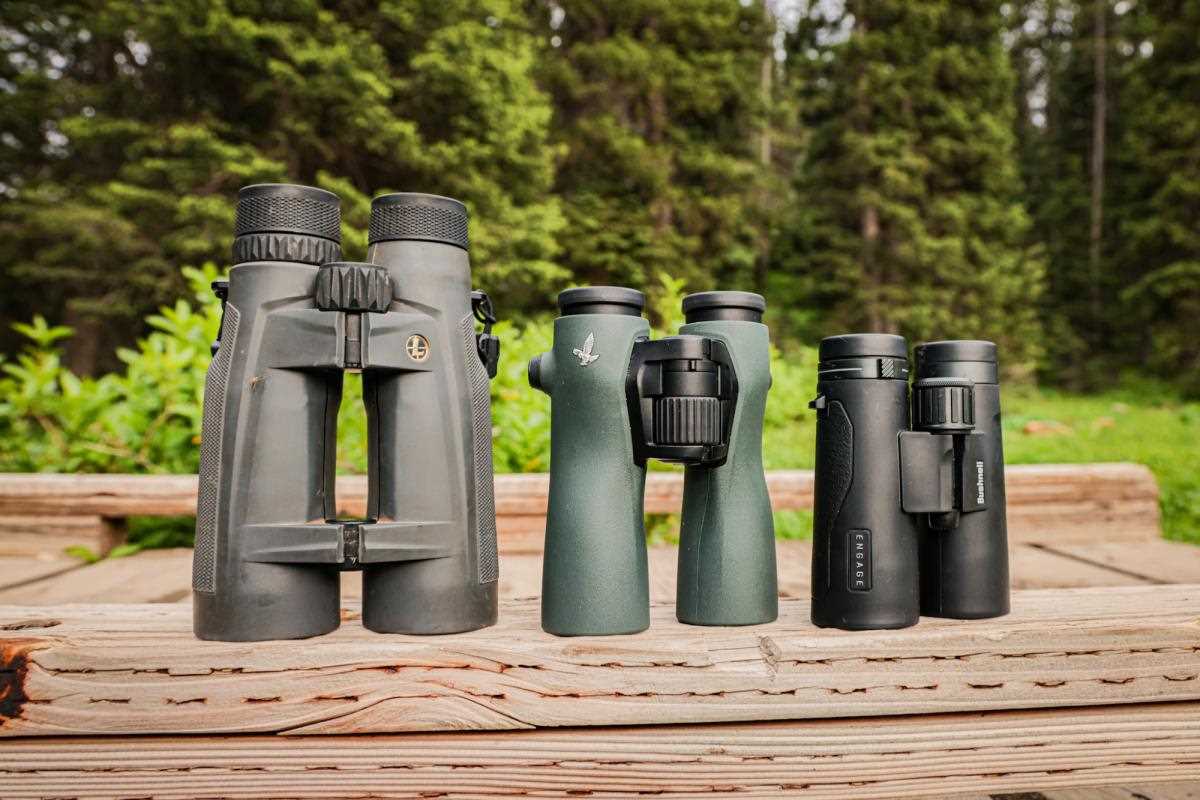
Hunting technology is evolving at a remarkable pace, and optics are at the forefront. For decades, the choice between compact and full-size binoculars was fairly straightforward. But the landscape is shifting. We’re seeing the emergence of AI-powered binoculars, like the Matata Xplore highlighted by Digital Camera World, that promise to identify game in seconds, and the broader integration of smart features, as reported by WIRED. This article, however, will focus on the fundamental form factor decision: compact versus full-size.
The core dilemma remains: do you prioritize portability and convenience, or maximizing optical performance? While AI is undoubtedly changing things, it's currently an addition to the platform, not a replacement for good glass and a suitable design. Ultimately, the 'best' choice is deeply personal, dictated by your individual hunting style, the terrain you frequent, and your budget.
I believe this year, 2026, is a turning point. Improvements in materials and coatings are significantly narrowing the performance gap between the two sizes. This means a hunter can now realistically consider a compact option without sacrificing too much in terms of brightness or clarity. We’ll explore the pros and cons of each, and help you navigate this evolving market.
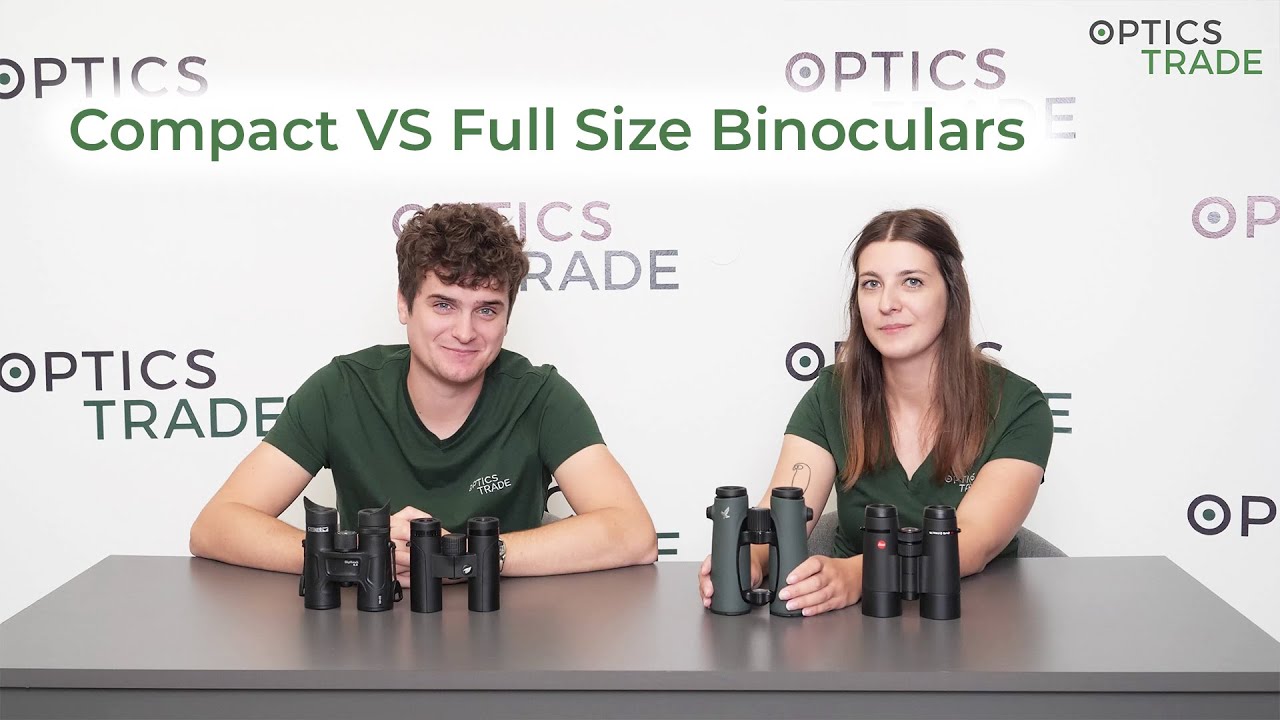
Full-Size Binoculars: The Traditional Choice
Full-size binoculars, typically featuring 42mm objective lenses, have long been the standard for serious hunters. Their primary advantage lies in their ability to gather light. Larger objective lenses translate directly into brighter images, which is critical during low-light conditions – think the first and last hours of the day, or hunting in dense forests.
This increased light gathering isn’t just about brightness; it also improves detail resolution. A larger lens allows for a greater exit pupil, the beam of light projected from the eyepiece. A larger exit pupil is easier for your eye to gather, reducing eye strain during long observation periods. A comfortable exit pupil is generally considered to be between 4mm and 7mm; many full-size binoculars hit that sweet spot.
Generally, full-size binoculars also offer a wider field of view, allowing you to scan larger areas quickly. Build quality and durability are often superior in higher-end full-size models, constructed with robust materials and sealed against the elements. The downside, of course, is weight and bulk. Carrying a substantial pair of 42mm binoculars all day can be fatiguing, and they require more space in your pack.
Good optics don’t come cheap. Expect to invest a significant amount if you want top-tier performance from a full-size binocular. But for hunters who prioritize absolute optical clarity and aren't overly concerned with weight, they remain a compelling option.
Compact Binoculars: Portability Without *Too Much* Compromise
Compact binoculars shine when it comes to portability. Weighing significantly less and taking up far less space than their full-size counterparts, they are ideal for hunters who cover a lot of ground or are limited by pack weight – think mountain hunting or long-distance backpacking. They're also easier to handle with gloved hands, and less intimidating for new hunters or those with smaller hands.
Improvements in glass quality and lens coatings are rapidly closing the gap in image quality. While they still generally can’t match the light-gathering ability of a 42mm objective, modern compacts are surprisingly capable. They fit neatly into a pack, are less likely to snag on brush, and are simply more convenient to carry.
The common concerns with compacts – a smaller exit pupil, potentially dimmer image in low light, and a narrower field of view – are valid, but increasingly less impactful. Many modern compacts offer exit pupils of 3mm or more, which is sufficient for most hunting situations. And while the field of view may be narrower, it’s often adequate for scanning at moderate distances.
I’ve found that the convenience factor often outweighs the slight optical compromises for many hunting scenarios. They are a fantastic option for those who value mobility and ease of use, and don’t necessarily need the absolute maximum in optical performance.
Hunting Scenarios: Where Each Type Excels
The optimal binocular choice often depends on the specific hunting scenario. For spot and stalk hunting, particularly in open country, a compact binocular’s portability is a major advantage. You’re constantly moving, glassing different areas, and need a lightweight optic that won’t slow you down.
For treestand hunting, where you’re stationary for extended periods, a full-size binocular’s superior light gathering and wider field of view are more valuable. You need to be able to clearly identify distant targets, especially during the low-light hours of dawn and dusk. This is especially critical when hunting deer or elk at longer ranges.
In dense forest, a compact binocular’s maneuverability is key. You’re navigating thick brush, and a smaller binocular is less likely to get snagged or impede your movement. This is ideal for tracking turkeys or hunting small game.
In open fields, a full-size binocular’s ability to resolve fine details is an advantage. You can more easily identify subtle movements or features that might indicate the presence of game. For mountain hunting, where every ounce counts, a compact binocular is almost essential. Weight savings are paramount when you’re hiking long distances at altitude.
- Spot and Stalk: Compact
- Treestand Hunting: Full-Size
- Dense Forest: Compact
- Open Field: Full-Size
- Mountain Hunting: Compact
Hunting Scenario vs. Binocular Feature Assessment - 2026
| Hunting Scenario | Weight | Low-Light Performance | Field of View | Portability |
|---|---|---|---|---|
| Spot and Stalk Deer (Open Terrain) | Excellent | Good | Good | Excellent |
| Dense Forest/Woodland Hunting | Fair | Good | Fair | Good |
| Long-Range Mountain Game Hunting | Fair | Excellent | Good | Fair |
| Waterfowl Hunting (Marsh/Blind) | Good | Fair | Good | Good |
| Predator Hunting (Night/Dusk) | Fair | Excellent | Fair | Good |
| Upland Bird Hunting (Fast-Moving) | Excellent | Fair | Excellent | Excellent |
| Backcountry/Backpacking Hunts | Excellent | Good | Good | Excellent |
Illustrative comparison based on the article research brief. Verify current pricing, limits, and product details in the official docs before relying on it.
The Rise of AI and Its Impact on Binocular Choice
AI-powered binoculars, like the Matata Xplore discussed by Digital Camera World, are introducing a new dimension to hunting optics. Features like object recognition – automatically identifying animals – and integrated rangefinding are game-changers. These features can significantly enhance your hunting efficiency and success.
AI can also partially mitigate some of the drawbacks of compact binoculars. For example, AI-powered image enhancement can help improve clarity and detail in low-light conditions, making a compact binocular more viable in challenging environments. The ability to quickly and accurately identify distant targets can also compensate for a narrower field of view.
However, AI binoculars currently come at a premium price point. The Matata Xplore, while cheaper than some rivals, still represents a significant investment. Whether the added cost is justified depends on your individual needs and budget. I'm not sure about the long-term durability of these early models, but it's something to consider.
I believe AI is more valuable on a compact platform. The added features can help bridge the performance gap between compacts and full-size binoculars, making them a more competitive option. As AI technology continues to develop, we can expect even more sophisticated features and potentially lower prices.
Beyond Size: Important Binocular Specs to Consider
While size is a primary consideration, it’s crucial to understand other important binocular specifications. Magnification determines how much closer the image appears. Objective lens diameter affects light gathering. Field of view is the width of the area you can see at a given distance.
Eye relief is the distance between your eye and the eyepiece – important for eyeglass wearers. Coating quality significantly impacts brightness, contrast, and color fidelity. Prism type (roof or porro) affects size and image quality – roof prisms are generally more compact, while porro prisms can offer better optical performance.
Nitrogen purging and waterproofing are essential for protecting the binoculars from the elements. These specs apply to both full-size and compact models, and understanding them will help you make an informed decision. Don't focus solely on size; consider the overall optical performance and build quality.
Budget Breakdown: What Can You Expect at Different Price Points?
Binocular prices vary widely. In the $300-$500 range, you can expect decent optics with basic features. These binoculars are suitable for casual hunters and beginners. Expect basic fully coated lenses and a reasonable field of view. Brands like Nikon and Vortex offer solid options in this price bracket.
In the $500-$1000 range, you’ll find binoculars with improved glass quality, better coatings, and more durable construction. These are a good choice for serious hunters who demand better performance. Look for fully multi-coated lenses, phase-corrected prisms, and waterproof construction. Leupold and Zeiss offer competitive models.
Above $1000, you enter the realm of premium optics. These binoculars offer exceptional clarity, brightness, and durability. They typically feature ED glass, advanced coatings, and robust construction. Swarovski and Leica are the dominant players in this segment. Spending more doesn't always guarantee a dramatically better experience, but you'll notice a difference in optical quality.
- $300-$500: Decent optics, basic features (Nikon, Vortex)
- $500-$1000: Improved glass, better coatings (Leupold, Zeiss)
- $1000+: Exceptional clarity and durability (Swarovski, Leica)
Top Full-Size Binoculars for Enhanced Hunting Visibility
ED (Extra-low Dispersion) glass for chromatic aberration reduction · Fully multi-coated lenses for maximum light transmission · Waterproof and fog-proof construction (Nitrogen-filled)
The Nikon Monarch M7 provides exceptional clarity and brightness, essential for spotting game in challenging light conditions.
HD (High Density) extra-low dispersion glass · Dielectric fully multi-coated lenses · ArmorTek lens coating for scratch resistance
Vortex Viper HD binoculars deliver outstanding optical performance and durability, making them a reliable choice for serious hunters.
Proprietary HD lens coatings · Generous eye relief for comfortable viewing · Rugged, lightweight magnesium chassis
Leupold BX-4 Pro Guide HD binoculars offer superior edge-to-edge clarity and a wide field of view, ideal for long-range game identification.
ED Prime Extra-low Dispersion glass · Fully multi-coated lenses with Ultra-Wide Band (UWB) coating · IPX7 waterproof rating
The Bushnell Forge provides excellent image quality and durability at a competitive price point, enhancing visibility during hunts.
As an Amazon Associate I earn from qualifying purchases. Prices may vary.
Top Compact Binoculars for the Discerning Hunter
ED (Extra-low Dispersion) glass for chromatic aberration reduction · Fully multi-coated lenses for superior light transmission · Waterproof and fog-proof construction (Nitrogen purged)
The Monarch M7 provides excellent optical clarity and a wide field of view, making it ideal for scanning diverse hunting terrains.
HD Optical System for enhanced resolution and contrast · Dielectric fully multi-coated lenses · Rubber armor with textured grips for durability and handling
Offering a balance of magnification and brightness, the Diamondback HD is a robust choice for identifying game at moderate distances.
ED Prime Glass for optimal color and contrast · Fully multi-coated lenses · IPX7 waterproof rating and fog proof
The Engage series delivers high-quality optics at a competitive price point, suitable for hunters seeking reliable performance without overspending.
Proprietary Advanced Optical System for exceptional clarity · Generous eye relief for comfortable viewing · Guard-ion lens coating repels water and debris
Engineered for rugged use, the BX-4 Pro Guide HD offers superior light transmission and durability, essential for demanding hunting conditions.
ED glass for outstanding color fidelity and detail · Hydrophobic lens coating for clear vision in wet conditions · Robust and compact design
Zeiss quality ensures exceptional optical performance and a compact, ergonomic design, making these binoculars a premium choice for serious hunters.
As an Amazon Associate I earn from qualifying purchases. Prices may vary.
Making the Call: A Personal Reflection
The best choice between compact and full-size binoculars ultimately depends on your individual hunting style, terrain, and budget. There's no one-size-fits-all answer. I personally lean towards compacts for their versatility, especially with AI becoming more prevalent and improving performance. But I still acknowledge the continued strength of full-size binoculars for certain scenarios, particularly long-range viewing and low-light conditions.
I encourage you to consider your priorities, try before you buy if possible, and choose the binoculars that best suit your needs. Don’t get caught up in the hype; focus on finding an optic that will help you be successful in the field.
No comments yet. Be the first to share your thoughts!