
First Light: Why Binoculars for Astronomy?
Astronomy often conjures images of large, complex telescopes, but binoculars offer an immediate and affordable way to begin exploring the night sky. They require minimal setup and no specialized knowledge to start using. Just grab them and look up.
With binoculars, you can see the Moon in detail, revealing craters and maria. Planets appear as discernible disks, allowing you to track phases and even glimpse cloud bands on Jupiter or Saturn. Brighter deep-sky objects, like the Orion Nebula or the Pleiades star cluster, become visible as fuzzy patches of light. Binoculars don’t offer the extreme magnification of telescopes, but their wide field of view is excellent for scanning the Milky Way.
Binoculars are an ideal first step for anyone curious about astronomy. They’re a great way to learn constellations and develop observing skills. Their portability makes them perfect for spontaneous stargazing sessions away from light pollution. Consider them a stepping stone to discover if the hobby resonates before committing to a larger investment in a telescope. The University of Michigan’s guide to understanding binoculars reinforces their ease of use, highlighting their wide field of view and simple operation.
Be realistic about limitations. You won't see the same level of detail as with a telescope, and faint objects will remain invisible. But for a low cost and minimal learning curve, binoculars deliver a rewarding astronomical experience. They can spark a lifelong passion for the cosmos.
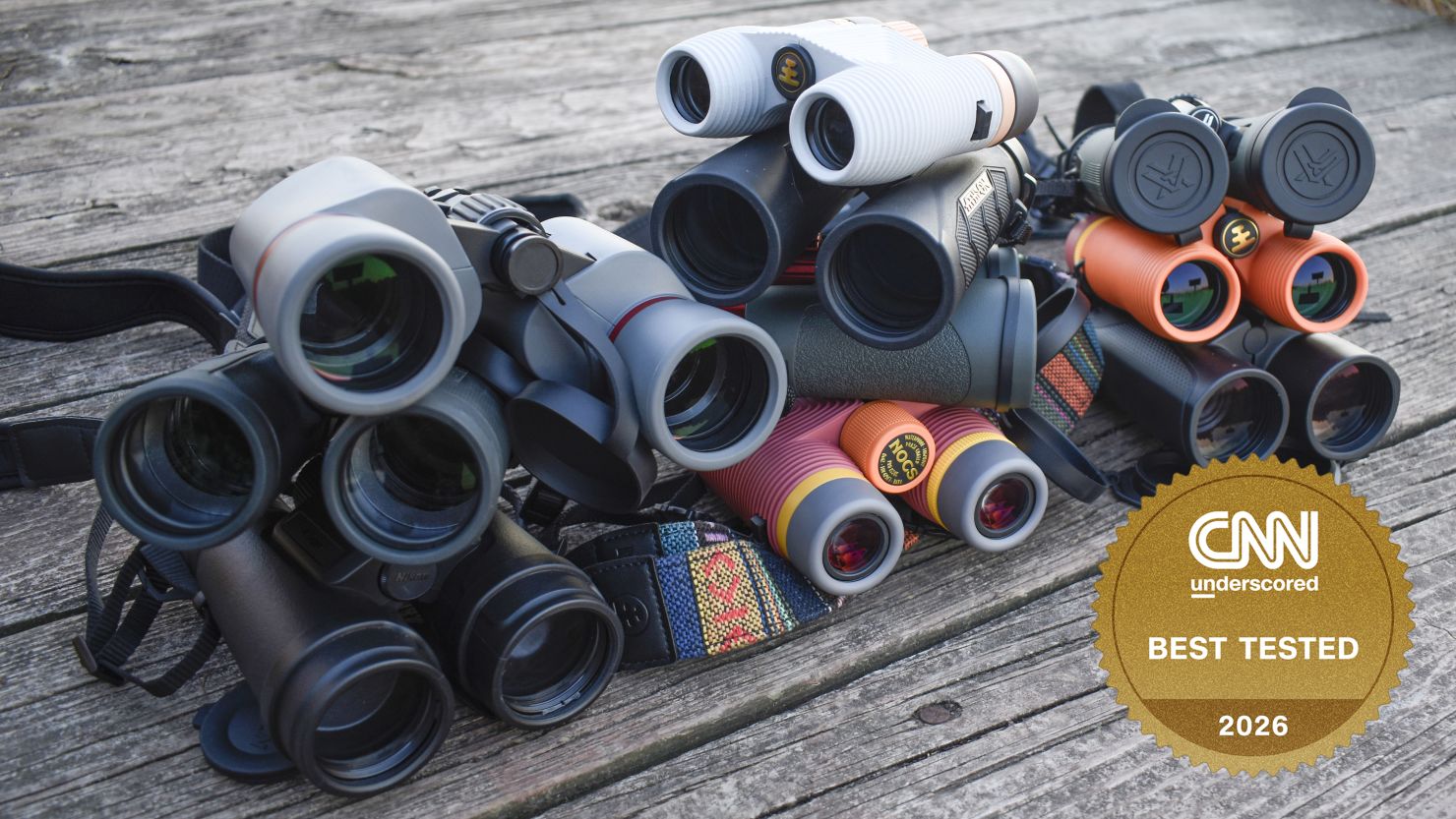
Magnification Isn’t Everything
Many beginners mistakenly think higher magnification is always better when choosing binoculars. While magnification enlarges the image, it also amplifies instability, making the view shaky and difficult to focus on. Higher magnification also reduces the field of view – the amount of sky you can see at once.
The key to good astronomical viewing is aperture – the diameter of the objective lenses. A larger aperture gathers more light, resulting in brighter, clearer images. This is especially important for observing faint deep-sky objects. A larger aperture also creates a more stable image, even at moderate magnifications.
Another important concept is the exit pupil, the diameter of the beam of light that exits the binoculars. It’s calculated by dividing the objective lens diameter by the magnification. A larger exit pupil is preferable for astronomy, particularly in low-light conditions, as it allows more light to enter your eye. Generally, an exit pupil of 4mm or greater is desirable for comfortable viewing.
Increasing magnification often reduces the field of view and makes binoculars harder to hold steady. Finding the right balance between magnification, aperture, and field of view is essential for a satisfying astronomical experience.
Key Specs: What to Look For
Binocular specifications are presented as two numbers, such as 10x50 or 7x35. The first number is magnification – how much larger the image appears. The second number is aperture, the diameter of the objective lenses in millimeters. So, 10x50 binoculars offer 10x magnification with 50mm objective lenses.
Lens coatings are important. Fully multi-coated lenses have multiple layers of coating applied to all lens surfaces, maximizing light transmission and minimizing reflections, resulting in brighter, higher-contrast images. Coated lenses have a single layer of coating, which is less effective. Avoid binoculars labeled simply “coated” if possible; the difference in image quality is noticeable, especially in low-light conditions.
Two main types of prisms are used in binoculars: Porro and Roof. Porro prisms are the traditional design, resulting in a wider, more three-dimensional image and are generally less expensive to manufacture. Roof prisms offer a more compact and streamlined design, but are more complex to produce and therefore typically more expensive. Roof prisms generally offer better durability.
Other specifications include field of view (measured in degrees or feet at 1000 yards) and close focus distance. A wider field of view is beneficial for scanning the sky, while a shorter close focus distance is useful for observing terrestrial objects. Understanding these specifications will help you make an informed decision.
- Magnification: How much larger the image appears.
- Aperture: The diameter of the objective lenses (light-gathering ability).
- Coatings: Quality of lens coatings (fully multi-coated is best).
- Prism Type: Porro or Roof (affects image quality and size).
Porro vs. Roof Prism Binoculars for Astronomy (Under $300)
| Attribute | Porro Prism | Roof Prism |
|---|---|---|
| Cost | Generally more affordable at a given aperture | Typically more expensive due to complex manufacturing |
| Brightness | Potential for high light transmission due to simpler optical path | Light transmission can be excellent, but relies heavily on high-quality coatings |
| Field of View | Typically wider field of view, aiding in locating objects | Field of view can be more limited, though modern designs are improving |
| Durability | Can be more robust due to simpler construction and alignment | Generally durable, but more susceptible to misalignment if impacted |
| Size & Weight | Often larger and heavier due to offset objective lenses | More compact and streamlined design |
| Image Orientation | Produces a right-side-up, correct image without additional inverting optics | Produces a right-side-up, correct image |
| Ease of Manufacturing | Simpler optical path leads to easier, less expensive manufacturing | More complex optical path requires precise manufacturing and alignment |
| Portability | Bulkier size can reduce portability for extended observing sessions | More compact size enhances portability |
Illustrative comparison based on the article research brief. Verify current pricing, limits, and product details in the official docs before relying on it.
Top Binoculars Under $300 (2026)
Here is a list of excellent astronomy binoculars under $300 that consistently receive positive reviews and offer a good balance of performance and price. Availability and pricing can fluctuate, so check Amazon for current information.
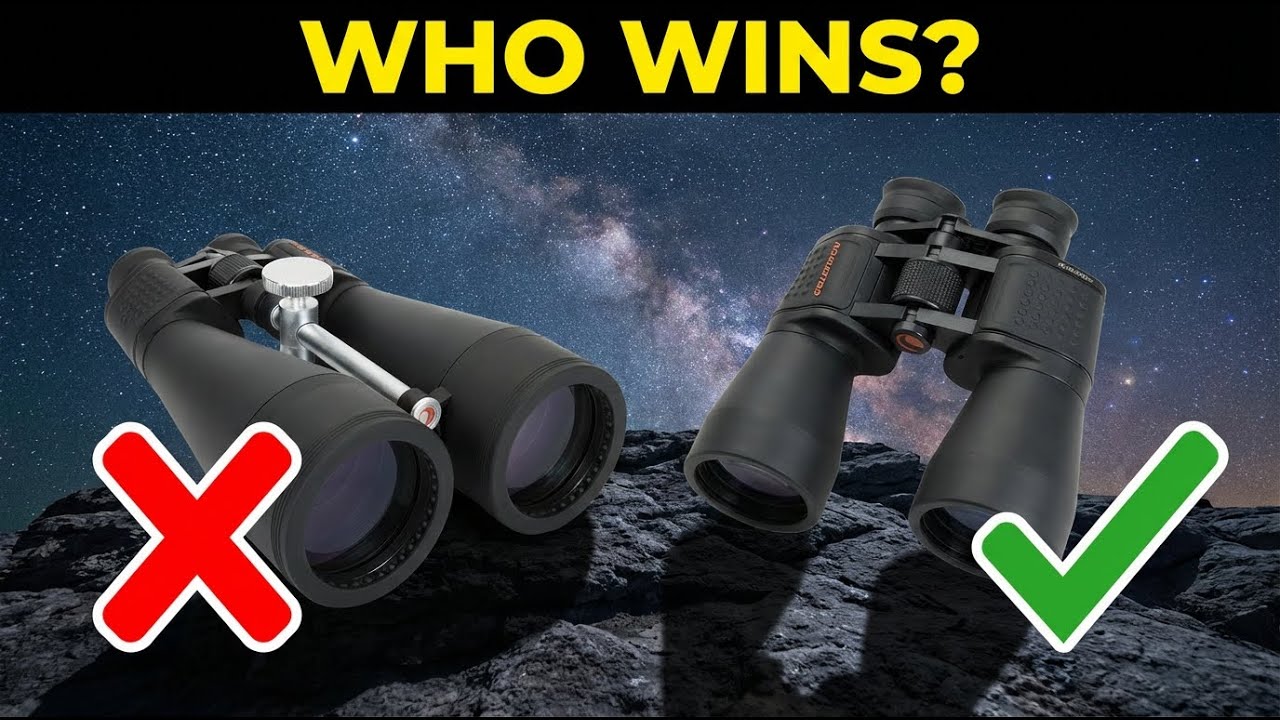
Celestron SkyMaster 25x75mm: A popular choice for beginners, these binoculars offer high magnification and a large aperture for excellent light-gathering. They are relatively affordable, but can be challenging to stabilize without a tripod. (Amazon Link)
Nikon Aculon A211 10x50: These binoculars provide a bright, clear image with good color fidelity. They are well-built and comfortable to hold. The 10x magnification provides a good balance between magnification and stability. (Amazon Link)
Bushnell Legend Ultra HD 10x42: While technically designed for general use, these binoculars perform surprisingly well for astronomy. They feature excellent optics and a rugged construction. (Amazon Link)
Orion GiantView 10x50 Astronomy Binoculars: Specifically marketed for astronomy, these binoculars offer a wide field of view and good light transmission. They’re a solid choice for beginners. (Amazon Link)
Vortex Diamondback HD 10x42: Known for their exceptional clarity and durability, these binoculars are a great all-around option. They’re a bit more expensive but offer excellent value for the price. (Amazon Link)
Olympus 10x50 DPS I: Another well-regarded option, these binoculars provide a bright and sharp image. They are waterproof and feature a comfortable grip. (Amazon Link)
These models represent a range of features and price points within the $300 budget. Consider your needs and preferences when selecting. Read user reviews and compare specifications before purchasing.
Featured Products

10x magnification · 50mm objective lens diameter · Fully coated optics
The Nikon PROSTAFF 5 offers a robust build and clear optics suitable for detailed lunar and bright deep-sky object observation within the budget.

12x magnification · 60mm objective lens diameter · Wide-field view
Celestron's SkyMaster provides a large aperture and significant magnification for observing brighter nebulae and star clusters on a minimal budget.

8x magnification · 42mm objective lens diameter · BAK4 prism
These HD binoculars deliver bright, clear views with a comfortable magnification for general sky surveys and identifying constellations.

10x magnification · 42mm objective lens diameter · IPX7 waterproof rating
The Bushnell H2O Xtreme offers durable, waterproof construction and fully multi-coated optics for reliable stargazing in various conditions.

12x magnification · 50mm objective lens diameter · High-definition optics
Occer's 12x50 binoculars provide a high magnification and large aperture at an exceptionally low price point, making them accessible for introductory astronomy.
As an Amazon Associate I earn from qualifying purchases. Prices may vary.
Standout Models: A Deeper Dive
The Celestron SkyMaster 25x7
The Nikon Aculon A211, on the other hand, offers a more manageable size and weight, making it easier to hold steady. While its magnification is lower, the excellent optics deliver a bright, clear image with good color accuracy. Many users report being impressed with the sharpness and contrast, even when observing challenging objects. It's a great choice for those who prioritize ease of use and portability.
I've observed that the SkyMaster, while capable, can suffer from chromatic aberration (color fringing) around bright objects. This is a common issue with lower-cost binoculars. The Nikon Aculon, with its superior lens coatings, minimizes this effect. Ultimately, the best choice depends on your observing priorities and whether you're willing to invest in a tripod.
Accessories to Enhance Your View
While binoculars are ready to use out of the box, a few accessories can significantly enhance your observing experience. A tripod adapter is essential for steadying high-magnification binoculars, especially during extended viewing sessions. It prevents fatigue and allows for sharper images.
A comfortable neck strap is also a worthwhile investment, particularly if you plan to carry your binoculars for long periods. A padded strap will distribute the weight evenly and prevent discomfort. A good lens cleaning kit is crucial for keeping your lenses clean and free of smudges, ensuring optimal image quality.
A red-dot finder can be helpful for locating objects in the night sky, although it’s not strictly necessary for binoculars. It projects a small red dot onto the sky, allowing you to quickly aim your binoculars at a desired target. A stable tripod is, in my opinion, the most important accessory for comfortable and enjoyable astronomical observations.
Beyond the Budget: What's Next?
If you find yourself captivated by astronomy and want to take your observing to the next level, there are several upgrade paths available. Larger aperture binoculars (70mm or 80mm) will gather even more light, revealing fainter objects and providing greater detail. Eventually, you might consider investing in a telescope, which offers significantly higher magnification and resolving power.
For those seeking a technologically advanced option, Unistellar’s smart binoculars (like the Envision model, as highlighted on space.com) represent a fascinating, albeit significantly more expensive, alternative. These binoculars combine traditional optics with digital image processing, enhancing the viewing experience and providing automated object tracking and identification. They’re a substantial leap in price, but offer a unique and immersive way to explore the cosmos.
The world of astronomy offers endless possibilities for discovery. Starting with a good pair of binoculars is an excellent first step, and who knows where your journey might take you?

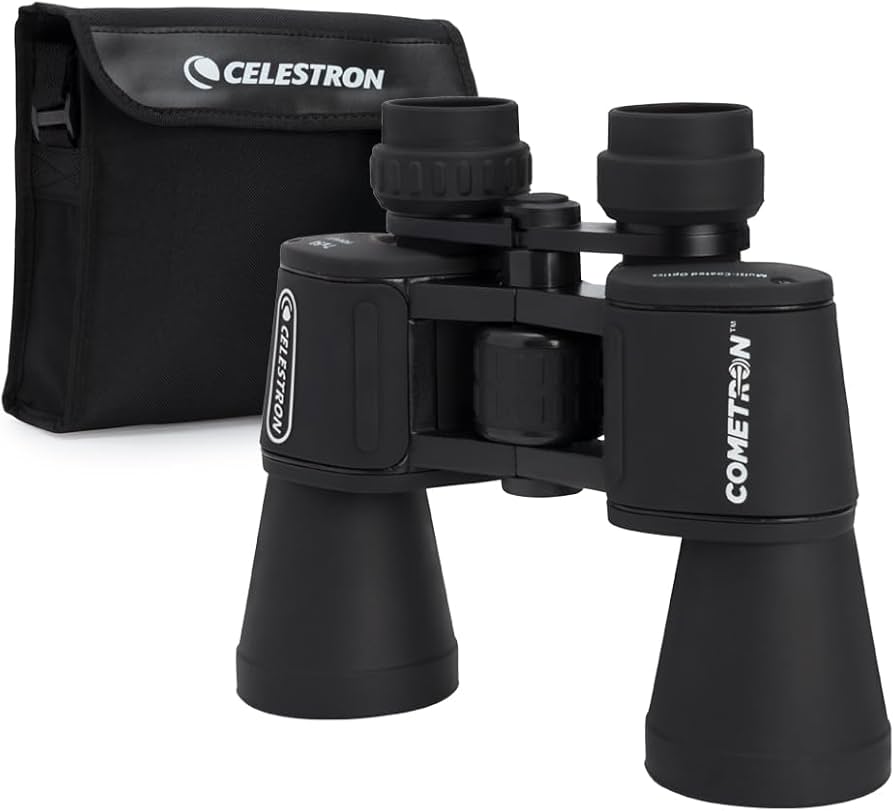
Celestron Cometron 7x50 Astronomy Binoculars – Entry-Level for Stargazing and Comet Watching – Large 50mm Objective Lenses – Wide 6.6° Field of View – Multi-Coated Optics
- 7x magnification for stable viewing
- 50mm objective lenses for enhanced light gathering
- Multi-coated optics for improved image clarity
- Wide 6.6° field of view for expansive sky observation
The Celestron Cometron 7x50 offers exceptional value for novice astronomers, providing a bright and wide field of view ideal for observing celestial objects without breaking the bank.
View on Amazon →As an Amazon Associate I earn from qualifying purchases.
No comments yet. Be the first to share your thoughts!