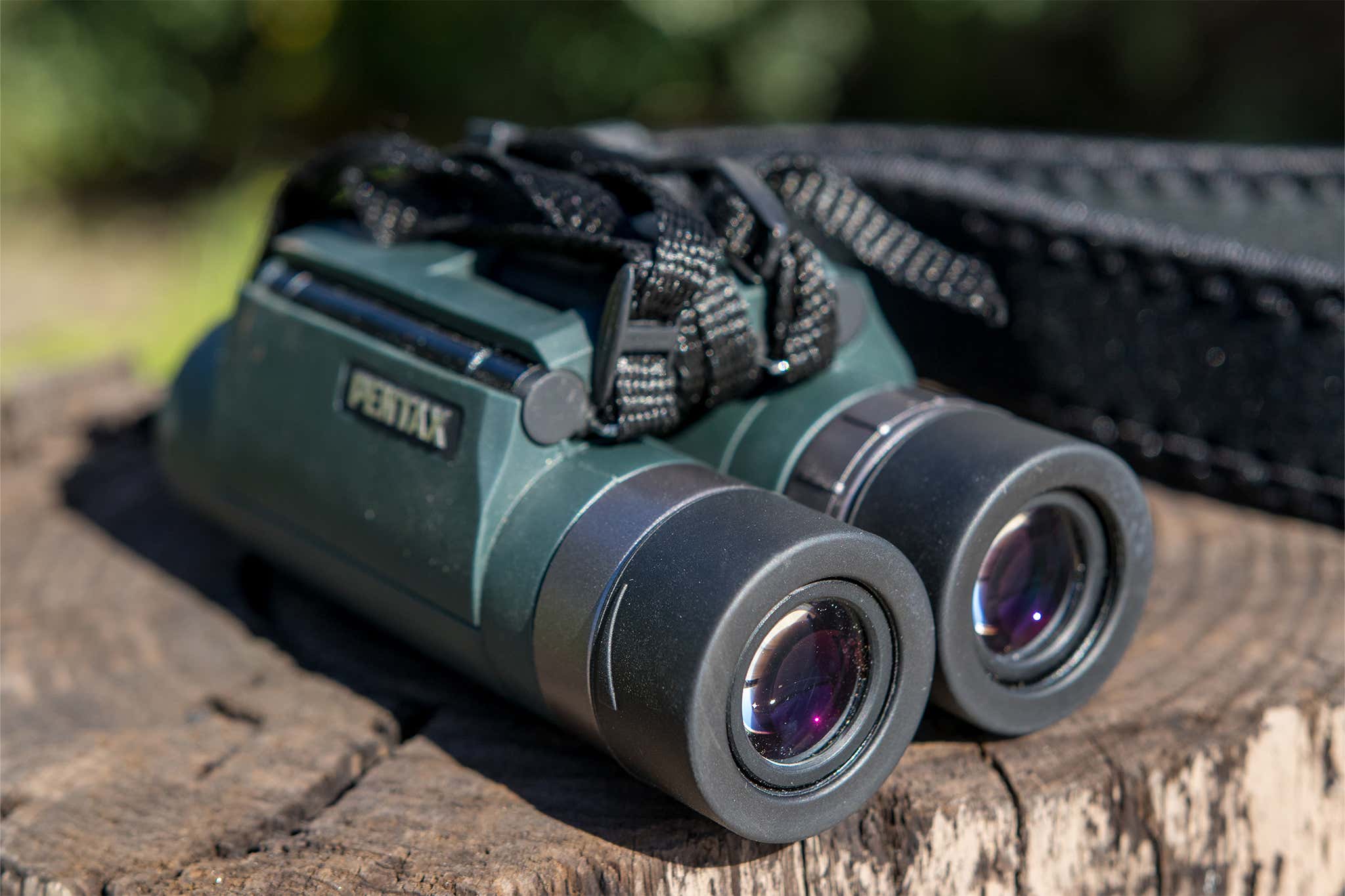

How we picked these binoculars
We didn’t just read spec sheets to build this list. To find the best compact binoculars for birding, we bought and tested several models from top optics brands, including Vortex, Nikon, and Leica. Our goal was to find pairs that perform well in the field, not just on paper.
Optical clarity is the non-negotiable starting point. We looked for sharp focus from edge to edge and accurate color reproduction, which matters when trying to distinguish subtle field marks on a distant warbler. Weight was the next major factor. Since birding often involves long hikes or hours of holding the binoculars up, anything too heavy becomes a burden rather than a tool.
Durability and handling rounded out our criteria. We checked for comfortable grip textures, intuitive focus wheels, and weather resistance. The best compact binoculars for birding should feel like an extension of your eyes, not a piece of heavy gear you’re trying to manage.
Best overall compact binoculars
For most birders, the Vortex Crossfire HD 10x28 is the sweet spot between optical quality and everyday usability. It delivers sharp, high-contrast images in a package light enough to carry all day without weighing down your neck or backpack.
The 10x magnification is the standard for birding because it offers enough power to identify field marks on distant birds while maintaining a wide enough field of view to track moving targets. The 28mm objective lenses keep the body compact, yet they gather enough light for clear viewing even in overcast conditions or dense forest shade.
Build quality is solid, with a rubber-armored exterior that provides a secure grip even when your hands are cold or damp. The focus wheel turns smoothly and stops precisely, allowing you to quickly shift attention from a branch to a bird without losing your place. Phase-corrected prisms and fully multi-coated lenses ensure the image remains bright and true to life.
If you prefer a slightly wider field of view or a different weight profile, the Nikon Monarch 5 10x25 and the Celestron Nature DX 10x25 are excellent alternatives. The Nikon offers a touch more clarity in low light, while the Celestron is often found at a lower price point without sacrificing much performance.
Quick comparison
| Model | Magnification | Objective (mm) | Weight (oz) | Key Feature |
|---|---|---|---|---|
| Vortex Crossfire HD 10x28 | 10x | 28 | 9.4 | Best all-around balance |
| Nikon Monarch 5 10x25 | 10x | 25 | 8.5 | Superior low-light clarity |
| Celestron Nature DX 10x25 | 10x | 25 | 8.8 | Budget-friendly performance |
| Olympus FE-III 10x25 | 10x | 25 | 8.1 | Ultra-compact and lightweight |


As an Amazon Associate, we may earn from qualifying purchases.
Best budget-friendly compact binoculars
You don’t need to spend a fortune to see the details of a distant warbler. For beginners or casual birders, the goal is finding a pair that offers clear optics without the premium price tag of high-end optics. The market is full of options, but a few stand out for delivering genuine value.
ScoopX UHD 10x42
These binoculars have become a quiet favorite in online birding communities for their surprising performance at a low price point. Users often note that they offer superior clarity compared to some well-known brands in the same price range. While they are slightly larger than the most pocket-sized models, the 10x42 configuration provides excellent magnification and light gathering, making them ideal for spotting birds in varied lighting conditions.
Why Budget Options Work
The key to choosing budget binoculars is managing expectations. You won’t get the ultra-lightweight feel of $500 optics, but you will get sharp images and durable construction. Look for models with fully multi-coated lenses and BaK-4 prisms, which are standard in good budget pairs. This ensures that the light transmission is high enough to see colors clearly, even in the shade of a tree canopy.

As an Amazon Associate, we may earn from qualifying purchases.
Best premium compact binoculars
If budget is no object and your priority is seeing every feather detail without compromise, these are the top-tier compact binoculars for birding. They represent the pinnacle of optical engineering, combining exceptional clarity with rugged, weather-sealed builds designed for years of field use.
Swarovski’s NL Pure series remains the gold standard for image quality. In rigorous testing, it was the only binocular to achieve perfect scores in resolution and sharpness, delivering an image so clear it feels like looking through a window. While heavy for its class, the optical performance is unmatched for serious birders who need to identify distant species.
For those who want premium optics without the heaviest weight penalty, the Vortex Razor HD Apochromatic series offers incredible value. These binoculars provide apochromatic correction, meaning colors are natural and contrast is high, even in low light. They are significantly lighter than many competitors in their class, making them easier to carry on long hikes.
Both options deliver the clarity and durability required for demanding birding conditions. The choice often comes down to whether you prioritize absolute optical perfection or a better balance of weight and performance.
| Model | Magnification | Objective (mm) | Weight (oz) | Field of View (ft/1000yd) |
|---|---|---|---|---|
| Swarovski NL Pure 8x32 | 8x | 32 | 23.6 | 418 |
| Vortex Razor HD 8x32 | 8x | 32 | 20.6 | 420 |
| Swarovski NL Pure 10x32 | 10x | 32 | 24.5 | 340 |
| Vortex Razor HD 10x32 | 10x | 32 | 21.3 | 345 |
What to look for in compact binoculars
Finding the right pair of compact binoculars for birding means balancing a few key specs against how you plan to use them. You want optics that are light enough to carry all day but powerful enough to spot details in the canopy. Here is how the main numbers translate to your actual birding experience.
Magnification and lens size
The two numbers on any binoculars, like 8x42 or 10x25, tell you the magnification and the objective lens diameter in millimeters. For compact birding, 8x magnification is often the sweet spot. It provides a wider field of view, making it easier to track fast-moving birds, and the image is steadier in your hands. Higher magnifications like 10x can shake too much for handheld use unless you have a very steady grip or a tripod. The second number, the lens size, determines light gathering. Smaller lenses (25mm) make the binoculars pocketable but dimmer in low light, while slightly larger ones (32mm or 42mm) offer brighter images at the cost of some portability.
Field of view
Field of view (FOV) is how much of the scene you see through the lenses at once, measured in feet at 1,000 yards. A wider FOV is a huge advantage when scanning tree lines or bushes for small birds. If you are looking at open habitats like wetlands, a narrower FOV might be acceptable, but for general woodlands, aim for at least 300 feet. This spec helps you find the bird first, then identify it.
Weight and ergonomics
Since you will be carrying these for hours, weight matters more than the spec sheet suggests. Compact binoculars should feel balanced in your hands, not just light on paper. Look for models with rubber-armored bodies that provide a secure grip, even in damp conditions. If the binoculars are too heavy, you will drop them sooner. If they are too small, your eyes might not align comfortably with the eyecups, causing eye strain. Try to hold a pair before buying to ensure the distance between the eyepieces matches your face.
Focus and eye relief
Fast focusing is essential for birding. You want to be able to rack focus from a distant tree to a nearby bush in a second or two. Look for binoculars with a central focus wheel that turns smoothly but has enough resistance to stay put. Eye relief—the distance your eye needs to be from the eyepiece to see the full image—is also critical, especially if you wear glasses. Most compact birding binoculars offer 15mm or more of eye relief, which is comfortable for most users.


As an Amazon Associate, we may earn from qualifying purchases.
Frequently asked questions about compact binoculars
What magnification is best for compact binoculars?
For most birders, 8x magnification is the sweet spot for compact binoculars. While 10x options exist, the higher zoom makes handheld stability difficult without a tripod, which defeats the purpose of "compact" gear. The 8x42 or 8x32 configuration provides enough reach to identify field marks on small songbirds while keeping the field of view wide enough to track moving birds in dense foliage.
Are 8x or 10x binoculars better for birding?
Eight-power binoculars are generally superior for birding because they offer a brighter image and a wider field of view. This makes spotting birds in low-light conditions, such as dawn or dusk, easier. The trade-off is that 10x binoculars bring distant subjects closer, but the narrow viewfinder can make it frustrating to relocate a bird once it flies. For casual to intermediate birders, the ease of use with 8x optics outweighs the extra reach of 10x.
Do I need waterproof binoculars?
Yes, waterproofing is essential for birding gear. Birding often takes place in damp environments like marshes, rainforests, or early morning dew. Fog-proofing (nitrogen or argon purging) is equally important to prevent internal lens fogging when moving between temperature zones. Look for models rated IPX7 or higher, which ensures they can withstand accidental submersion or heavy rain without damage.
No comments yet. Be the first to share your thoughts!