
The Birding Optics Revolution: AI and the $500 Binocular Sweet Spot
Choosing binoculars for birding has changed. We're moving beyond just specs and recommendations. Data-driven reviews and better optics are reshaping how we pick our gear, especially in the competitive sub-$500 market where value is key.
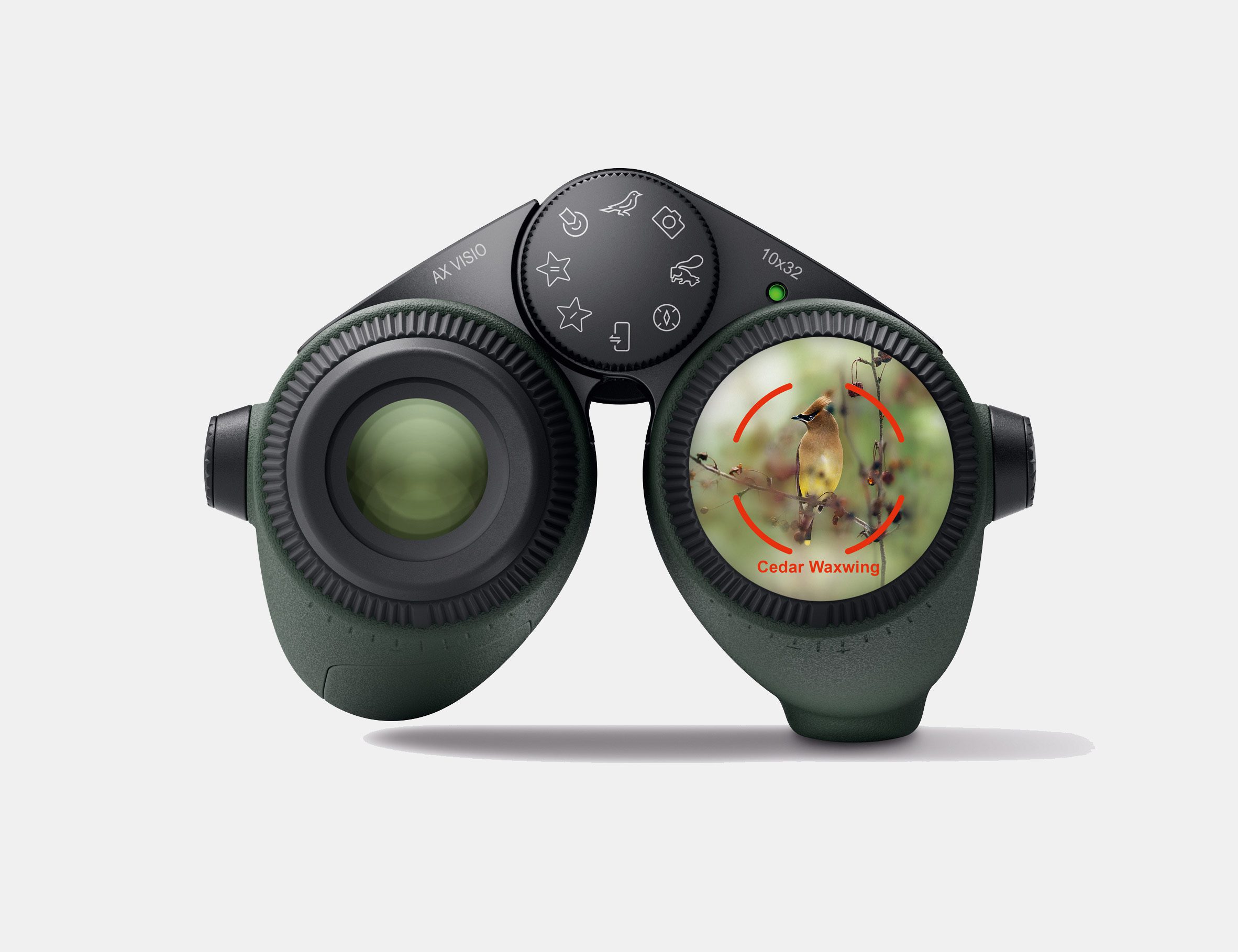
Better coatings and glass are now common even in cheaper binoculars, offering impressive performance without a huge cost. AI is also starting to help analyze reviews, though binoculars with built-in AI are still new, as WIRED noted. This leads to more objective, data-backed reviews.
The $500 price point is ideal for many birders. It's affordable for beginners but still offers features like fully multi-coated lenses, good magnification, and solid durability. By 2026, this segment will see fierce competition focused on delivering the best optics for the money. Knowing which specs matter most is crucial for a good birding experience.
Bino AI cuts through marketing hype to offer clear recommendations, combining expert reviews and user feedback. We assess how binoculars perform in actual birding situations, not just in labs. Our goal is to help you find the right binoculars, whether you're experienced or new to birding.
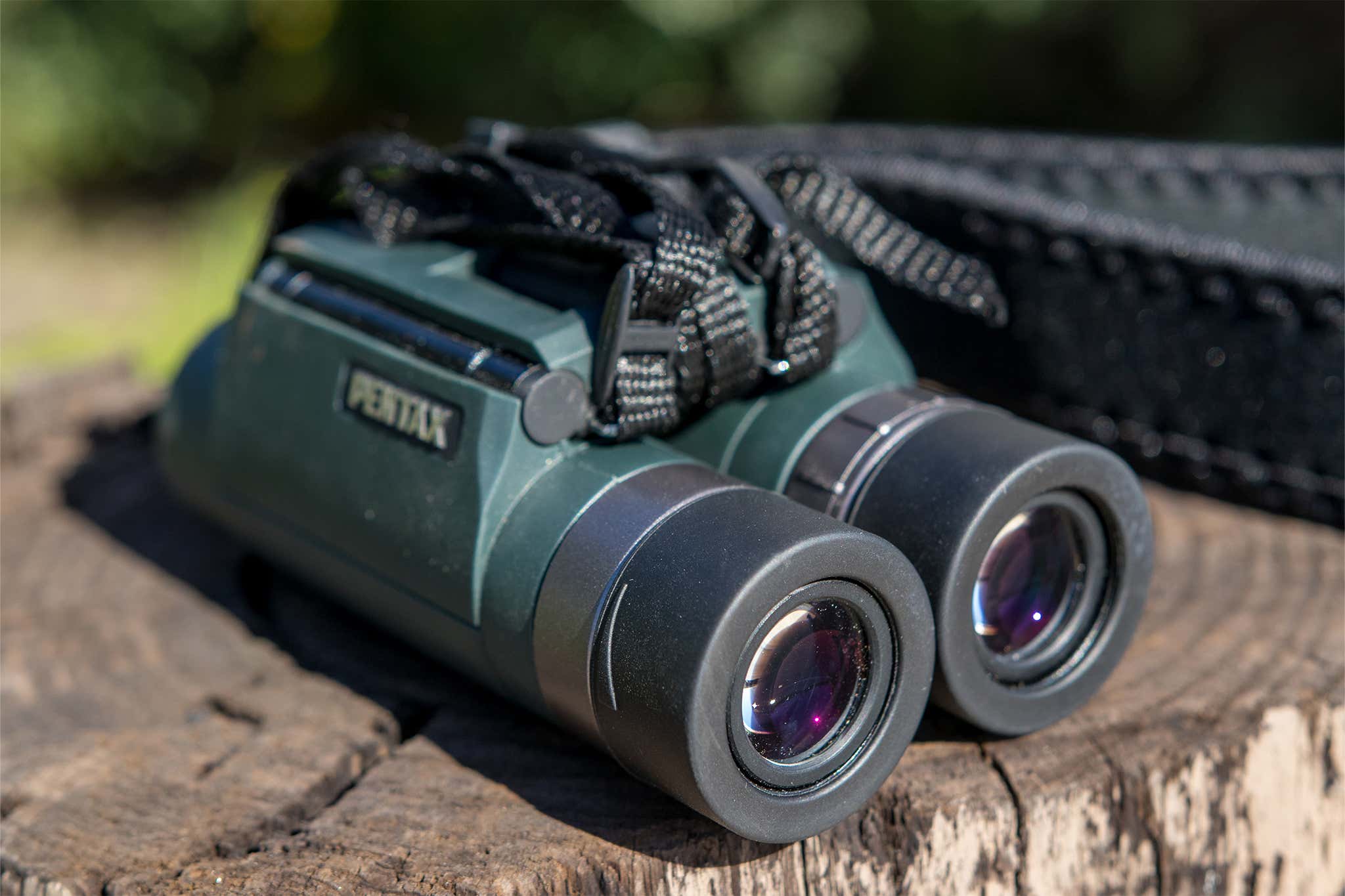
Decoding Binocular Specs: What Matters for Birding?
To choose the right binoculars, understand the specs. The numbers, like 8x42 or 10x50, show magnification and objective lens diameter. Magnification brings objects closer, while the objective lens diameter determines light-gathering ability.
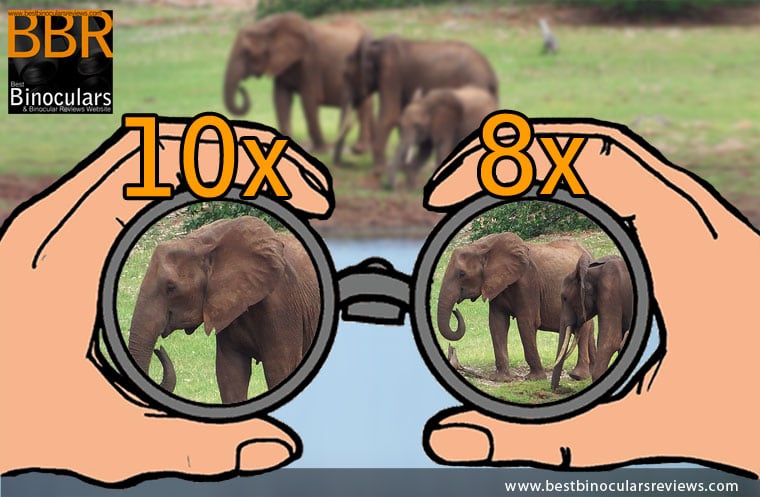
Higher magnification isn't always best. 10x or 12x binoculars can be shaky and hard to hold steady. Many birders prefer 8x for its wider field of view and stable image, which helps track moving birds. A larger objective lens gathers more light, creating brighter images, especially in dim light.
Field of view (FOV), measured in degrees or feet at 1000 yards, shows how wide an area you can see. A wider FOV helps locate and follow birds, especially fast ones. Eye relief, the distance from your eye to the eyepiece, is critical for eyeglass wearers; too little makes it hard to see the full FOV.
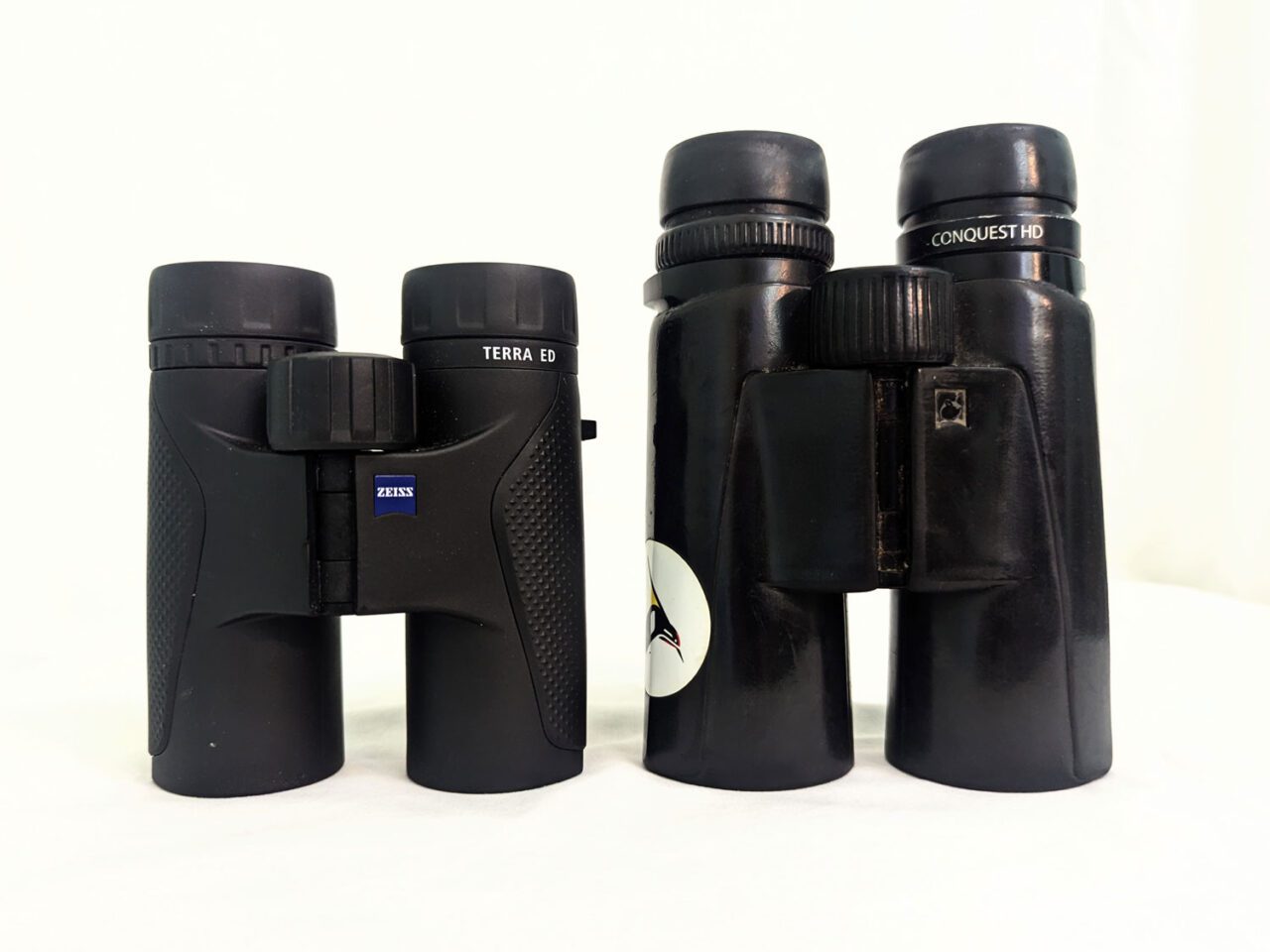
Prism type—roof or porro—affects size and shape. Roof prisms are compact; porro prisms are traditional and often offer better optical performance for the price. Lens coatings are essential. Fully multi-coated lenses reduce light reflection and boost light transmission for brighter, clearer images, which is vital for detail and clarity.
A larger objective lens means brighter images but adds weight. Higher magnification offers more detail but reduces field of view and stability. The best binoculars depend on your needs.
- Magnification: How much closer the binoculars make objects appear.
- Objective Lens Diameter: The size of the light-gathering lens.
- Field of View: The width of the visible area.
- Eye Relief: Distance between your eye and the eyepiece.
- Prism Type: Roof or porro, impacting size and optical performance.
Roof Prism vs. Porro Prism Binoculars for Birding: A Qualitative Comparison
| Characteristic | Roof Prism | Porro Prism |
|---|---|---|
| Price | Medium | Low |
| Weight | Low | Medium |
| Durability | Medium | High |
| Brightness | Medium | Medium |
| Field of View | Medium | High |
| Size/Compactness | High | Low |
| Image Quality | High | High |
| Water Resistance | Medium | Medium |
Illustrative comparison based on the article research brief. Verify current pricing, limits, and product details in the official docs before relying on it.
AI-Powered Reviews: How We Selected These 15 Binoculars
At Bino AI, our recommendations aren’t based on gut feeling. We leverage the power of data aggregation and analysis to identify the best binoculars for birding. We begin by collecting data from reputable sources like OutdoorGearLab, which conducts rigorous, hands-on testing of a wide range of binoculars. We also analyze user reviews from multiple retailers and online forums.
While AI has limitations, it's good at finding patterns in large datasets. We use AI to analyze user reviews for recurring comments on sharpness, brightness, and durability, and to spot potential problems.
undefined noise and identifying the binoculars that consistently receive positive feedback from both experts and users.
Optics Days returns this Sunday (3 Nov) 🦅
— WWT Slimbridge (@WWTSlimbridge) November 1, 2024
Join us on the first Sunday of the month between 11am - 3pm, in the Peng Observatory, to test the best binoculars and scopes for your wildlife and birding adventures.
Find out more: https://t.co/FMF8sj6Apk
📸 Snipe | Nick Cottrell pic.twitter.com/g9nVCaj1TA
Top 5 Binoculars: Excellent All-Around Performers (Under $500)
These five binoculars represent the best overall value and performance in the sub-$500 category. Each offers a compelling combination of optical quality, durability, and features, making them ideal for a wide range of birding scenarios.
Vortex Diamondback HD 8x42: Often praised for its exceptional clarity and brightness, the Diamondback HD is a popular choice among birders. Its 8x42 configuration provides a good balance between magnification and field of view. Vortex’s VIP warranty is also a significant selling point. Price: around $280. Pros: Excellent optical quality, durable construction, lifetime warranty. Cons: Can be a bit heavy.
Nikon ProStaff 3S 8x42: A consistently well-regarded binocular known for its sharp images and comfortable ergonomics. The ProStaff 3S offers a wide field of view and good eye relief, making it suitable for eyeglass wearers. Price: around $250. Pros: Sharp images, comfortable to hold, affordable. Cons: Coatings aren't quite as advanced as higher-end models.
Celestron TrailSeeker ED 8x42: Featuring extra-low dispersion (ED) glass, the TrailSeeker ED minimizes chromatic aberration, resulting in exceptionally clear and color-accurate images. It’s a great option for birders who demand high optical performance. Price: around $300. Pros: Excellent color fidelity, minimal chromatic aberration, waterproof. Cons: May be slightly heavier than comparable models.
Bushnell Forge ED 8x42: The Forge ED combines ED glass with fully multi-coated lenses to deliver bright, clear, and detailed images. Bushnell’s EXO Barrier coating protects the lenses from water, oil, and scratches. Price: around $350. Pros: Durable construction, excellent image quality, protective lens coatings. Cons: Focusing ring can be a bit stiff.
Leupold BX-2 Alpine HD 8x42: Leupold is a respected name in optics, and the BX-2 Alpine HD delivers impressive performance for the price. It features a wide field of view and good eye relief, making it comfortable to use for extended periods. Price: around $299. Pros: Wide field of view, comfortable ergonomics, durable construction. Cons: Build quality isn’t quite as refined as some competitors.
Specialized Optics: Binoculars for Specific Birding Needs
Sometimes, a general-purpose binocular isn’t enough. Certain birding scenarios demand specialized optics tailored to specific challenges. Here are five binoculars designed for particular needs.
Low-Light Birding: Nikon Monarch 5 10x42: For birding in forests or during dawn and dusk, the Nikon Monarch 5 with its 42mm objective lenses excels at gathering light. While 10x magnification can be challenging to hold steady, the improved brightness is worth the trade-off in low-light conditions. Price: around $370.
Long-Distance Viewing: Vortex Razor UHD 10x50: When observing birds at a distance, higher magnification is crucial. The Vortex Razor UHD 10x50 delivers exceptional clarity and detail, even at long ranges. However, a tripod is recommended to minimize image shake. Price: around $499.
Travel Binoculars: Compact Bushnell Legend Ultra HD 10x25: For birders on the go, a compact and lightweight binocular is essential. The Bushnell Legend Ultra HD 10x25 is small enough to fit easily into a backpack or daypack, yet still offers good optical performance. Price: around $180.
Water Resistance: Celestron Nature DX ED 8x42: Birding often takes place in wet environments. The Celestron Nature DX ED is fully waterproof and fogproof, ensuring reliable performance in all weather conditions. Price: around $230.
Budget Low-Light: Olympus Trooper 10x50 DPS I: A solid option for those prioritizing low-light performance on a budget. While it won't match the clarity of higher-end models, it provides a noticeable improvement in brightness compared to smaller objective lenses. Price: around $150.
Budget Champions: 5 Great Binoculars Under $300
These binoculars prove you don’t need to spend a fortune to enjoy birding. While they won't offer the same level of optical performance as higher-end models, they provide excellent value for the money. Expect some compromises, but these binoculars are still capable of delivering a satisfying birding experience.
Wingspan Optics Spectator 8x32 Compact Binoculars: A surprisingly capable compact binocular with good clarity and brightness for its price. Price: around $80. Pros: Very affordable, lightweight, compact. Cons: Image quality isn't as sharp as more expensive models.
Aomei 10x42 Binoculars: A popular choice for beginners, offering a good balance of magnification and objective lens diameter. Price: around $70. Pros: Affordable, decent magnification, easy to use. Cons: Build quality is somewhat basic.
ROXANT 10x50 High Powered Binoculars: These binoculars offer impressive magnification for the price, making them suitable for observing distant birds. Price: around $90. Pros: High magnification, good value for money. Cons: Can be difficult to hold steady without a tripod.
Creedmoor Sports Binocular 8x42: A reliable and durable binocular that offers good optical performance for the price. Price: around $130. Pros: Durable construction, good image quality, comfortable to hold. Cons: Field of view is somewhat limited.
Gateway Distance 8x32 Binoculars: A compact and lightweight option that’s easy to carry on hikes and travels. Price: around $60. Pros: Compact, lightweight, affordable. Cons: Image quality is not as sharp as higher-end models.
Top 5 Birding Binoculars Under $500: AI-Curated Selections
ED (Extra-Low Dispersion) glass for chromatic aberration reduction · Fully multi-coated lenses for superior light transmission · Waterproof and fog-proof (nitrogen-filled)
The Monarch M5 offers exceptional optical clarity and brightness, crucial for detailed bird identification in varied lighting conditions.
Fully multi-coated optics for enhanced brightness · BaK-4 prisms for sharp, detailed images · Waterproof and fog-proof construction
This model provides a robust and clear viewing experience at an accessible price point, making it an excellent entry-level choice for birders.
HD (High Density) extra-low dispersion glass · Fully multi-coated lenses · Waterproof, fog-proof, and shockproof
The Diamondback HD delivers outstanding color fidelity and resolution, enabling precise observation of avian plumage and behavior.
ED Prime Glass for enhanced color and contrast · Fully multi-coated lenses · Waterproof and fog-proof
With its 10x magnification and ED glass, the Engage is ideal for observing distant birds without sacrificing image quality or brightness.
Advanced multi-layer lens coating · Waterproof (IPX7) and fog-proof · Wide field of view for its magnification
The PRO series offers superior optical performance and durability, providing professional-grade clarity for discerning birdwatchers.
As an Amazon Associate I earn from qualifying purchases. Prices may vary.
Future Trends: What to Expect in Birding Optics by 2028
The future of birding optics is likely to be shaped by several emerging technologies. Improved lens coatings, such as hydrophobic and oleophobic coatings, will continue to enhance image clarity and protect lenses from damage. Advanced prism designs, like Schmidt-Pechan prisms, may become more common, offering improved optical performance in a more compact package.
We might see wider adoption of ED (extra-low dispersion) glass, even in lower price ranges, further reducing chromatic aberration and improving color fidelity. Integrated digital features, such as image stabilization and rangefinding, are also on the horizon, though these are currently found primarily in higher-end models.
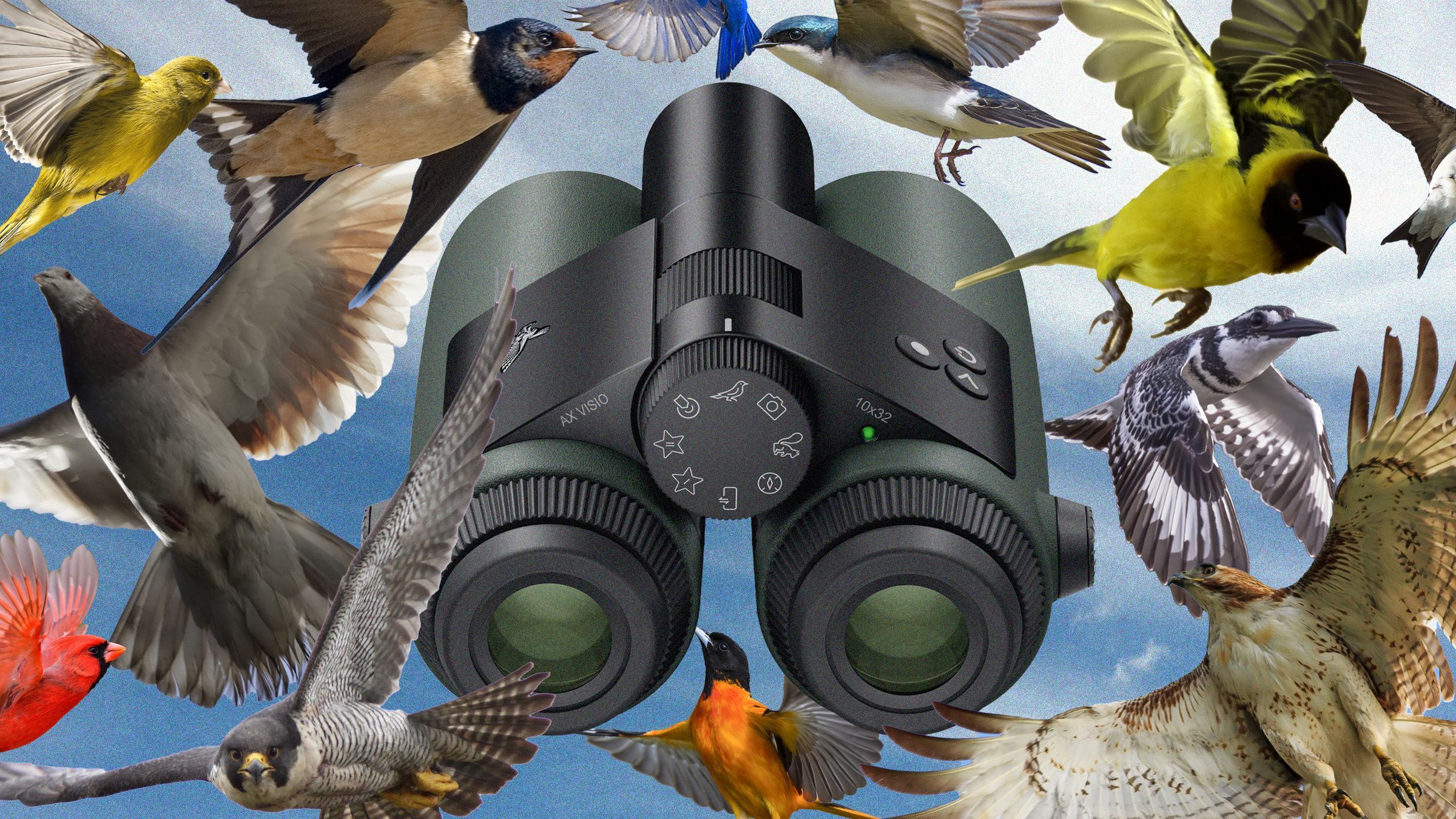
Perhaps the most exciting development is the potential for AI-powered bird identification integrated directly into binoculars. While still in its early stages, this technology could revolutionize birding by instantly identifying species as you observe them. However, the cost and complexity of such systems could limit their availability in the sub-$500 market for some time.
It's difficult to predict exactly how these technologies will evolve and impact the sub-$500 market. Innovation is rarely linear, and unforeseen breakthroughs could accelerate or disrupt the current trajectory. However, it’s reasonable to expect that birders will have access to increasingly sophisticated and affordable optics in the years to come.
AI-Powered Binoculars Price Prediction 2026-2028
Bull / Base / Bear scenario analysis for consumer AI optics market
| Timeframe | Bull Case | Base Case | Bear Case | Key Driver |
|---|---|---|---|---|
| 1 Month | Likely: Under $300 range | Likely: $300-$500 range | Possible: $300-$500 range | Early adopter demand and holiday seasonal pricing |
| 3 Months | Possible: Under $300 range | Likely: $300-$500 range | Likely: $300-$500 range | Manufacturing scale improvements and competitive pressure |
| 6 Months | Likely: Under $300 range | Possible: Under $300 range | Likely: $300-$500 range | AI chip cost reduction and market penetration strategies |
| 1 Year | Likely: Under $300 range | Likely: Under $300 range | Possible: $300-$500 range | Mass market adoption and component commoditization |
Price Prediction Summary
AI-powered binoculars are expected to follow typical consumer electronics pricing trajectory, with significant price compression over 12 months as manufacturing scales and competition intensifies. Base case suggests migration from current $300-$500 range to under $300 by late 2027.
Key Factors Affecting AI-Powered Binoculars Stock Price
- AI processing chip cost reduction and integration efficiency
- Manufacturing scale economies from major optics manufacturers
- Competitive dynamics between traditional and tech-enabled brands
- Consumer adoption rates and market penetration in birding community
Disclaimer: Predictions are speculative and not financial advice. Stock price predictions are based on current market analysis and may vary significantly due to market volatility, economic conditions, and other unpredictable factors. Always do your own research before making investment decisions.
No comments yet. Be the first to share your thoughts!