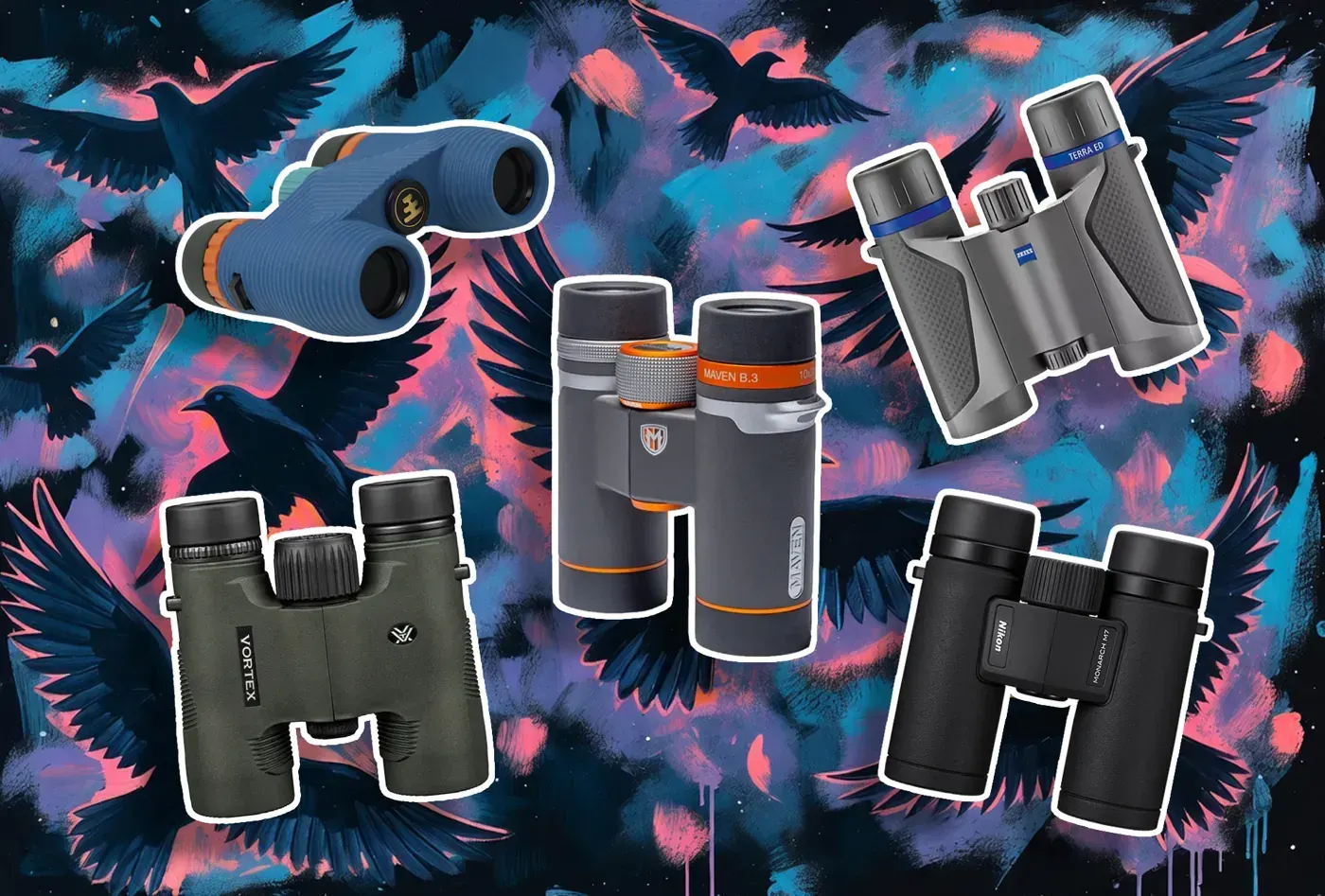

Why compact binoculars work for birding
Birding is often a game of endurance. You might be hiking a few miles along a coastal trail or standing still in a blind for hours, waiting for a warbler to reveal itself. In these scenarios, weight becomes the enemy. A pair of standard 10x42 binoculars can weigh nearly two pounds. Over a long day, that extra mass adds up, leading to fatigue and shaky hands that ruin your view.
Compact binoculars, typically ranging from 8x25 to 10x32 in size, solve this problem by shedding ounces without sacrificing the clarity you need to identify species. They fit easily into a jacket pocket or a small side pouch, allowing you to keep them accessible but out of the way when not in use. This portability encourages you to carry them consistently, increasing your chances of spotting unexpected birds.
The key to choosing the right compact pair lies in matching the magnification to your needs. While 10x magnification offers more reach, it can amplify hand shake, making it harder to track moving birds. Many experts, including the Audubon Society, suggest that 8x magnification provides a steadier, wider field of view, which is often more practical for general birding. The optical quality in modern compact models has improved significantly, ensuring that you still get sharp, bright images even in lower light conditions.
When selecting a compact model, prioritize ergonomics and build quality. Look for rubber-armored bodies that offer grip and protection against the elements. A comfortable eyecup design ensures you can see the full field of view without straining your eyes. By focusing on these practical aspects, you ensure that your gear supports your passion rather than hindering it.
Best overall compact binoculars
The Vortex Razor HD 8x32 stands out as the top pick for birders who refuse to compromise between image quality and portability. It is an apochromatic (APO) binocular, meaning it uses specialized extra-low dispersion glass to eliminate color fringing around high-contrast subjects like birds against the sky. This optical clarity makes identifying subtle field marks significantly easier than with standard binoculars in the same weight class.
Weighing just 17.3 ounces, the Razor HD 8x32 is light enough to carry all day on a hike without causing neck strain, yet it delivers the sharpness and contrast usually reserved for heavier 10x42 models. The fully multi-coated lenses and phase-corrected prisms ensure bright, crisp images even in the low-light conditions of early morning or dense forest canopies. The rubber-armored body provides a secure grip in wet conditions and offers solid protection against drops or bumps in the field.
While the Vortex brand is known for its legendary VIP warranty, the optical performance here is the real draw. It offers the best balance of price, weight, and resolution for general birding use. For those ready to invest, the 8x32 model provides the ideal magnification-to-portability ratio for most birding scenarios.


As an Amazon Associate, we may earn from qualifying purchases.
Best value binoculars under $200
You don't need to spend a fortune to see the fine details of a warbler's wing or the texture of a heron's feathers. The under-$200 bracket is where optical performance meets practical budgeting, offering 8x42 or 10x42 configurations that deliver crisp, bright images without the premium tax. For many birders, this price point is the sweet spot for daily field use.
The ABLIVO 10x25 Compact Binoculars exemplify the portable option within this range. Weighing in at a fraction of standard binoculars, these foldable optics are ideal for birders who prioritize carrying light over long-duration viewing sessions. The 10x magnification helps resolve distant subjects, while the compact form factor fits easily into a jacket pocket or vest side pouch, making them a great secondary pair for travel or quick glances.
Beyond pocket-sized options, full-size 8x42 binoculars dominate the value segment. Models like the Athlon Midas UHD and the Vortex Viper HD often drop below $200 during sales, offering premium BaK-4 prisms and multi-coated lenses that rival optics costing twice as much. These provide a wider field of view and better low-light performance, essential for scanning dense tree lines or watching birds in early morning shade.


As an Amazon Associate, we may earn from qualifying purchases.
Premium optics for low light and dense canopy
When the sun drops below the horizon or you are scanning through a heavy forest, standard glass often leaves you staring at gray noise. Premium binoculars solve this with superior optical glass and advanced multi-coatings that squeeze every photon of available light. This investment buys you brighter, higher-contrast images when it matters most—during the active dawn and dusk hours or under a thick tree canopy.
The Swarovski NL Pure stands out as a benchmark in this category. It is the only binocular tested by Field & Stream to achieve perfect scores for resolution and image quality, offering exceptional clarity even in challenging lighting conditions. While the price tag is steep, the optical performance justifies the cost for serious birders who refuse to compromise on detail.
For those who prioritize portability without sacrificing brightness, compact premium models are an excellent choice. They fit easily into a jacket pocket or small pack, allowing you to stay light on long hikes while still having high-end optics ready for sudden sightings.


As an Amazon Associate, we may earn from qualifying purchases.
How to choose the right magnification
Best Binoculars for Birding works best as a clear sequence: define the constraint, compare the realistic options, test the tradeoff, and choose the path with the fewest hidden costs. That order keeps the advice usable instead of decorative. After each step, pause long enough to check whether the recommendation still fits the reader's actual situation. If it depends on perfect timing, unusual access, or a best-case budget, include a simpler fallback.
| Factor | What to check | Why it matters |
|---|---|---|
| Fit | Match the option to the primary use case. | A good deal still fails if it does not fit the job. |
| Condition | Verify age, wear, and service history. | Hidden condition issues erase upfront savings. |
| Cost | Compare purchase price with likely upkeep. | The cheapest option is not always the lowest-cost option. |
Frequently asked questions about birding binoculars
How do I clean my binoculars without damaging the lenses? Never use household glass cleaners or paper towels, which can strip coatings. Instead, use a soft microfiber cloth and a dedicated lens cleaning solution designed for optical glass. For loose dust, use a rubber blower bulb first to avoid grinding particles into the lens surface during wiping.
Are waterproof binoculars necessary for birding? Yes, if you bird in variable weather. Waterproof models are nitrogen-purged to prevent internal fogging, which is critical when moving between cold mornings and humid wetlands. This feature also protects the optics from accidental splashes or heavy dew, ensuring long-term clarity.
What is the best warranty coverage for birding gear? Look for a lifetime warranty that covers damage and repairs, not just manufacturing defects. Brands like Swarovski Optik and Zeiss offer excellent lifetime protection, while Vortex provides an unconditional VIP warranty that replaces defective binoculars without requiring a receipt, making them a safe choice for frequent field use.
No comments yet. Be the first to share your thoughts!